

Termite larvae are newly hatched termites that have not yet developed into workers, soldiers, nymphs, or reproductive termites. Homeowners rarely see termite larvae out in the open because larvae stay protected inside the colony, galleries, or nest area.
If you think you found termite larvae, the bigger question is not whether the larvae themselves are dangerous. The bigger question is whether there is an active termite colony nearby. Larvae usually mean termites are reproducing somewhere close enough for young termites to survive.
This guide explains what termite larvae look like, how they differ from maggots, ant pupae, and beetle larvae, and what to do if you find pale, soft-bodied insects near wood, soil, frass, or damaged areas.
Affiliate and referral disclosure: PestsGuide may earn a commission from qualifying purchases or referrals through links in this article. This does not change your price or our editorial recommendations.
- Termite larvae are young termites. They hatch from termite eggs and later develop into workers, soldiers, nymphs, or reproductives depending on the colony’s needs.
- They are usually white, pale, soft-bodied, and very small. They can look like tiny versions of worker termites.
- Finding larvae usually means a colony is nearby. Larvae do not wander far on their own.
- Larvae are not the main cause of damage. Worker termites do the feeding and bring food back to the colony.
- If you find larvae near damaged wood, mud tubes, frass, or swarmers, inspect further before cleaning or treating.
Important: Do not rely on larvae alone to diagnose termites. Look for surrounding signs such as mud tubes, frass, damaged wood, shed wings, swarmers, moisture, or activity in multiple areas.
What Do Termite Larvae Look Like?
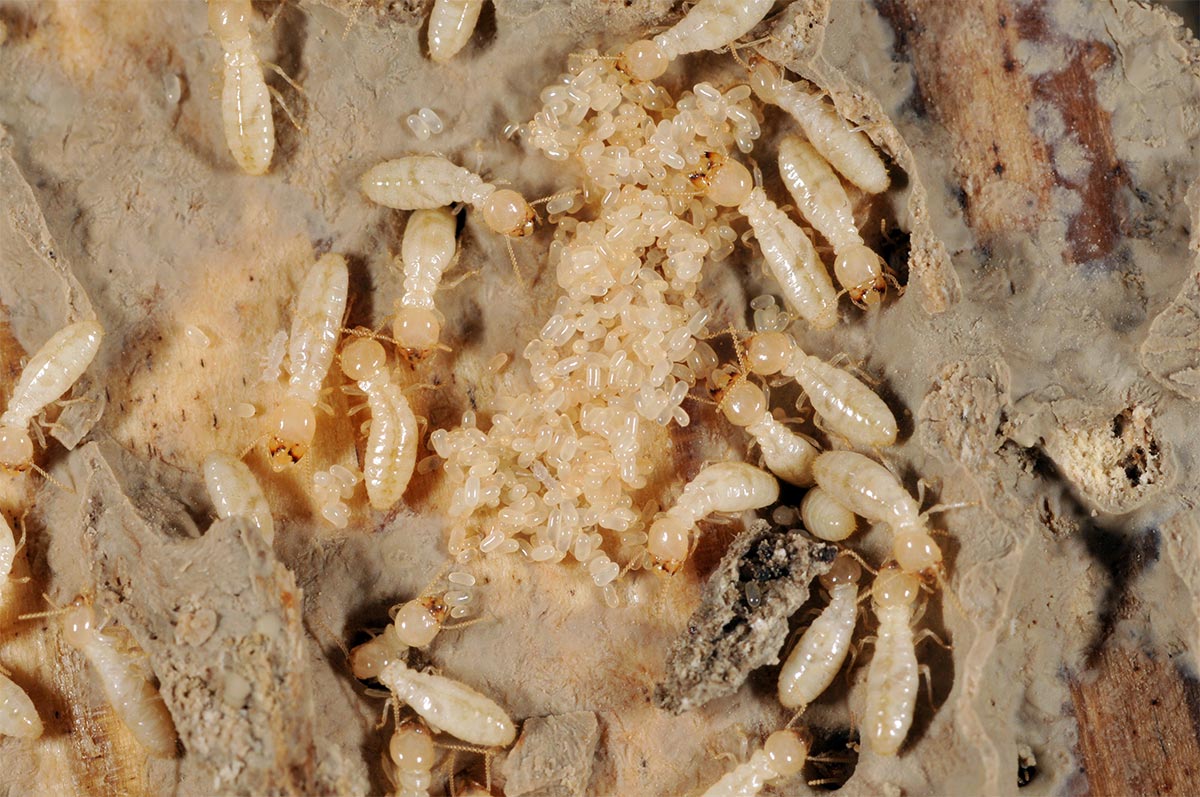
Termite larvae are small, pale, soft-bodied insects. They usually look like tiny, underdeveloped termites rather than worm-like maggots.
Key features include:
- Size: often around 2.5 mm long or smaller, depending on age and species.
- Color: white, cream, or translucent.
- Body: soft and pale, with a visible head and segmented body.
- Legs: termite larvae have legs, unlike many fly maggots.
- Antennae: straight antennae may be visible under close inspection.
Color alone is not enough to confirm larvae. Worker termites and some nymphs can also look pale. The surrounding evidence matters just as much as the insect itself.
How to Identify Termite Larvae
If you find small pale insects near wood or soil, use these checks before deciding what you have.
1. Check the Body Shape
Termite larvae usually look like small versions of adult worker termites. They have a more defined head than maggots and a body that looks segmented rather than smooth and tube-like.
2. Look for Legs and Antennae
Termite larvae have legs and may have visible straight antennae. Maggots usually do not have visible legs, and their bodies look more worm-like.
3. Check the Location
Location is one of the biggest clues. Termite larvae are more likely if you find pale insects near:
- damaged wood;
- termite eggs;
- mud tubes;
- frass or termite droppings;
- wall voids or hidden galleries;
- crawlspaces, foundations, or damp structural wood.
If you find pale insects in food waste, trash, drains, or decaying organic matter, they may be maggots or another insect larvae instead.
What Do Termite Larvae Eat?
Like other termites, larvae depend on cellulose-based food. But larvae do not forage through your home the way worker termites do. Worker termites break down and share food with the young termites inside the colony.
That means the larvae are not usually the insects directly chewing through wood. The workers are responsible for most of the feeding damage, while larvae remain protected and fed inside the colony.
Still, finding larvae can be important because it may mean the colony is active, reproducing, and established.
Life Cycle of Baby Termites
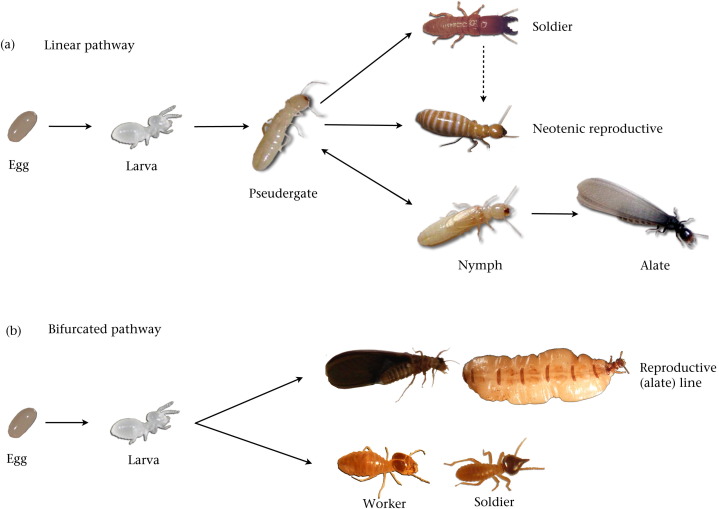
When termite eggs hatch, the young termites are commonly called larvae or baby termites. These young termites molt several times as they develop.
Depending on the species and the colony’s needs, termite larvae may develop into:
- worker termites;
- soldier termites;
- nymphs;
- winged reproductives, also called alates or swarmers.
In many colonies, larvae become workers because workers are needed to feed the colony, maintain tunnels, care for young termites, and gather food. Some develop into soldiers for defense. Others may eventually become termite swarmers that grow wings and leave the colony to reproduce.
This is why larvae can be a useful sign. If young termites are present, the colony is not just passing through. It may be established and developing.
Termite Larvae vs Other Insects
Termite larvae can be confused with several other pale insects. The comparisons below can help, but close identification may require a sample, photo, or inspection.
Termite Larvae vs Maggots

Termite larvae and maggots can both look pale and soft-bodied, but they are not the same.
Termite larvae usually have a more defined head, visible legs, and a body shape that resembles a tiny termite. Maggots are fly larvae. They are usually legless, more tube-shaped, and often found in decaying food, trash, dead organic material, or very wet waste areas.
If the insects are all similar in size and found in rotting material, maggots are more likely. If you find pale insects mixed with adult termites, eggs, mud tubes, frass, or wood damage, termites become more likely.
Termite Larvae vs Ant Pupae
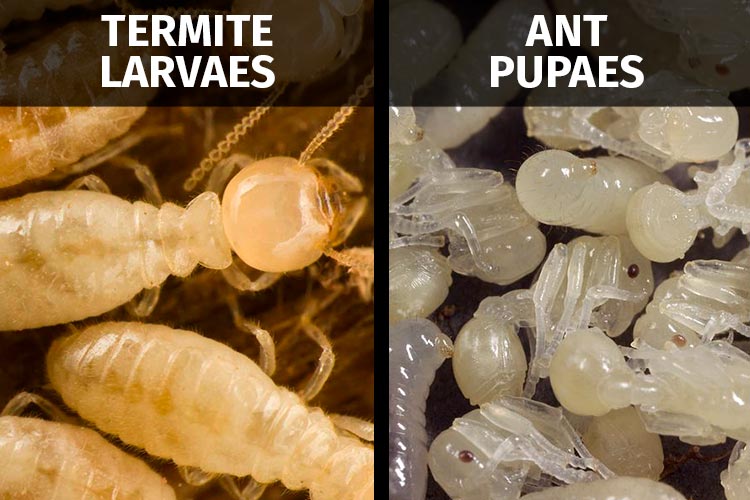
Termites and ants can look similar at a glance, but their body shapes are different. Termites have straighter, thicker bodies. Ants have a narrow waist.
Termite larvae look more like small pale termites. Ant pupae can look like pale, developing ants and may have a more ant-like body shape. If you find adult ants nearby, ant pupae are more likely. If you find mud tubes, termite workers, frass, damaged wood, or swarmers, termites are more likely.
If the insect you found has wings, compare it with our guide to flying termites vs flying ants.
Termite Larvae vs Beetle Larvae
Some wood-boring beetle larvae can also be found near damaged wood. Powderpost beetle larvae are usually white or cream-colored and often C-shaped. They may leave fine powdery frass and small exit holes in wood.
Termite larvae are not usually C-shaped. Termite activity is more likely to involve mud tubes, galleries, workers, swarmers, or pellet-like frass depending on the termite type.
If you are seeing holes, powder, or damaged wood but no termites, compare the pattern carefully before choosing treatment.
Do Termite Larvae Damage Wood?
Termite larvae are not usually the direct wood-damaging stage homeowners need to target. They stay inside the colony and depend on workers for care and food.
The damage risk comes from the colony as a whole. Worker termites forage, feed, and bring nutrients back. If a colony has larvae, it may be active and growing, which means workers may already be feeding nearby.
Look for these signs around the same area:
- mud tubes on foundation, walls, crawlspaces, or wood;
- termite droppings or frass near wood;
- hollow, blistered, soft, or damaged wood;
- discarded wings near windows or doors;
- winged termites or swarmers indoors;
- moisture problems near structural wood.
What to Do If You Find Termite Larvae
If you think you found termite larvae, do not panic, but do not ignore them either. The larvae are a clue that should trigger a closer inspection.
Follow these steps:
- Take photos before cleaning. Photograph the insects and the surrounding area.
- Save a sample if possible. Place a few insects in a small sealed container or bag for identification.
- Check nearby wood. Tap suspect wood and look for hollow areas, blistering, galleries, frass, or mud tubes.
- Look for adult termites or swarmers. Larvae alone are harder to identify than larvae found with adults.
- Do not spray randomly. General bug spray may kill visible insects but will not solve a hidden colony.
- Match the next step to the signs you find. Mud tubes, frass, damaged wood, or repeated activity all point to different treatment paths.
- Save a sample or take clear photos before cleaning the area.
- Check nearby signs such as mud tubes, frass, hollow wood, shed wings, swarmers, or moisture problems.
- If larvae appear with damage or activity in more than one area, start with the termite inspection cost guide and the DIY vs pro termite treatment guide before choosing products.
What Treatment Matches the Signs?
The right treatment depends on what else you find besides larvae.
- Mud tubes or soil-related activity → compare soil treatment and bait stations.
- Localized visible activity in wall voids or cracks → review termite sprays and foams for spot treatment.
- Exposed unfinished wood during repairs → consider borate wood treatment.
- Dry pellets, kick-out holes, or drywood signs → compare drywood termites and termite droppings.
- Multiple signs, structural damage, or uncertainty → start with the termite inspection cost guide and the DIY vs pro guide before buying products.
FAQ
Are termite larvae baby termites?
Yes. Termite larvae are newly hatched or young termites that later develop into workers, soldiers, nymphs, or reproductives depending on the colony’s needs.
What color are termite larvae?
They are usually white, cream, or translucent. However, color alone is not enough for identification because worker termites and some nymphs can also look pale.
Can termite larvae live without workers?
Termite larvae depend on the colony. Worker termites feed and care for them, so larvae usually do not survive long away from the colony.
Do termite larvae eat wood?
Larvae depend on cellulose-based food, but worker termites usually process and share food with them. The main wood damage is caused by worker termites and the colony as a whole.
Are termite larvae dangerous?
The larvae themselves are not dangerous to people. The concern is that larvae may indicate an active, reproducing termite colony nearby.
How can I tell termite larvae from maggots?
Termite larvae usually have a more defined head, legs, and a small termite-like body. Maggots are usually legless, tube-shaped, and more often found in rotting food, waste, or decaying organic material.
Should I call a professional if I find termite larvae?
Consider inspection if you find larvae near damaged wood, mud tubes, frass, swarmers, or moisture. Larvae found with other termite signs can point to an active colony.
Conclusion
Termite larvae are young termites that stay protected inside the colony. They are small, pale, soft-bodied, and easy to confuse with other insects. Finding them does not automatically tell you how severe the infestation is, but it can mean a colony is active nearby.
If you suspect termite larvae, document what you found, check nearby wood and moisture, and look for stronger evidence such as mud tubes, frass, damaged wood, shed wings, or swarmers. The safest next step depends on the full pattern of signs, not larvae alone.
Related Reading
- Termite Eggs: What They Look Like and What to Do
- Termite Swarmers: What They Look Like and What to Do
- Flying Termites: What They Look Like and What to Do
- Termite Mud Tubes: What They Look Like and What to Do
- Termite Droppings: What Frass Looks Like and What to Do
- Termite Damage: Signs, Pictures, and Repairs
- 10 Signs of Termite Infestation Every Homeowner Should Know
- Termite Inspection Cost: What Homeowners Should Expect
- Can I Treat Termites Myself or Do I Need a Professional?


Does your blog have a contact page? I’m having trouble locating it but, I’d like to send you an email. I’ve got some ideas for your blog you might be interested in hearing. Either way, great site and I look forward to seeing it improve over time.
Hi Ethan!
Sure I have contact page 🙂
You can send me email via form here.
I see you have some floor knowledge about termite larvaes in addition to some practical experience.
Such kind of information is more valuable than copypasted blog articles thoughts.
Thank you for your kind words!
Baby termites are very dangerous and you should know your enemy to get rid of them successfully.
Whats the deal with baby termites?