
Termite eggs are one of the earliest signs of a growing termite colony, but they are also one of the hardest signs for homeowners to spot. They are tiny, pale, soft, and usually hidden deep inside wood, soil, wall voids, or protected nest chambers.
Most people do not find termite eggs by accident. They usually notice other warning signs first, such as mud tubes, droppings, shed wings, swarmers, hollow wood, or visible termite damage. This guide shows what termite eggs look like, how to tell them apart from ant eggs, where they are usually found, and what to do if you think you have found them in your home.
- Termite eggs are tiny and oval, usually about the size of a poppy seed.
- They are white, pale yellow, or translucent and often look like small soft capsules.
- They are usually found in clusters, not as single isolated eggs in open areas.
- Homeowners rarely see eggs alone. More common signs include mud tubes, termite droppings, swarmers, shed wings, or damaged wood.
- Eggs plus damage, frass, or swarmers → start with the termite inspection cost guide and the DIY vs pro termite treatment guide.
Important: Finding termite eggs usually means you have exposed part of an active colony. Do not rely on removing visible eggs by hand. The real goal is to identify the termite type, locate the colony activity, and choose the right treatment path.
What Do Termite Eggs Look Like?
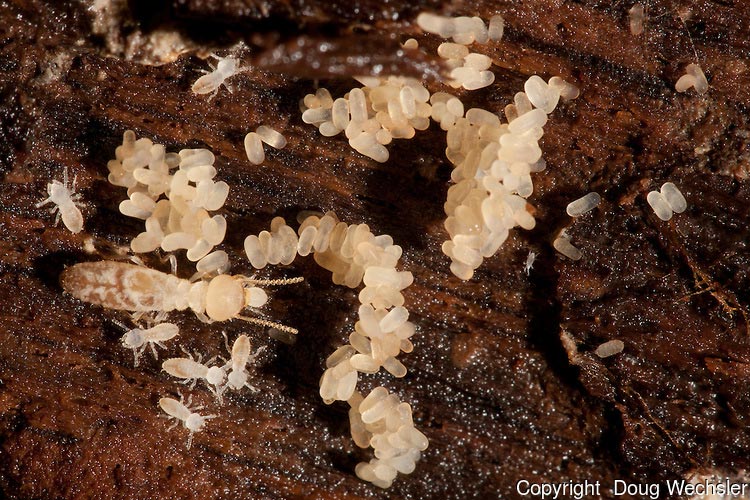
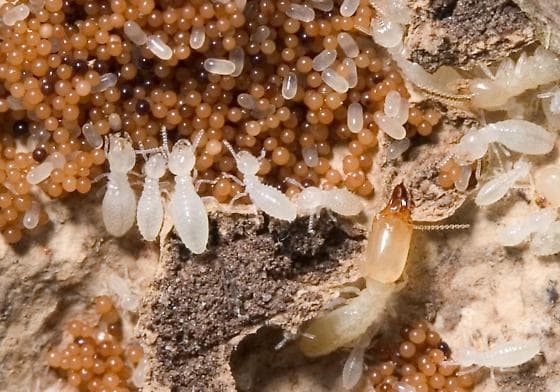
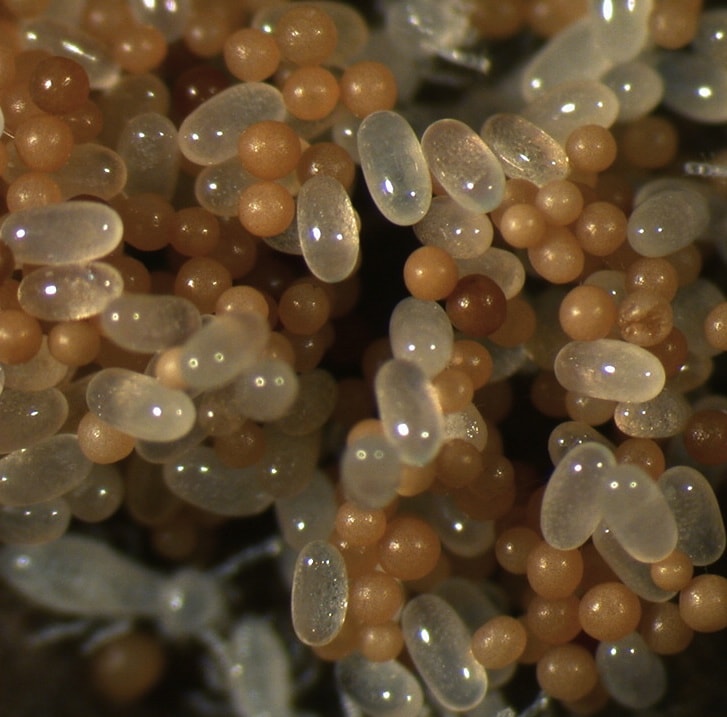
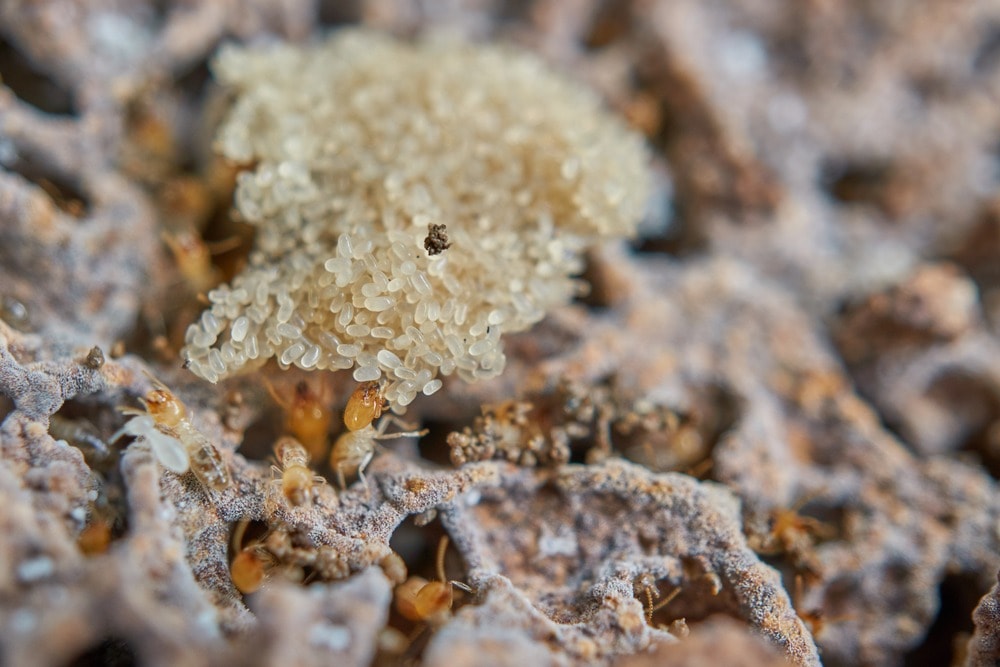
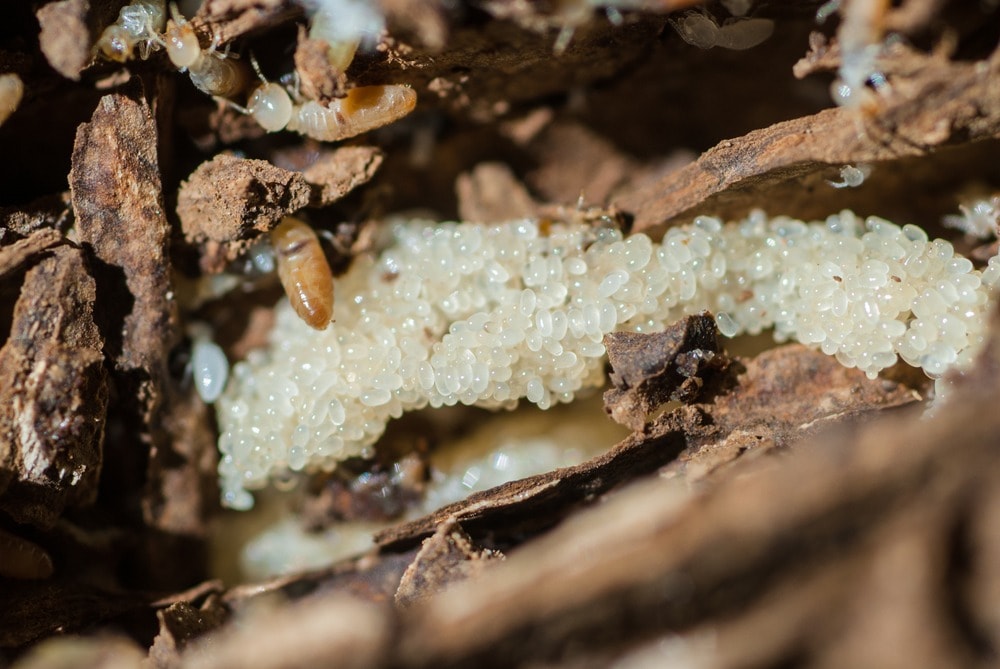
Termite eggs are small, soft, and almost translucent. A single egg is difficult to see, but termite queens lay eggs in groups. When many eggs are clustered together, they may look like tiny pale grains, capsules, or miniature caviar.
Here is what to look for:
- Size: usually about the size of a poppy seed;
- Color: white, pale yellow, cream, or slightly transparent;
- Shape: oval or capsule-shaped, not perfectly round;
- Texture: soft, smooth, and slightly jelly-like;
- Pattern: usually grouped in clusters rather than scattered alone.
Because eggs are hidden and protected, they are not the most common sign homeowners see. If you find pale eggs together with soft wood, frass, mud tubes, shed wings, or live termites, treat it as a possible active infestation.
Where Are Termite Eggs Found?
You usually will not find termite eggs sitting on a floor, windowsill, or countertop by themselves. Termites keep eggs inside protected areas where workers can clean them, move them, and regulate moisture.
| Termite type or situation | Where eggs may be hidden | Signs you are more likely to see |
| Subterranean termites | Soil nests, underground chambers, crawlspaces, and areas near wood-to-soil contact. | Mud tubes, swarmers, shed wings, hollow wood, foundation activity. |
| Drywood termites | Inside furniture, wall framing, attic beams, trim, door frames, or other dry wood. | Frass pellets, kick-out holes, swarmers indoors, damaged wood. |
| Wall void or hidden gallery | Behind drywall, baseboards, window frames, trim, or structural wood. | Soft wood, bubbling paint, small holes, clicking sounds, or wings nearby. |
If the surrounding signs include mud tubes, read our guide to termite mud tubes. If you see hard pellets near wood, compare them with our termite droppings guide.
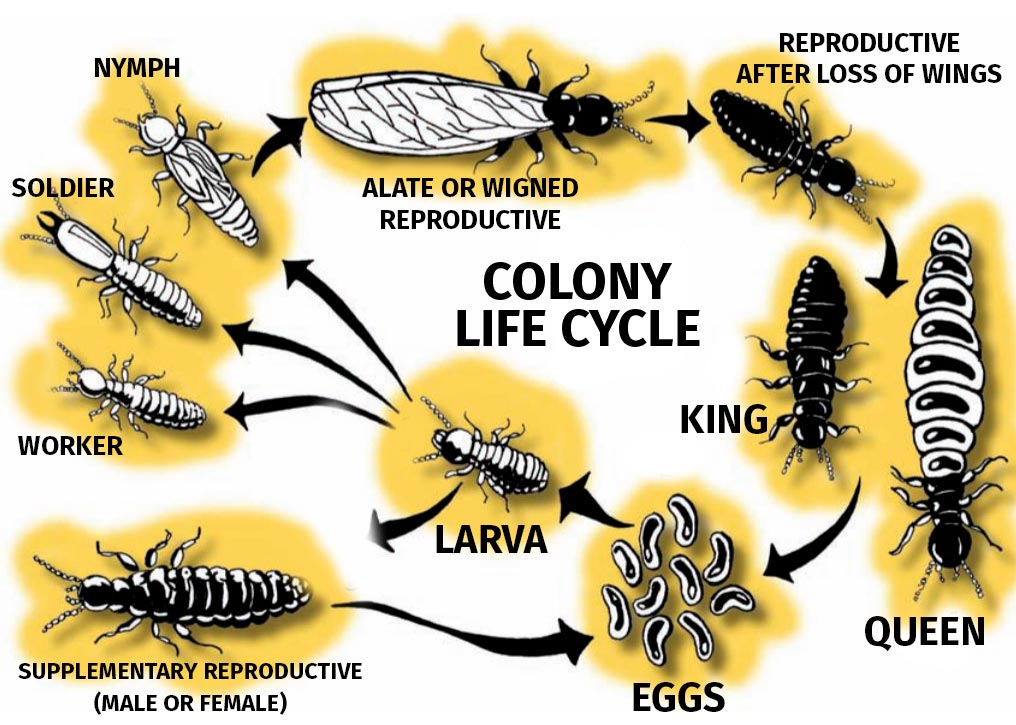
The Termite Queen and Her Role in the Colony

The termite queen is the egg-producing female in the colony. At first, she lays eggs slowly. As the colony matures, egg production increases. A mature queen can lay thousands of eggs per year, depending on the species, climate, colony age, and colony size.
Once the queen lays eggs, worker termites usually move them to protected chambers. Workers groom the eggs and keep them away from open air, dryness, and predators. This is why seeing eggs often means you have opened, broken, or exposed part of the colony.
Subterranean vs Drywood Termite Eggs
The eggs themselves look similar. The more useful difference is where the colony lives and what other signs appear nearby.
- Subterranean termite eggs are usually hidden in soil-based nest chambers. These termites often enter homes through foundation gaps, crawlspaces, and mud tubes.
- Drywood termite eggs are usually hidden inside the wood itself. Drywood colonies are often smaller, but they can live in framing, furniture, trim, or attic wood without soil contact.
If you are trying to identify which termite type you have, do not rely on eggs alone. Mud tubes point more strongly toward subterranean termites. Dry, hard pellets near wood point more strongly toward drywood termites.
Termite Eggs vs Ant Eggs
Ant eggs and termite eggs can look similar because both may be small, pale, and grouped together. The surrounding signs are usually the easiest way to tell the difference.
| Feature | Termite Eggs | Ant Eggs |
| Shape | Oval, slightly elongated, capsule-like. | Often smaller and more rice-like or rounded. |
| Location | Hidden inside wood, wall voids, galleries, or soil nests. | Usually in ant nests under stones, soil, wall gaps, or protected cracks. |
| Nearby signs | Mud tubes, frass, shed wings, hollow wood, swarmers, damaged trim. | Visible ants, trails, soil piles, food activity, workers carrying brood. |
| Risk | Can indicate an active wood-destroying colony. | May indicate an ant nest, but not necessarily structural wood damage. |
If you see winged insects too, compare them with our guide to flying termites vs flying ants. Wings, antennae, waist shape, and body shape are easier to compare than eggs.
10+ Pictures of Termite Eggs
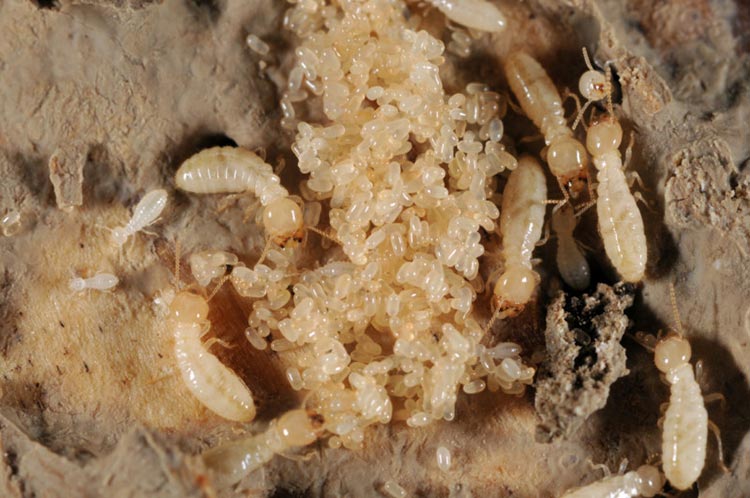
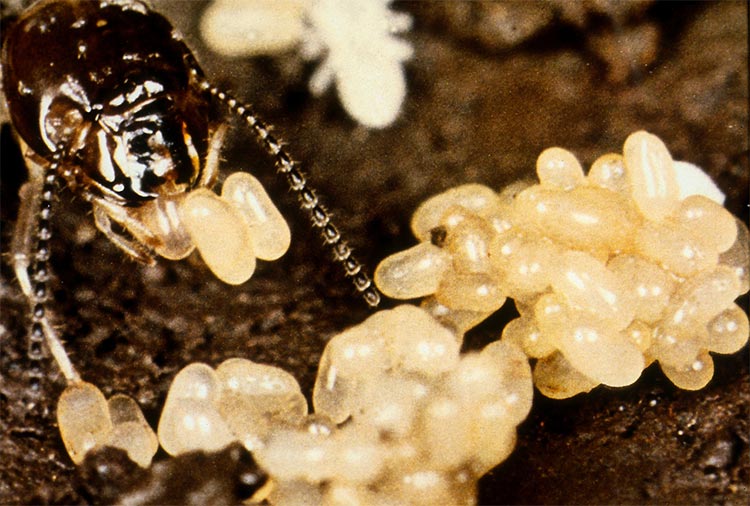
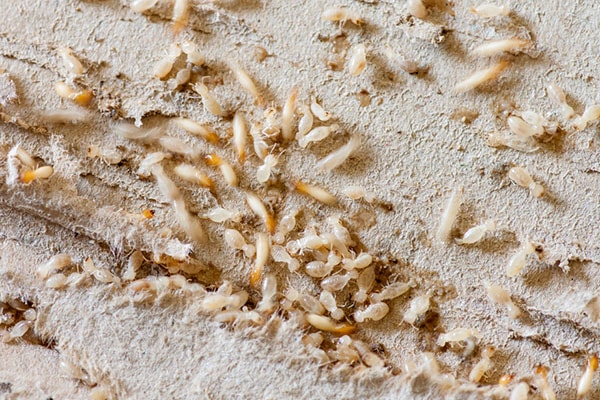
The pictures below show termite eggs in different settings, including close-ups, nest views, nymphs, larvae, workers, and a queen. Use them as a visual reference, but remember that most real infestations are confirmed by multiple signs rather than eggs alone.



Found Termite Eggs? What to Do Next
Finding termite eggs means an active colony may be living in or near your home. The right next step depends on where you found them and what other signs are present.
- Eggs or larvae inside a wall void → review termite sprays and foam spot treatments
- Eggs in exposed unfinished wood → protect accessible wood with a borate wood treatment
- Eggs plus mud tubes near the foundation → compare soil treatment and termite bait stations
- Eggs, frass, swarmers, or damage in multiple rooms → use the termite inspection cost guide and review termite damage signs before repairs
Do not try to solve the problem by scraping away eggs. Disturbing a colony can scatter workers and make activity harder to track. Identify the termite type, check how widespread the signs are, and then choose the treatment path.
- Do not treat visible eggs as the whole problem. Eggs usually mean an active colony is hidden nearby.
- Match the treatment to the evidence. Mud tubes point toward subterranean termites, while frass pellets often point toward drywood termites.
- If signs appear in more than one area, start with the termite inspection cost guide and the DIY vs pro guide before choosing treatment.
What Kills Termite Eggs?
The best treatment does not target eggs alone. It targets the colony that is producing the eggs. If the queen, workers, and nest remain active, new eggs can continue to appear.
Common treatment paths include:
- Foam spot treatment for known wall voids, galleries, and localized activity;
- Borate treatment for exposed unfinished wood during repairs, remodeling, attic work, or crawlspace access;
- Soil termiticide treatment for subterranean termites traveling through soil near the foundation;
- Bait stations for colony-level subterranean termite control around the home perimeter;
- Heat treatment or fumigation for certain drywood termite infestations, especially when activity is widespread.
For a broader treatment overview, see our guide on how to get rid of termites.
Termite Egg Treatment Cost
Cost depends on what the eggs indicate. A small exposed gallery in one piece of wood may be inexpensive to treat. A hidden colony across multiple rooms, wall voids, or structural areas may require professional inspection and treatment.
DIY treatment costs:
- Foam spot treatment: often about $25-60;
- Borate wood treatment: often about $40-100;
- Bait station kit: often about $100-300+ depending on size and brand;
- Localized wood replacement: often $50-300+ depending on the damaged piece.
Professional treatment costs:
- Termite inspection: often free to $150;
- Localized treatment: often $300-1,200;
- Soil treatment around a home: often $800-2,500+;
- Drywood fumigation or whole-structure treatment: often $1,200-3,800+;
- Damage repair: minor repairs may be affordable, while severe structural damage can cost thousands.
The final cost depends on termite type, square footage, treatment method, accessibility, and whether repair is needed. See our guide to termite inspection and treatment costs for a wider breakdown.
FAQ
How long do termite eggs take to hatch?
Many termite eggs hatch in about 25 to 30 days, but timing depends on species, humidity, temperature, and colony conditions.
Can you see termite eggs with the naked eye?
Yes, but usually only in clusters. A single termite egg is very small and easy to miss. A group of eggs may look like tiny pale grains or soft capsules.
Do termites lay eggs inside houses?
Drywood termites can lay eggs directly inside wooden structures such as furniture, trim, attic beams, and wall framing. Subterranean termites usually lay eggs in soil-based nests, but they can still forage into homes and damage wood.
Are termite eggs dangerous?
The eggs themselves do not bite or damage wood, but they signal a reproducing colony. That colony can continue growing and damaging wood if it is not treated.
Can I remove termite eggs myself?
You can physically remove visible eggs, but that does not solve the infestation. If the queen and workers remain active, the colony can continue producing eggs. Use eggs as a warning sign, not the entire treatment target.
What do termite eggs look like compared with larvae?
Eggs are small, oval, pale capsules. Termite larvae or young termites are larger, more insect-like, and may have visible body segments. See our guide to termite larvae for more details.
Can ants eat termite eggs?
Yes. Some ants may raid termite colonies and eat termite eggs or young termites. However, ants are not a reliable termite control method and will not eliminate a full infestation.
Conclusion
Termite eggs are a serious warning sign because they usually mean a colony is active and reproducing. They are small, pale, oval, and usually hidden in protected chambers rather than exposed in open areas.
Match the next step to the situation:
- Eggs in one accessible area → review spot treatment options
- Eggs in exposed wood during repairs → consider borate wood treatment
- Eggs plus mud tubes → compare soil treatment and bait stations
- Eggs plus widespread damage, frass, or swarmers → start with termite inspection cost and DIY vs pro treatment guidance
If you are not sure what you found, look for the surrounding signs: mud tubes, dry pellets, shed wings, swarmers, hollow wood, and damaged trim. Those clues usually tell you more than eggs alone.
Related Reading
- Termite Larvae: How to Identify Baby Termites
- Termite Droppings: What Frass Looks Like and What to Do
- Termite Mud Tubes: What They Look Like and What to Do
- Termite Swarmers: What They Look Like and What to Do
- Drywood Termites: Signs, Damage, Treatment, and Cost
- Subterranean Termites: Signs, Damage, Treatment, and Cost
- Termite Inspection Cost: What Homeowners Should Expect
- Can I Treat Termites Myself or Do I Need a Professional?
- Termite Damage: Signs, Pictures, and What to Do