
Drywood termites can damage homes, furniture, framing, trim, and other wooden structures. Unlike subterranean termites, they do not need to nest in soil. Instead, drywood termites can live directly inside the wood they are feeding on.
One of the clearest signs of drywood termite activity is finding termite droppings, also called frass. These tiny pellets may look like sawdust, coffee grounds, sand, or small grains near wood, baseboards, windows, doors, furniture, or attic framing.
If you are not sure what termite droppings look like, this guide will help you identify frass, compare it with carpenter ant frass and sawdust, and decide what to do next.
- Small hard pellets near wood → often point to drywood termites
- Dirt-like tubes on foundation or walls → usually point to subterranean termite mud tubes, not droppings
- Frass keeps reappearing after cleaning → the infestation may still be active
- Droppings near exposed unfinished wood → compare borate wood treatment
- Droppings in multiple rooms or near structural damage → review when to DIY and when to call a termite professional
What Are Termite Droppings or Frass?
Termite droppings, commonly called frass, are fecal pellets produced by termites as they eat and tunnel through wood. Frass is most strongly associated with drywood termites, because drywood termites live inside wood and push their droppings out through tiny kick-out holes.
Different termite species can leave different signs. Subterranean termites are more often identified by mud tubes, while drywood termites are often identified by pellets, kick-out holes, and damaged wood.
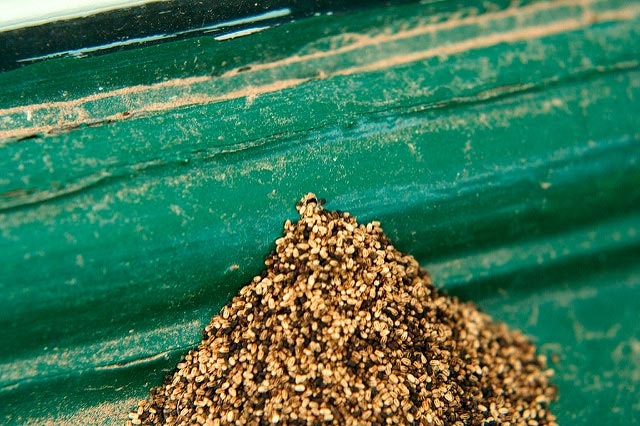
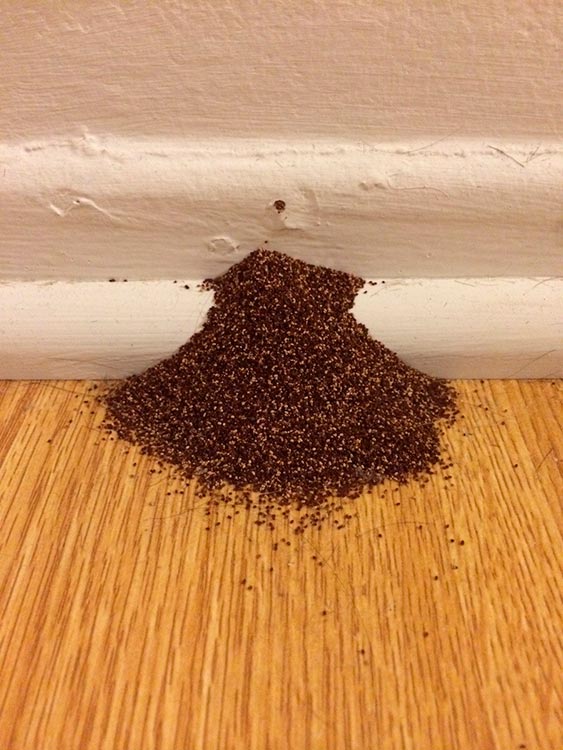
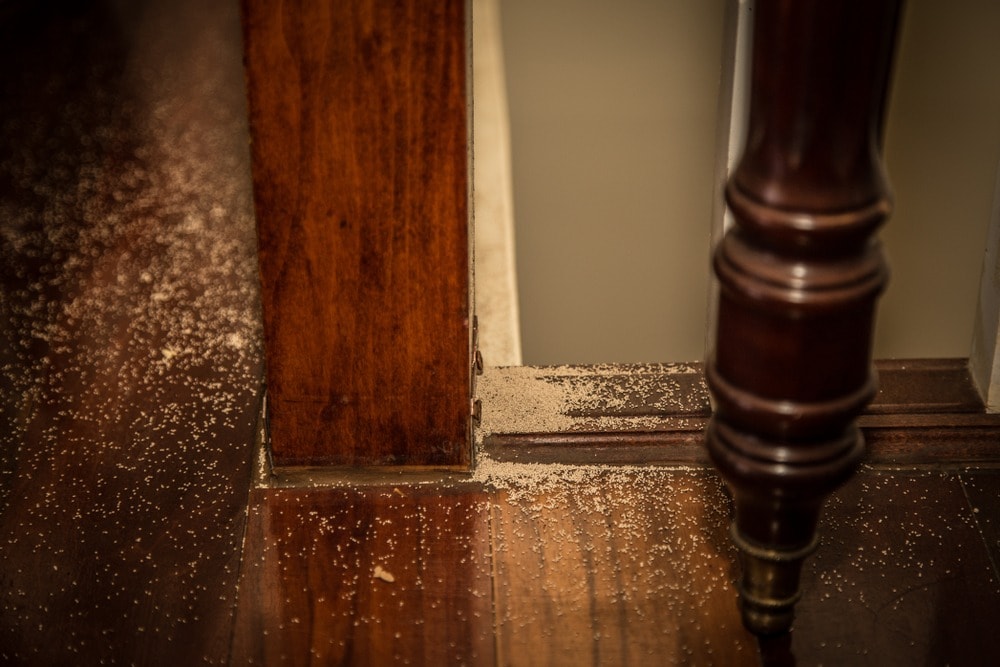
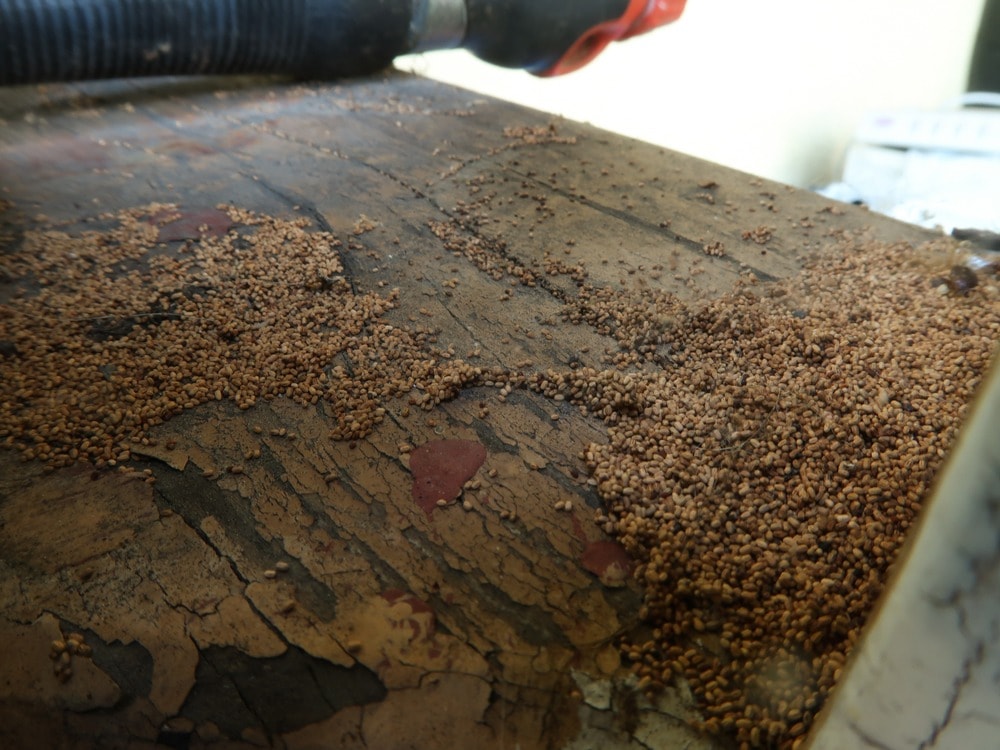
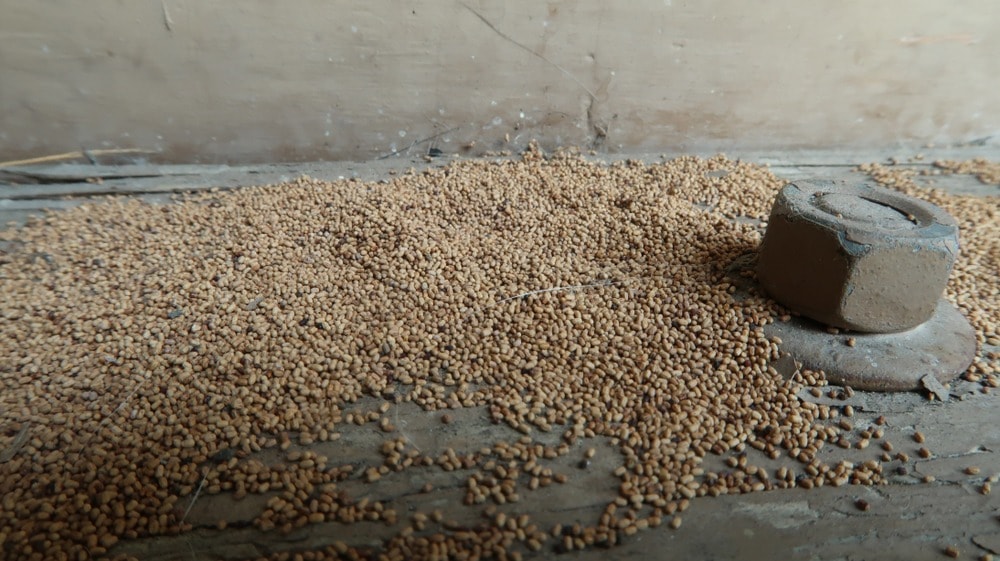
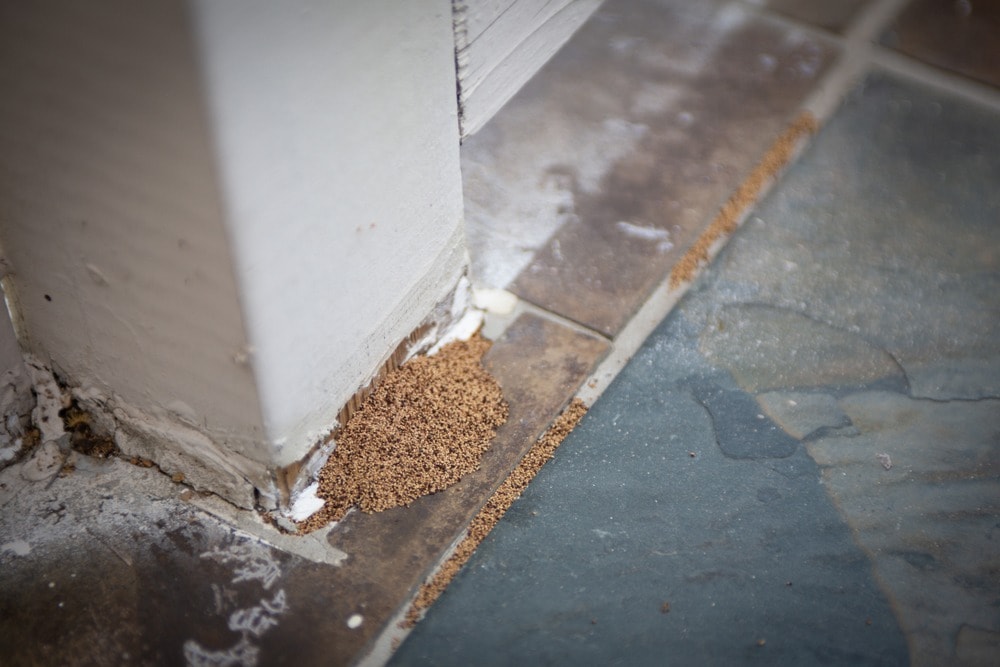
Drywood termite pellets are usually small, hard, oval-shaped, and may have rounded ends with tiny ridges or concave sides. To the naked eye, they often look like piles of sand, sawdust, pepper, coffee grounds, or tiny wood-colored grains.
What Do Termite Droppings Look Like?
Termite droppings usually appear as small piles of pellets near the wood where termites are active. The color can vary from beige to tan, reddish brown, dark brown, or almost black, depending on the wood the termites are eating.
Common visual signs include:
- tiny hard pellets instead of soft powder;
- small piles beneath holes in wood;
- grains that look like sand, sawdust, or coffee grounds;
- pellets near windowsills, baseboards, door frames, furniture, attics, or crawlspaces;
- new droppings appearing again after cleaning.
Not sure if that pile is termite frass? This quick visual guide shows what drywood termite droppings actually look like and what they mean.
Termite Droppings Pictures
Use the pictures below as visual references. Frass can vary in color and location, so compare the shape, texture, and where the pellets appear.

Where Do Termites Leave Droppings?
Drywood termites push frass out of small openings called kick-out holes. These holes allow the colony to clear waste from the galleries inside the wood.
You may find termite droppings in or near:
- windowsills and door frames;
- baseboards and trim;
- attics and roof framing;
- crawlspaces;
- basements;
- wooden furniture;
- isolated corners of rarely used rooms;
- storage areas;
- under or near damaged floorboards;
- behind furniture or appliances.
Frass may also be hidden under carpet or furniture if the infested wood is not exposed. If droppings keep returning to the same spot after cleaning, inspect the wood directly above or nearby.
Termite Droppings vs Sawdust vs Carpenter Ant Frass
Termite droppings are often confused with sawdust, carpenter ant frass, or general debris. The difference matters because the treatment path changes depending on the pest.
| Material | What It Looks Like | Common Clue |
|---|---|---|
| Termite droppings / frass | Tiny hard pellets, sand-like grains, coffee-ground texture | Usually appears below kick-out holes in wood |
| Carpenter ant frass | Wood shavings mixed with insect parts and debris | Often messier and less pellet-like |
| Sawdust | Soft powder or shavings | Usually linked to recent drilling, cutting, repairs, or wood movement |
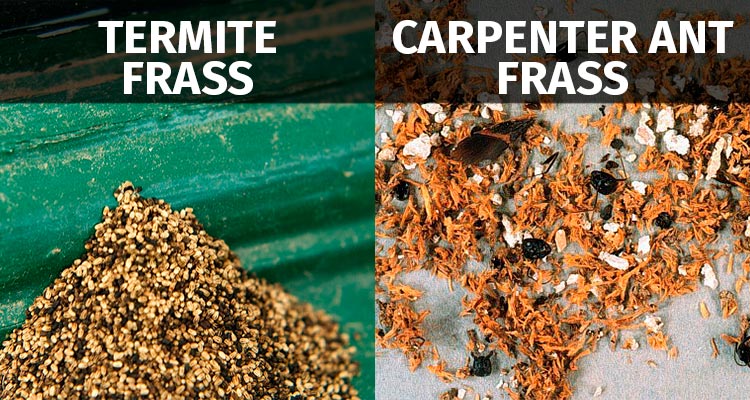
Carpenter ant frass can be mistaken for drywood termite frass, so close inspection matters. If the debris includes insect parts, larger wood shavings, or irregular chunks, carpenter ants may be involved. If the material is mostly uniform, hard pellets, drywood termites are more likely.
Are Termite Droppings Harmful?
Termite droppings are not usually dangerous to touch in the way some animal droppings can be. The bigger issue is what the droppings mean: termites may be actively feeding inside wood nearby.
You cannot simply clean up termite feces and assume the problem is solved. If fresh frass continues to appear, the colony may still be active inside the wood. The right next step is to inspect the area, identify the termite type, and choose the correct treatment.
Are Termite Droppings a Sign of Active Infestation?
Termite droppings can point to an active infestation, but one pile of frass does not always tell the full story. The key question is whether new pellets keep appearing.
Signs that activity may still be active include:
- droppings return after you clean them;
- you find tiny kick-out holes nearby;
- the wood sounds hollow or feels soft;
- you see drywood termite swarmers or wings;
- frass appears in more than one room or area.
If you only find an old pile once, the activity may be old, but you should still inspect the surrounding wood carefully.
How to Clean Up Termite Droppings
Cleaning up frass is fine, but do it in a way that helps you monitor the problem.
- Take a photo before cleaning so you can compare later.
- Look directly above and around the pile for kick-out holes or damaged wood.
- Vacuum or sweep the pellets.
- Mark the date you cleaned the area.
- Check the same spot again over the next few days or weeks.
If new pellets appear in the same place, assume the problem may still be active and investigate further.
Found Termite Droppings? Here Is What to Do Next
If you find frass in your home, the next step is to act based on where the droppings are and whether the area is accessible.
- Droppings near exposed unfinished wood → borate wood treatment can help protect accessible wood.
- Droppings near a wall, baseboard, or hidden area → termite foam or spot treatment may help if the active gallery can be reached.
- Droppings plus mud tubes → check our termite mud tubes guide, because subterranean termites may be involved. If the activity connects to the soil or foundation, compare Termidor SC vs Taurus SC soil treatment options.
- Droppings in multiple locations or near structural damage → review when to DIY and when to call a termite professional.
Need a complete treatment plan? Use our step-by-step guide to getting rid of termites and preventing them from returning to compare spot treatment, exposed-wood treatment, soil barriers, bait stations, and professional help before choosing a product.
Want to treat it yourself?
Termidor Foam for spot-treating frass in wall voids and galleries
If you can locate the active gallery behind the frass, Termidor Foam is a ready-to-use option for spot treatment. It expands to fill wall voids, tunnels, and galleries where termites are working, then collapses into a residue that termites carry back through the colony via the Transfer Effect. It uses fipronil, the same active ingredient trusted in professional liquid termiticides. Best for accessible spots near baseboards, trim, and wall voids where you can drill a small hole to reach the activity.
Not sure if it is termite frass?
Use inspection first when the signs are widespread
If droppings keep appearing, the wood sounds hollow, or you see pellets in multiple areas, the infestation may be active. Use the DIY-vs-pro guide and inspection-cost guide before spending money on the wrong product.
DIY vs Pro Termite Treatment Guide Termite Inspection Cost Guide
How to Prevent Termite Droppings From Coming Back
Prevention depends on the termite species, but these steps help reduce risk:
- Fix leaks and moisture problems around the home.
- Inspect exposed wood, attic framing, crawlspaces, and window/door trim regularly.
- Seal cracks and gaps where swarmers may enter.
- Remove or repair damaged wood when possible.
- Use borate treatment on accessible unfinished wood during repairs or remodeling.
- Watch for new frass after cleaning old piles.
- Get an inspection if droppings return or appear in multiple places.
FAQ
What do termite droppings look like?
Termite droppings usually look like tiny hard pellets, sand-like grains, coffee grounds, or sawdust-like piles near wood. Drywood termite frass often appears below tiny kick-out holes.
Are termite droppings the same as sawdust?
No. Termite droppings are fecal pellets, while sawdust is loose wood material from cutting, drilling, or wood damage. Termite pellets are usually harder and more uniform than sawdust.
Do termite droppings mean the infestation is active?
They can. If new droppings appear after cleaning, the infestation may still be active. If the pile is old and never returns, activity may have stopped, but the nearby wood should still be inspected.
Where do drywood termites leave frass?
Drywood termites often leave frass near windowsills, door frames, baseboards, attic framing, furniture, and other wooden structures where they are nesting.
Should I clean up termite droppings?
Yes, but take a photo first and check whether new pellets return. Cleaning helps you monitor whether the problem is ongoing.
Are termite droppings dangerous?
Termite droppings are not usually the main danger. The real risk is wood damage from the termite colony that produced them.
Conclusion
Termite droppings, or frass, are one of the clearest visual signs of drywood termite activity. They may look like tiny pellets, sand, sawdust, or coffee grounds near wood, windowsills, baseboards, furniture, or attic framing.
If you find frass, do not just clean it and move on. Take a photo, inspect the nearby wood, look for kick-out holes, and check whether new pellets appear. If droppings return, appear in multiple areas, or come with visible damage, start with the DIY-vs-pro decision guide or an inspection before choosing a treatment.