Bed Bugs: Identify the Signs, Understand Bites, Choose Effective Treatment
Bed bugs are among the most stressful household pests — they hide well, spread quickly, and often return if treatment is incomplete. Start here: confirm whether the bites and signs really point to bed bugs, then jump straight into the treatment guide that fits your infestation before it spreads.
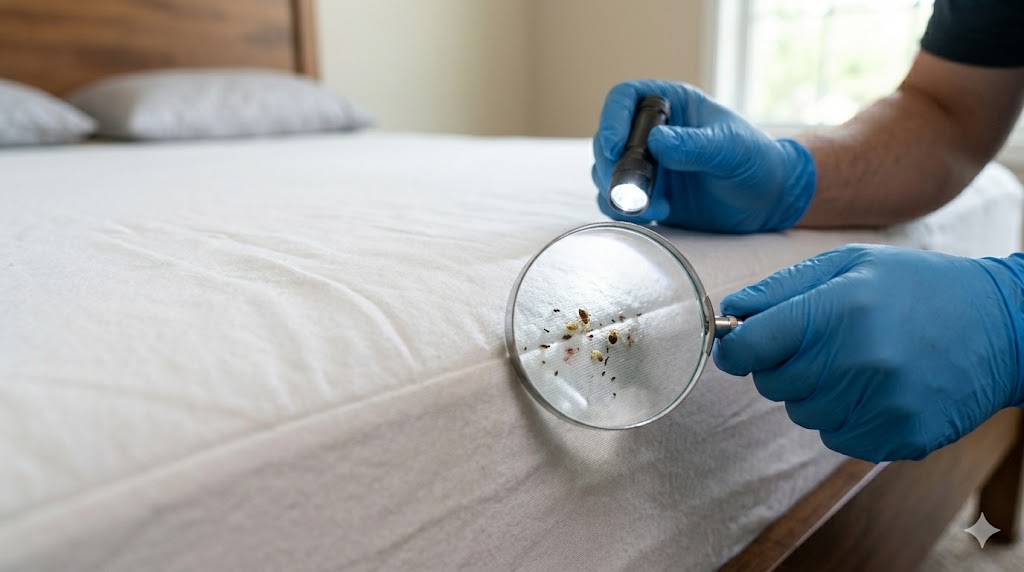
The first step is confirming that the problem is actually bed bugs. Bites alone are not enough — flea bites, mosquito bites, and skin reactions can look similar. Check the mattress seams, bed frame, and box spring for small dark spots, shed skins, or live insects, then use the comparison below.
Bed Bug Bites vs Mosquito Bites: How to Tell Them Apart
Both are itchy, red, and appear on exposed skin — but they behave very differently, and identifying the right culprit matters because the treatment is completely different. If bites appear in clusters or a straight line and you only notice them in the morning, bed bugs are the most likely cause.
Bed bug bites vs mosquito bites at a glance
Feature
Bed Bug Bites
Mosquito Bites
Pattern
Clusters or straight lines of 3-5 bites (“breakfast, lunch, dinner”)
Single random bites, rarely clustered
Location
Skin exposed during sleep — arms, shoulders, neck, back, legs
Any exposed skin, including face and hands; outdoors-prone areas
Appearance
Small red welts, often with a darker red center; flat or slightly raised
Puffy, raised round bumps; develop quickly within minutes
Timing
Itch develops hours to days after the bite
Itch appears within minutes of being bitten
When bitten
At night while sleeping; you do not feel it happen
Any time of day; mosquito often visible or audible
Healing time
1-2 weeks; may leave dark spots
A few days to a week
Strongest clue
Bites appear in a line or cluster, only when waking up
Random single bites after time spent outdoors at dawn or dusk
Another reliable signal: bed bugs leave physical evidence on your mattress and bed frame — small dark spots, shed skins, live insects in seams. Mosquitoes leave no trace except the bite itself. If you see bed bug signs along with the bites, the identification is confirmed.
All Bed Bug Guides
Filter by what you need right now: confirming the identification, understanding the bites, or getting rid of the infestation.
Woke up with itchy bites? Answer three questions about what you see. This is the fastest way to know whether you need a mattress inspection tonight or just a bottle of after-bite cream.
Bites alone are never enough — flea bites, mosquito bites, and skin reactions can look similar. Combine the bite pattern (clusters or straight lines noticed in the morning) with physical evidence: check mattress seams, the bed frame, and box spring for small dark spots, shed skins, or live insects. If both are present, the identification is confirmed.
Can I treat bed bugs myself?
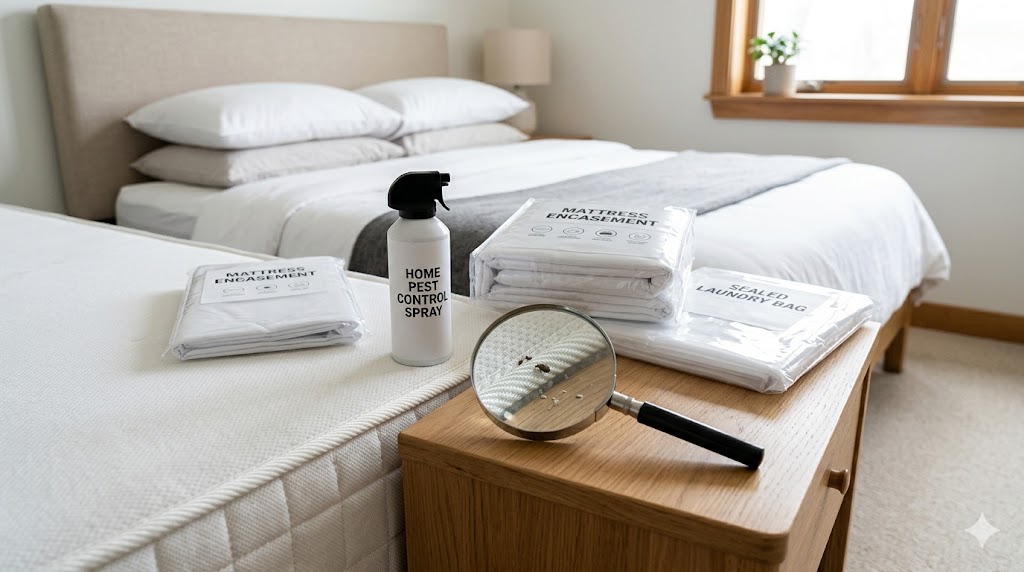
Small, early infestations may be manageable with DIY methods — a combination of inspection, cleaning, heat, mattress encasements, and targeted treatment products. Larger infestations usually require repeated treatment or professional help, because eggs hidden deep in furniture and walls survive a single pass.
Which bed bug treatment works best?
There is no single product that solves every bed bug problem. Most homeowners need a combination approach: thorough inspection, cleaning, heat treatment, mattress protection, and targeted sprays or powders. Start with the product comparison guide to match tools to your situation.
When should I call a professional?
DIY treatment may not be enough if bed bugs are spreading across multiple rooms, bites continue after repeated treatment, or eggs are hidden deep inside furniture and walls. In those cases, professional pest control may save time and reduce the risk of reinfestation.
Why do bed bugs keep coming back?
Bed bugs hide well and often return if treatment is incomplete. The most common causes are missed eggs in seams and cracks, untreated adjacent rooms, and reintroduction on luggage or furniture. Repeat treatment on schedule and keep mattress encasements on until activity has fully stopped.