Wasps

Wasps are among the most misunderstood insects in North America. Some species are aggressive stingers that defend their nests fiercely — others are solitary, nearly harmless, and quietly control garden pests all summer. Knowing which wasp is living on your property, when it’s active, and what actually keeps it away is the difference between a stress-free yard and a summer of stings.

This guide covers the wasp species most homeowners encounter, how they build nests, when they’re most dangerous, how to treat stings, and — most importantly — what actually works to control them without making the problem worse. It’s meant to be the starting point: for specific product picks and step-by-step removal guides, we link to detailed articles throughout.

In this article you will find show

Quick Answer: Best Wasp Sprays for US Homeowners

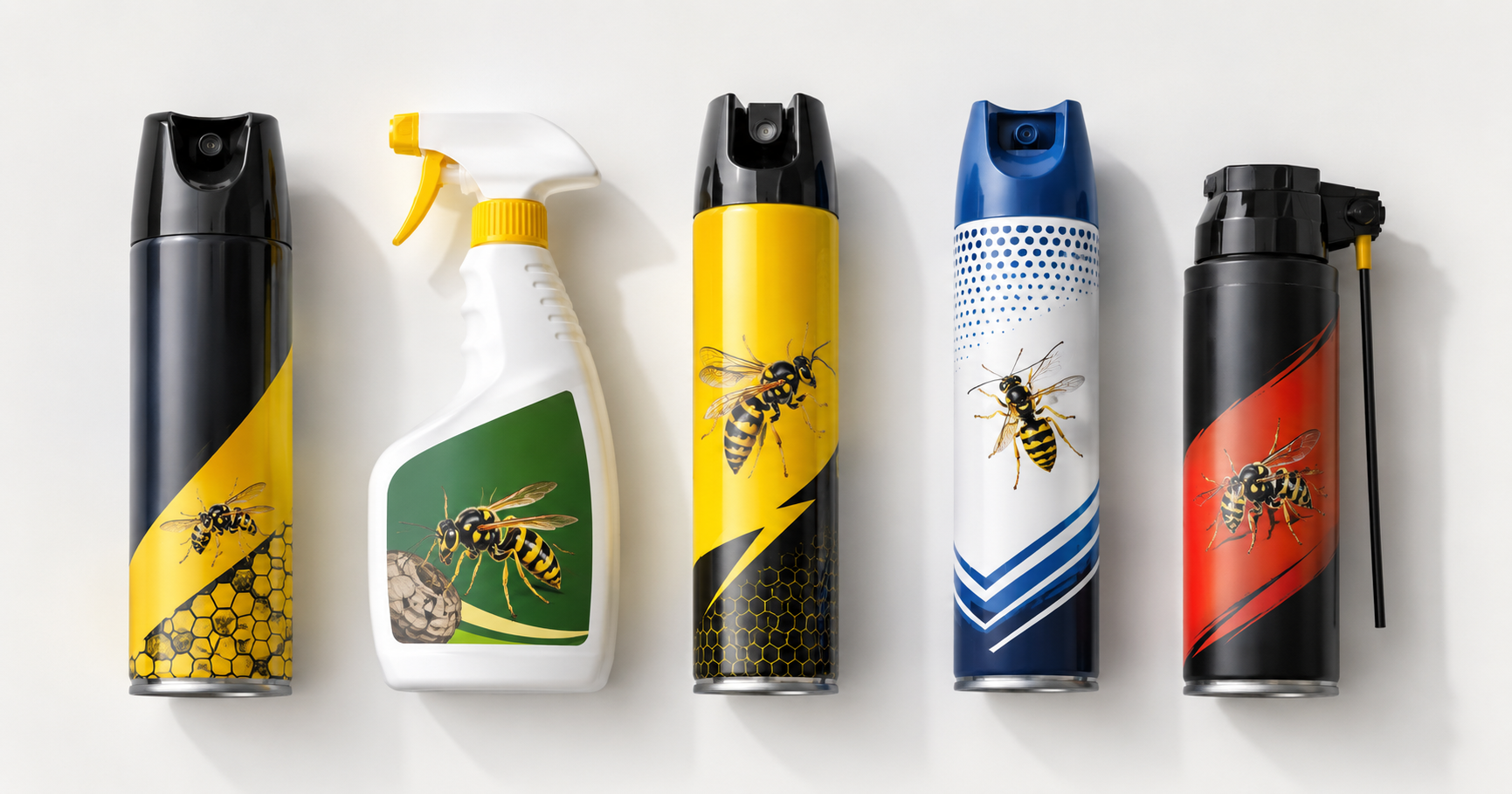
If you’ve found an active wasp nest on your house, in a tree, or near a doorway, you need a wasp-specific spray — regular bug spray won’t work at the right range or speed. Below are three top picks at different budgets and situations:

Best Budget Pick — Long-Distance Jet

Spectracide Wasp & Hornet Killer (18.5 oz, Twin Pack)

Jet stream reaches up to 27 feet so you can hit a nest under the eaves without standing under it. Twin pack means you’ve got a backup for the second nest you’ll probably find next week. The go-to choice for most US homeowners dealing with paper wasps or hornets.

Check Spectracide on Amazon →

Best for Nests — Foam Classic

Raid Wasp & Hornet Killer Foam (14 oz, Pack of 2)

Expanding foam coats the entire nest and traps wasps inside, killing them as they try to escape. Essential for yellow jacket nests in wall voids or ground holes where you can’t see the colony. Two cans is the right amount for most homeowner jobs.

Check Raid Foam on Amazon →

Best Natural — Pet & Family Safe

Wondercide Wasp & Hornet Killer (Essential Oils, 2-Pack)

Plant-based formula made with cedarwood and peppermint essential oils. Designed for households with pets and small children who play outside near the nest area. Best for paper wasps and small visible nests — less effective on hidden yellow jacket colonies.

Check Wondercide on Amazon →

For a full comparison of 5 wasp sprays including foam alternatives and professional-grade pyrethrin formulas — plus the step-by-step safety protocol that keeps you out of the ER — see our Best Wasp Spray for Home (2026) guide.

Prices and availability change frequently — click through to Amazon for current pricing. PestsGuide.com earns from qualifying purchases (Amazon Associates).

Wasps vs. Bees vs. Hornets: Quick Differences

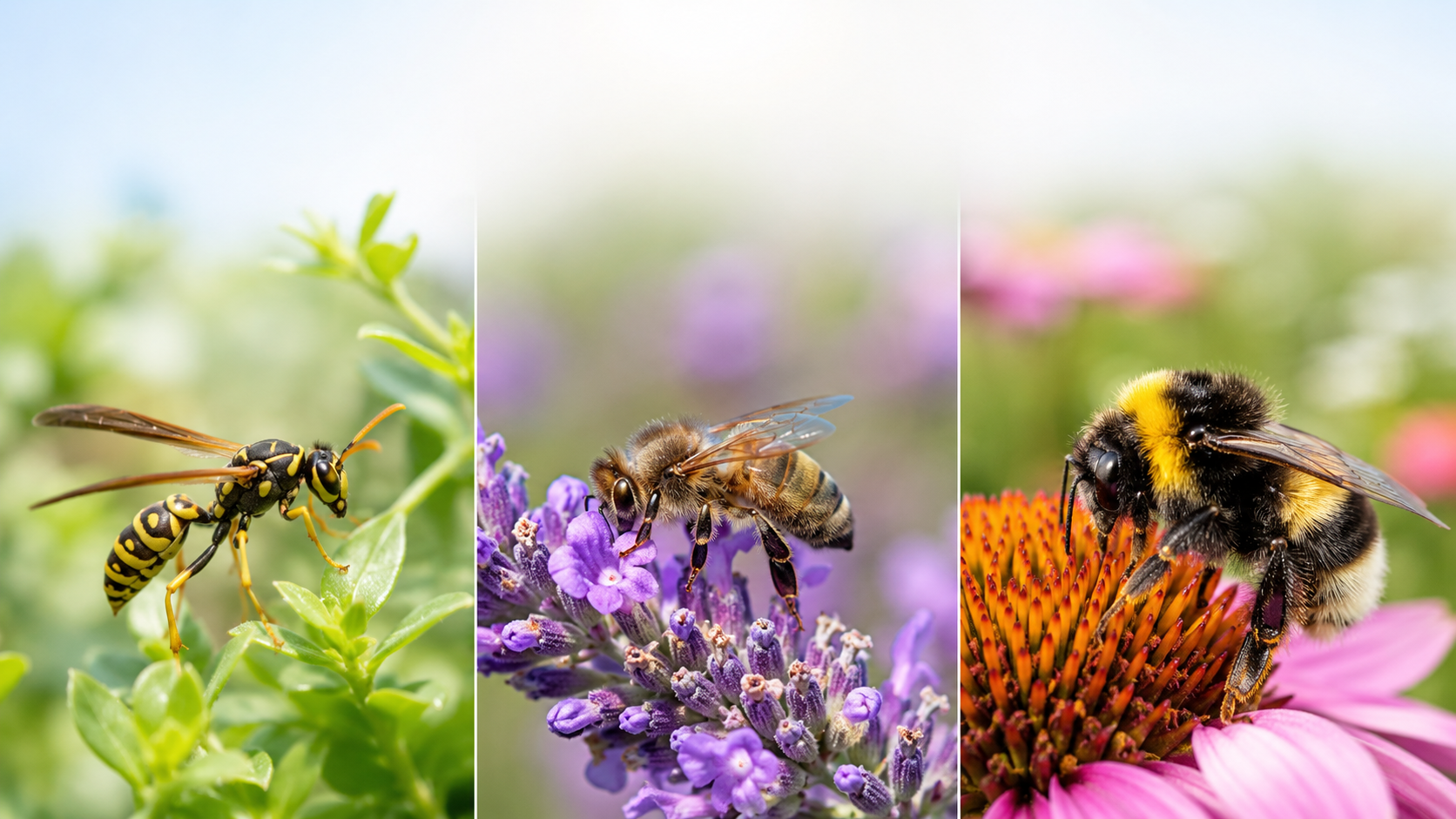
Before deciding what to do about an insect on your property, make sure it’s actually a wasp. Confusing wasps with bees or hornets leads to the wrong treatment — and killing beneficial pollinators unnecessarily. Here’s how to tell them apart at a glance (for a more detailed identification walk-through, see our wasps, bees and bumblebees comparison guide):

FeatureWaspsBeesHornets
BodySlim, smooth, defined “waist”Chunky, hairy, roundedLarge wasp — up to 1.5 inches
ColorBright yellow/black or reddish-brownGolden-brown, muted stripesBlack & white or black & brown
NestOpen paper combs (eaves, branches)Wax combs in cavitiesLarge enclosed paper “footballs”
DietInsects (larvae) + sugar (adults)Nectar and pollen onlyInsects, mainly other wasps & bees
StingCan sting many timesOnce, then diesMultiple, more painful
AggressionModerate — defensive near nestLow — sting only if threatenedHigh — very territorial

Rule of thumb: if it’s slim, shiny, and buzzing around your soda can — it’s a wasp (usually a yellow jacket). If it’s fuzzy and hopping between flowers — it’s a bee, leave it alone. If it’s abnormally large with a striking black-and-white pattern — it’s a hornet (usually a bald-faced hornet in North America). Bees are federally-recognized pollinators; killing a bee nest that isn’t causing harm is both unnecessary and, for honey bees, sometimes regulated.

Common Wasp Species Around US Homes

There are more than 4,000 wasp species in North America, but only a handful regularly cause problems around homes. Here are the ones you’re most likely to encounter — and how to recognize each.

Paper Wasps (Polistes spp.)

Slender, reddish-brown or dark with yellow markings, long legs that dangle in flight. Build the classic open, umbrella-shaped paper nest — usually under eaves, deck railings, porch ceilings, or inside grills that haven’t been used in a while. A mature nest holds 20–75 workers. Not particularly aggressive unless the nest is disturbed, but the sting is painful (rated 3.0 on the Schmidt Sting Pain Index — the same as a honey bee). For a closer look at how paper wasps construct their nests step by step, see our guide to paper wasp nest construction.

Yellow Jackets (Vespula and Dolichovespula spp.)

Short, stocky, bright yellow and black with sharp banded markings. The wasp responsible for most human stings in the US. Build large colonies (2,000–5,000 workers by late summer) inside wall voids, attics, rodent burrows, or under sheds. Attracted to sugary drinks, meats, and trash — the “picnic wasp” you see at every summer barbecue. Highly defensive; can chase intruders 20+ feet from the nest and sting repeatedly. Peak aggression in August and September when food sources dwindle.

Bald-Faced Hornets (Dolichovespula maculata)

Actually a yellow jacket, not a true hornet — but usually classified separately because of size and behavior. Large (¾ inch), striking black-and-white pattern. Build the football-shaped gray paper nest hanging from tree branches, eaves, or utility poles, often 10+ feet off the ground. Very aggressive if the nest is threatened, but generally leave people alone otherwise. Nests should not be removed by homeowners — hire a professional.

European Hornets (Vespa crabro)

The only true hornet in North America. Large (1–1.4 inches), reddish-brown with yellow abdomen. Nest inside hollow trees, wall voids, or attics. Active at night — often the wasp bumping against your porch light after dark. Less aggressive than yellow jackets or bald-faced hornets, but capable of a very painful sting. Not to be confused with the “murder hornet” (Asian giant hornet), which is a separate invasive species mostly seen in the Pacific Northwest.

Mud Daubers (Sceliphron and Chalybion spp.)

Long, slim, with a very thin waist (petiole) between thorax and abdomen. Metallic blue-black or black-and-yellow. Solitary — no colony, no defensive swarm. Build small, tube-like mud nests on walls, in sheds, under bridges. Almost never sting humans. Actually beneficial — they hunt spiders, including black widows, to feed their larvae. If you find a mud dauber nest and it’s not in your way, leave it.

Cicada Killers (Sphecius speciosus)

Huge (up to 2 inches), rusty red and black, terrifying appearance — but almost harmless to humans. Solitary ground-nesters that dig burrows in sandy soil or lawns. Males are territorial and will dive at intruders but have no stinger. Females can sting but almost never do unless grabbed. If you see large wasps hovering over bare patches of lawn in July–August, these are usually cicada killers, and no action is needed.

Yellow jacket wasps on a wooden surface — the most common stinging wasp in US homes

How Wasps Build Their Nests

Wasp nests are engineering marvels made from surprisingly simple materials. Understanding what a nest is made of and where it’s built helps identify the species and predict how the colony will behave.

Paper Nests

Paper wasps, yellow jackets, and hornets all make paper — by chewing weathered wood fibers (fences, dead branches, deck rails) and mixing them with saliva. The result is a lightweight, water-resistant material that looks and feels like gray cardstock. A single queen starts the nest alone in spring, building a few cells and laying eggs. Once the first workers hatch, they take over construction, expanding the nest through summer.

Mud Nests

Mud daubers collect wet mud from puddles, ponds, or damp soil and shape it into small tube-like chambers on walls, in sheds, under bridges, or inside garages. Each tube holds a single egg with a paralyzed spider (food for the larva). Old mud dauber nests are often reused by other insects — including bees.

Ground and Cavity Nests

Yellow jackets, in particular, often nest underground in abandoned rodent burrows, old stumps, or the hollow spaces of retaining walls. From the outside you may see only a small hole in the lawn with wasps flying in and out — but the colony below can be the size of a basketball. This is the most dangerous nest type for homeowners because you often don’t know it’s there until you mow over it.

Nest Size by Season

A wasp nest starts with a single queen in April or May, holds maybe 20 workers by June, 200 by July, and can peak at 2,000–5,000 in August or September (depending on species). By October, the nest collapses — the workers die off, and only newly mated queens survive to overwinter. Old nests are almost never reused the following year, though the location may attract new queens.

Paper wasp nest hanging under a wooden eave

What Attracts Wasps to Your Yard

Wasps don’t visit your property at random. They’re drawn by specific attractants — and reducing those cuts the problem at the source. In roughly the order of importance:

  • Sugary foods and drinks. Especially in late summer, when natural food is scarce. Sodas, sweet tea, ripe fruit on the ground, hummingbird feeders, open trash cans.
  • Meat and protein. Early in the season, workers hunt insects to feed larvae — but they’ll also gladly take pet food, uncovered grill scraps, or dropped chicken at your barbecue.
  • Water sources. Bird baths, pool edges, leaky spigots, pet water bowls. Wasps drink and also use water to soften wood pulp for nests.
  • Shelter cavities. Wall voids, attic vents, unused chimneys, ground burrows, hollow deck posts. If a queen finds a good spot in April, you have a nest by June.
  • Bright colors and floral perfumes. Wasps investigate bright yellows, whites, and floral-scented lotions or shampoos. Not a nesting cue, but a reason a specific person keeps getting stung when others don’t.
  • Existing wasp pheromone traces. A previous nest at the same location, even removed, can attract next year’s queens. Repainting or scrubbing the spot with soapy water reduces this.

Wasp Season: When to Expect Trouble

Wasp activity follows a predictable annual cycle in North America. Knowing what stage you’re in tells you what action to take:

SeasonWhat’s HappeningWhat to Do
April–MayQueens emerge from hibernation, scout nest sites, build first cells aloneBest time to prevent — inspect eaves, seal wall gaps, remove old nests
JuneFirst workers hatch; nests visibly growSmall nests (grape-sized) can be treated by homeowners at dusk
JulyColony expands rapidly; foraging pressure growsDeploy hanging traps around outdoor eating areas
August–SeptemberPeak population and peak aggression; sugar-craving workersMost stings happen now — cover food/drinks outside, hire pro for large nests
OctoberColony declines; workers die off; queens leave to overwinterFirst hard freeze effectively ends the season
November–MarchOnly fertilized queens survive, hidden in wood piles, attics, shedsRemove abandoned nests, seal entry points before spring

Wasp Stings: First Aid and When to Worry

Unlike bees, wasps do not leave their stinger behind — one wasp can sting many times. About 3% of adults have a systemic allergy to wasp venom, and roughly 60 Americans die each year from insect sting anaphylaxis. Knowing what to do in the first 30 minutes matters.

Normal Reaction (95% of stings)

  1. Move away from the sting site. Wasp venom releases an alarm pheromone that attracts nestmates.
  2. Wash with soap and water. Reduces infection risk.
  3. Apply a cold pack for 20 minutes. Reduces swelling and pain.
  4. Take an oral antihistamine. Benadryl or a store-brand equivalent reduces itching and localized swelling.
  5. Apply hydrocortisone cream or a baking soda paste to the sting site if itching persists.

Normal pain lasts 1–2 hours; localized redness and mild swelling can last 2–3 days.

Large Local Reaction (2–10% of stings)

Swelling spreads beyond the immediate sting site — for example, a sting on the hand causes the whole forearm to swell over 24–48 hours. Not life-threatening but uncomfortable. Same first aid, plus consider a short course of oral antihistamine (24–48 hours) and see a doctor if swelling covers a joint or restricts movement.

Systemic Reaction — Call 911

Anaphylaxis is a medical emergency and can develop within minutes. Call 911 immediately if the person shows any of these signs:

  • Difficulty breathing, throat tightness, or wheezing
  • Swelling of face, lips, or tongue
  • Rapid, weak pulse or drop in blood pressure
  • Dizziness, confusion, or loss of consciousness
  • Widespread hives away from the sting site
  • Nausea, vomiting, or diarrhea combined with the above

If the person has a prescribed EpiPen (epinephrine auto-injector), use it immediately — into the outer thigh — and still call 911. A single EpiPen dose can wear off before help arrives, and a second dose may be needed.

⚠️ People at higher risk: Anyone with a known wasp/bee allergy, previous large local reactions, heart or breathing conditions, or those on beta-blockers should carry an EpiPen during summer months. If you’ve been stung more than 10 times at once, seek medical evaluation even without systemic symptoms — venom toxicity itself can cause kidney or liver strain at high doses.

Are Wasps Beneficial? (Yes — Mostly)

It’s tempting to see wasps as pure nuisance insects, but their ecological role is significant enough that entomologists actively discourage blanket extermination. Here’s what wasps do for you when they’re not stinging you:

  • Pest control. A single yellow jacket colony consumes tens of thousands of insects per season — caterpillars, flies, spiders, aphids. Farms in Brazil and New Zealand actively introduce paper wasps as biocontrol for crop pests.
  • Pollination. Adult wasps drink nectar and inadvertently move pollen between flowers. Fig trees, for example, are entirely pollinated by fig wasps — no wasps, no figs.
  • Cleanup crew. Wasps scavenge dead insects and carrion, breaking down organic material that would otherwise attract other pests.

The practical takeaway: if a nest isn’t near a doorway, walkway, or play area, and no one in the household is allergic, leaving it alone is often the right call. The colony dies off in October anyway, and next year’s queens rarely return to the same spot.

Effective Wasp Control Strategies

Control works in three tiers: prevention (before there’s a nest), trapping and deterrence (early season), and direct nest treatment (mid-to-late season). Skip prevention and you’ll be doing nest treatment every year.

Prevention — the Highest ROI Step

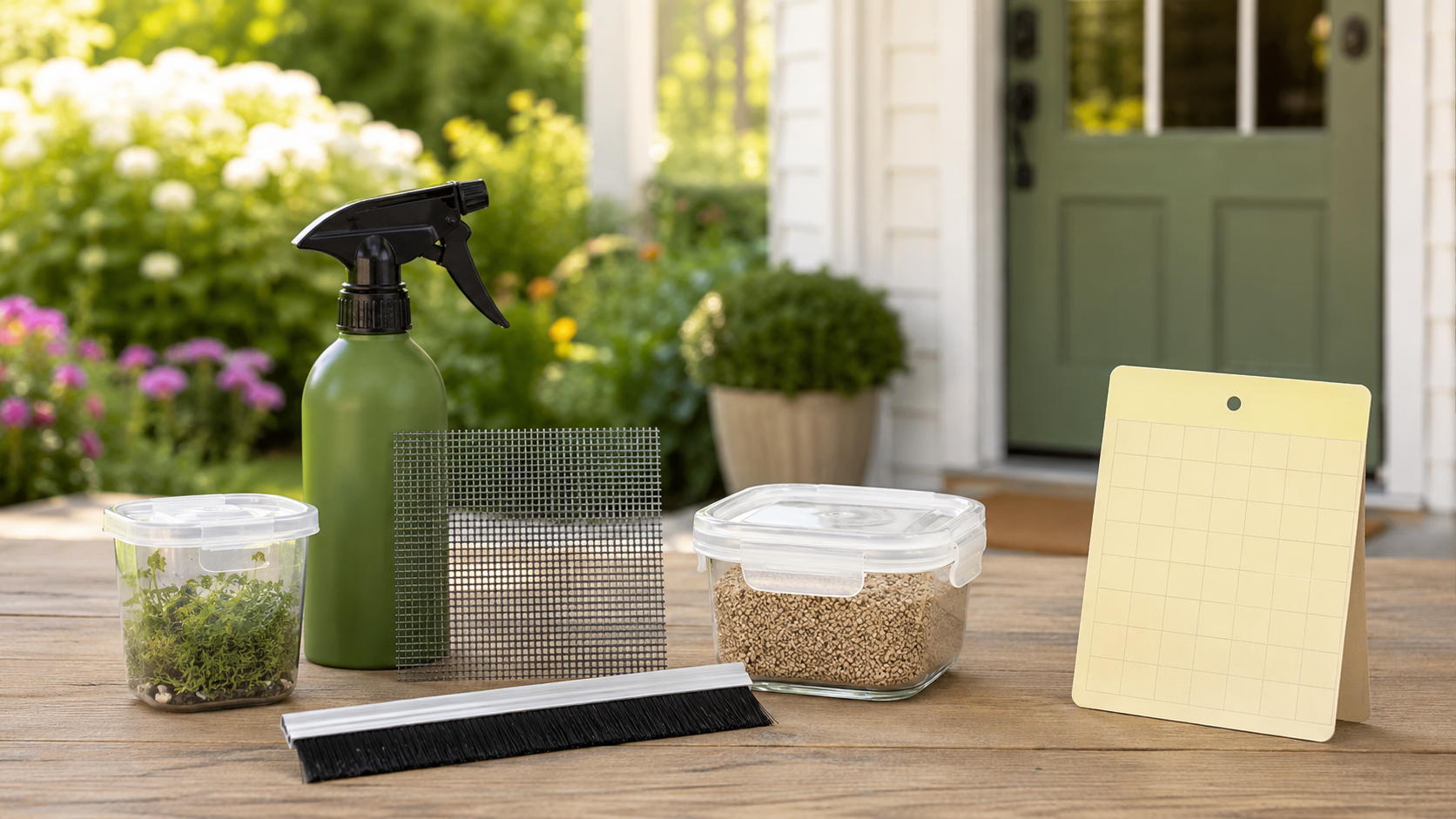
  • Walk the exterior of your home in early April. Look under eaves, deck railings, playhouse roofs, and inside grills, mailboxes, and unused pipes. Remove any last year’s nests (empty at this point) and hose down the spot.
  • Seal cracks and gaps in siding, around utility penetrations, and at attic vents with steel wool or foam sealant.
  • Screen chimney openings and attic vents with ¼-inch hardware cloth.
  • Keep outdoor trash cans tightly lidded through summer.
  • Fill in old rodent burrows in the lawn — a common yellow jacket nesting site.

Traps and Deterrents

Hanging wasp traps (baited with sugar and vinegar or commercial lures) placed 20+ feet from the areas you actually use reduce foraging pressure. Fake nests — paper lantern-style decoys — exploit territorial behavior and can discourage new queens from founding a nest nearby. Both work best in April–June, before a colony is established.

Direct Nest Treatment

Small paper wasp nests (fewer than 50 workers, no larger than a golf ball) are manageable for careful homeowners. Approach at night or before dawn — wasps are inactive, back in the nest, and can’t see you clearly. Use a long-range spray, aim at the nest entry, and retreat immediately. Wait 24 hours before removing the nest itself. For anything larger, hidden, at height, or involving yellow jackets or hornets, hire a professional. The cost of a pro ($150–$400 typically) is far less than the cost of an ER visit or a fall from a ladder.

Homeowner spraying a wasp nest under the eave using a long-range aerosol

See Also: Deep-Dive Guides

When to Call a Professional

Some wasp situations aren’t safe DIY jobs — no matter how confident you are. Call a licensed pest control company if:

  • Anyone in the household has a sting allergy
  • The nest is larger than a softball
  • The nest is above ladder height, in a wall void, chimney, or attic
  • It’s a yellow jacket ground nest — these can have thousands of workers
  • You’ve attempted a treatment already and the colony survived (they’re now defensive)
  • It’s a bald-faced hornet or European hornet nest

Professional treatment for a single nest usually runs $150–$400 depending on nest size, height, and location. See our comparison of licensed pest control services to find providers in your state.

Frequently Asked Questions

What’s the difference between a wasp and a hornet?

All hornets are technically wasps — a subgroup. In North America, the only true hornet is the European hornet (introduced in the 1800s). What Americans call “bald-faced hornets” are actually large yellow jackets. Hornets tend to be larger, build enclosed football-shaped nests (versus wasps’ open combs), and are usually more aggressive when their nest is threatened. Behavior and nest style matter more than the label — treat any large stinging colony with caution.

When do wasps die off each year?

In the northern US, wasp colonies die off with the first hard freeze — typically late October or November. In the South, activity can continue through December in mild years. Only newly mated queens survive the winter, hidden in wood piles, attics, and leaf litter. The nest itself is empty by winter and almost never reused the following year.

Should I kill wasps or leave them alone?

If the nest is more than 20 feet from doorways, play areas, and outdoor eating spots — and no one in the household is allergic — leaving the colony alone is often the right call. Wasps are effective predators of caterpillars and other garden pests. If the nest is near daily traffic or someone is allergic, treat it or hire a pro. Never treat a mud dauber nest — those are solitary, harmless wasps that hunt spiders.

What time of day should I spray a wasp nest?

Dusk or before dawn. Wasps are back in the nest, cold and sluggish, and cannot see red light well. Wear long sleeves, long pants, closed shoes, and eye protection. Use a spray with a range of at least 15 feet so you can hit the nest from a safe distance. Spray at the entry hole, empty the can if the nest is large, and retreat immediately. Wait 24 hours before removing the nest itself.

Why do wasps keep coming back to the same spot?

Two reasons. First, pheromone traces from a previous nest attract new queens the following spring. Scrubbing the site with soapy water and repainting reduces this. Second, the location itself may be genuinely ideal — sheltered, warm, near water and food. If the same spot attracts nests year after year, physically block access with caulk, foam, or hardware cloth in early spring, before queens arrive.

Are wasps attracted to certain colors or scents?

Yes. Wasps investigate bright yellow, white, and floral patterns — the colors of flowers they naturally forage. Floral-scented perfumes, shampoos, and lotions also draw their attention. Wearing muted colors (khaki, gray, dark blue) and avoiding sweet-smelling personal care products during peak wasp months (August–September) reduces your chance of being stung.

How much does professional wasp nest removal cost?

In the US, a single-nest removal typically runs $150–$400. Price depends on nest size, height, location (wall voids and chimneys cost more), and species (bald-faced hornet nests at height often run $300+). Some pest control companies charge less if you already have a service contract. Get quotes from at least two providers before hiring, and confirm that the price includes a return visit if any wasps survive the initial treatment.

Are wasps dangerous to pets?

Yes, especially to dogs, which often snap at flying insects. A single sting to the face or paw is uncomfortable but usually not dangerous. Multiple stings — for example, a dog that disturbs a ground nest — can cause severe reactions, especially in small breeds. Signs of a dangerous reaction include swelling of the face, difficulty breathing, vomiting, or collapse. Call a veterinarian immediately in those cases. Keep pets away from any suspected nest until it’s been treated.

When the nest is too risky to DIY

Find licensed wasp removal pros near you

Some wasp nests are not DIY jobs — anyone in the household with a sting allergy, nests larger than a softball, nests above ladder height, hidden yellow jacket colonies inside walls or chimneys, or any situation where a previous spray attempt failed and the colony is now defensive. A botched DIY attempt (multiple stings, ladder falls, wasps entering living spaces) is much more costly than calling a pro.

✓ Local licensed pros · ✓ Emergency same-day service common · ✓ Free quote comparison

Compare Pest Control Services →

Final Thoughts

Most wasp problems around a home resolve with two things: identifying which species you’re actually dealing with, and acting at the right point in the season. A paper wasp nest under an eave in June is a 5-minute homeowner job at dusk with a long-range spray. The same nest ignored until September becomes a 2,000-strong yellow jacket colony that needs a professional. Prevention in April costs nothing; treatment in August costs $200–$400 and a lot of stress.

If you’ve read this far and still aren’t sure what to do next, the two most useful follow-ups are our comparison of wasp sprays for home use (if you want to handle it yourself) and our guide to licensed pest control services (if you don’t).

Related Reading


RECOMMENDED