
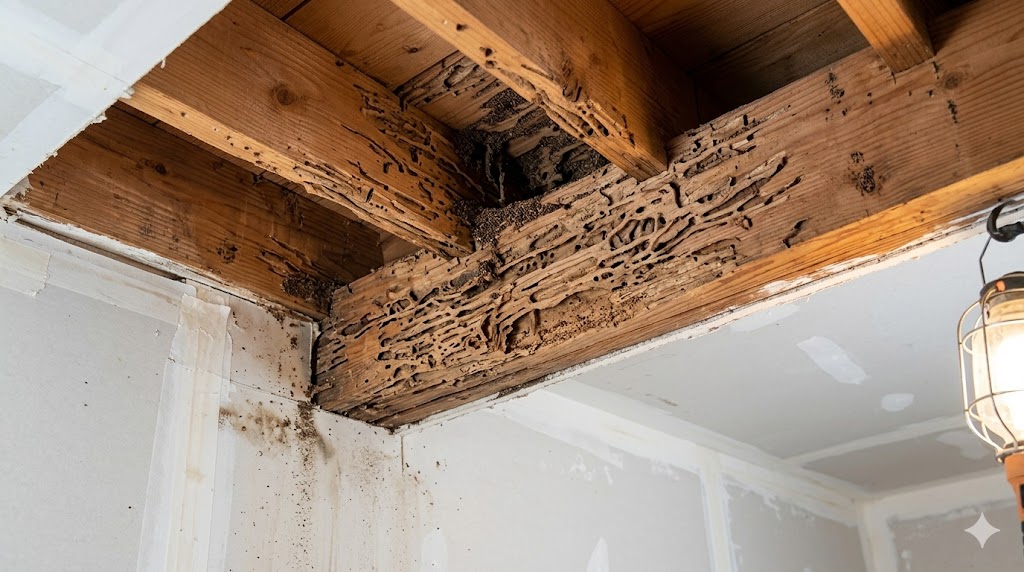
Termites may be tiny, but as a colony they can cause serious structural damage. In the United States, termites are responsible for billions of dollars in property damage every year, and many homeowners do not realize there is a problem until repairs become expensive.
Termites do not just damage the surface of wood. Over time, they can weaken important parts of a house, including:
- wall studs;
- ceiling joists;
- support posts;
- floor joists;
- support beams;
- subflooring, trim, and window frames.
To reduce the cost of termite damage, early detection is critical. The problem is that termite activity often stays hidden inside wood, walls, floors, and structural spaces for a long time. If you are not sure what termite damage looks like, this guide will help you recognize it before it gets worse.
Affiliate and referral disclosure: PestsGuide may earn a commission from qualifying purchases or referrals through links in this article. This does not change your price or our editorial recommendations.
- Visible local termite activity in wood or wall voids → compare spot treatment options
- Mud tubes or soil-related activity → check mud tubes and compare bait stations
- Drywood termite damage in exposed wood → consider a borate wood treatment during repairs
- Damage in multiple rooms or structural wood → start with the termite inspection cost guide and the termite damage repair guide
Important: Do not repair or cover damaged wood until you know whether termites are still active. Replacing wood without treating the infestation can hide the problem and allow damage to continue behind the repair.
What Does Termite Damage Look Like?
Termite damage can look different depending on the termite species, how long the colony has been active, and where the damage is located. In many homes, termite damage is first mistaken for water damage, old wood, peeling paint, or normal settling.
Common signs include:
- wood that sounds hollow when tapped;
- thin, papery, or blistered wood surfaces;
- bubbling paint or warped wall surfaces;
- sagging floors, ceilings, or trim;
- mud tubes near the foundation or crawlspace;
- dry pellets or frass near wood;
- discarded wings or termite swarmers near windows and doors.

- Termite damage often comes with hollow wood, galleries, mud, frass, or nearby discarded wings.
- Water damage often follows leaks, stains, swelling, or soft areas without mud tubes or termite pellets.
- When both are possible, inspect before painting, patching, or replacing the wood.
Common Places Termite Damage Appears
Termite damage may appear anywhere termites can reach wood, cellulose material, or hidden structural spaces. The most important clue is not just where the damage appears, but whether nearby signs point to an active infestation.
Ceilings, Joists, and Upper Framing
Ceiling damage may begin when termites gain access to roof joists, rafters, or other structural wood above the living space. As the damage spreads, it can sometimes lead to visible staining, sagging, bubbling paint, or weakness in the ceiling area.
Ceiling damage can also come from leaks, so do not rely on appearance alone. Look for surrounding clues such as mud tubes, frass, hollow wood, discarded wings, or repeated activity in the same area.
Foundation Areas and Crawlspaces
Damage near the foundation often points to subterranean termites. These termites usually travel from the soil into the structure through cracks, wood-to-ground contact, crawlspaces, or hidden entry points.
If you see mud tubes nearby, treat it as a serious warning sign. Mud tubes can mean termites are actively moving between the soil and the wood they are feeding on.
Walls, Baseboards, and Trim
Wall damage can show up as bubbling paint, warped surfaces, weakened paneling, soft trim, or hidden hollow areas behind drywall or baseboards. In many cases, the outside looks only slightly damaged while the wood behind it is already affected.
If the wall also has moisture stains, do not assume it is only water damage. Termite activity and moisture problems can overlap, especially near plumbing, bathrooms, exterior walls, basements, and crawlspaces.
Windows, Doors, and Wooden Frames
Termites can damage window frames, door frames, sills, and nearby trim. Sticking windows or warped doors may be caused by humidity, settling, or moisture, but termite activity can also distort wood as galleries expand inside the frame.
If frames become difficult to open and you also notice wings, frass, hollow wood, or bubbling paint, inspect the area more carefully.
Signs of Subterranean Termite Damage
Signs of subterranean termite damage are often missed at first because these termites work below the wood surface or inside structural spaces.
Some of the most common warning signs include:
- mud tubes spreading from the soil to wood or concrete surfaces;
- mud-lined galleries or open channels in weakened lumber;
- winged termites near windows, doors, or light sources;
- discarded wings from termite swarmers;
- wood that looks water-damaged, swollen, buckled, or soft.
Subterranean termite damage is sometimes mistaken for water damage because it can cause swollen floors, buckling wood, sagging surfaces, or mold-like odors. The difference is that subterranean termites often leave soil, mud, or mud-lined channels behind.
Signs of Drywood Termite Damage
Drywood termites create galleries inside wood and gradually consume it from within. The outer surface may look thin, rippled, or mostly intact even when the inside has already been heavily damaged.
This kind of damage is often found in:
- antique furniture;
- trim and molding;
- window frames;
- doors;
- attic beams;
- walls and floors.
One of the strongest clues is frass, or dry termite pellets, near small kick-out holes. If you see hard pellets below wood, compare them with our guide to termite droppings.

Carpenter Ant Damage vs Termite Damage
Carpenter ants and termites can both damage wood, but they do it in different ways.
| Feature | Termite Damage | Carpenter Ant Damage |
| What they do to wood | Termites eat wood and other cellulose materials. | Carpenter ants tunnel through wood to build nests. |
| Gallery appearance | Often rough, layered, muddy, or following the wood grain. | Usually smoother, cleaner, and more polished inside. |
| Debris | May include mud, frass pellets, or damaged wood that looks hollowed out. | Often includes sawdust-like debris and insect fragments. |
| Risk | Can cause serious structural damage if activity continues. | Can damage wood over time, but usually does not consume wood as food. |
If you are not sure which pest caused the damage, do not guess from the wood alone. Look for surrounding clues: mud tubes, termite frass, ant trails, swarmers, discarded wings, or live insects.
Can Termite Damage Be Repaired?
Yes, termite damage can often be repaired, but treatment should come before cosmetic repair. The correct order is:
- Confirm whether termites are still active. Look for live termites, fresh mud tubes, new frass, swarmers, or worsening damage.
- Identify the termite type. Subterranean and drywood termites often need different treatment paths.
- Treat the active infestation. Do not simply cover damaged wood with paint, filler, or new trim.
- Repair or replace damaged wood. Severely weakened structural wood may need professional repair.
- Protect exposed wood during repairs. Borate treatment can help protect unfinished wood before it is covered again.
Small cosmetic damage may be handled with wood filler, sanding, or replacing trim after the infestation is treated. Structural damage to joists, beams, posts, subflooring, or load-bearing framing should be evaluated by a qualified contractor or pest control professional.
What Treatment Usually Matches the Damage?
- Visible local damage with active termites → spot treatment sprays and foams
- Damage linked to subterranean activity from the ground → compare soil treatment and bait stations
- Exposed damaged wood during repairs → borate wood treatment
- Widespread drywood termite damage → fumigation or professional treatment
- Damage in structural wood or multiple areas → use the termite inspection cost guide and the termite damage repair guide before covering or replacing wood
- Do not cover damaged wood too early. First confirm whether termites are still active.
- Plan treatment and repair together. Our termite inspection cost guide explains what an inspection may include.
- Repair after the infestation is controlled. Use the termite damage repair guide to decide what may be DIY-friendly and what needs a contractor.
Home Insurance and Termite Damage: Will It Be Covered?
In most cases, standard homeowners insurance does not cover termite damage. Insurance policies are usually designed to cover sudden and accidental events, while termite damage is considered preventable through maintenance, inspections, and treatment.
There are limited situations where related structural damage may be reviewed more closely, especially if another covered event contributed to the problem. But termite-related repairs themselves are usually the homeowner’s responsibility.
This is one reason why regular inspections and early response matter so much. If you think termites may already be active, our guide to termite inspection cost is a useful next step.
How to Prevent More Termite Damage
After treatment and repair, the next goal is to reduce the chance of new activity.
Helpful prevention steps include:
- fix leaking pipes, faucets, AC drain lines, and moisture problems;
- keep gutters clean and direct water away from the foundation;
- avoid wood-to-soil contact around decks, steps, fences, and siding;
- store firewood away from the house and off the ground;
- remove old stumps, scrap wood, and cellulose debris near the home;
- inspect crawlspaces, basements, and foundations regularly;
- consider bait stations, soil treatment, or annual inspections in high-risk areas.
For a broader prevention and treatment overview, see our guide on how to get rid of termites.
FAQ
What does termite damage look like?
Termite damage often looks like hollow wood, blistered surfaces, bubbling paint, sagging floors, warped trim, or wood that appears thin and papery. Subterranean termites may leave mud tubes, while drywood termites often leave hard pellets called frass.
How do I know if termite damage is old or active?
Fresh mud tubes, live termites, new frass, swarmers, discarded wings, or worsening damage suggest active termites. Old damage may remain unchanged, but it should still be inspected because termites may be hidden nearby.
Can I repair termite damage myself?
Small cosmetic damage, such as trim or surface wood, may be DIY-friendly after the infestation is treated. Structural damage to beams, joists, posts, subflooring, or load-bearing framing should be inspected by a professional.
Should I treat termites before repairing the damage?
Yes. Treat the active infestation first. Repairing or covering damaged wood before treatment can hide the problem and allow termites to keep damaging the structure.
Does homeowners insurance cover termite damage?
Usually no. Standard homeowners insurance normally does not cover termite damage because it is considered preventable through maintenance, inspection, and treatment.
Can termite damage make a house unsafe?
Yes. Severe termite damage can weaken floors, beams, joists, walls, posts, or other structural wood. If floors sag, wood crumbles, or support members look damaged, get a professional inspection before making repairs.
What should I do first if I find termite damage?
Do not cover it immediately. Look for signs of active termites, check nearby areas, compare mud tubes or frass, and get an inspection if the damage is structural, spreading, or found in multiple places.
Conclusion
Termite damage is not something homeowners should ignore. The longer termites stay hidden inside wood, walls, floors, and framing, the more expensive the repairs can become.
Learning what termite damage looks like gives you a better chance of catching the problem early. Watch for hollow wood, mud tubes, frass, swarmers, wall damage, sagging surfaces, and signs that resemble hidden moisture damage.
If you notice any of these warning signs, the best next step depends on what you find:
- mud tubes and soil-related activity → compare soil treatment and bait stations
- localized visible termites → review spot treatment options
- exposed wood during repair work → use borate treatment
- damage in multiple areas or structural wood → start with termite inspection cost and repair planning
The earlier you act, the better the chances of limiting damage and avoiding bigger repair costs later.
Related Reading
- 10 Signs of Termite Infestation Every Homeowner Should Know
- Termite Mud Tubes: What They Look Like and What to Do
- Termite Droppings: What Frass Looks Like and What to Do
- Subterranean Termites: Signs, Damage, Treatment, and Cost
- Drywood Termites: Signs, Damage, Treatment, and Cost
- Termite Inspection Cost: What Homeowners Should Expect
- Termite Damage Repair: Cost, DIY Fixes, and When to Hire a Pro
- Can I Treat Termites Myself or Do I Need a Professional?


I would like to thank you for the efforts you’ve put in writing this blog. Your article helped me to spot damage that termites made to my property early and to fix it quickly. Thanks once again
Dean, I’m glad to hear that you were able to avoid costly repairing from termites. You’re always welcome!