

Termites are one of the most damaging pests a homeowner can face. Most species hide underground or deep inside walls, floors, crawlspaces, or wooden framing, and they can quietly damage a home for years before the problem becomes obvious. One warning sign is much harder to miss: flying termites.
Flying termites are not a separate species. They are reproductive termites, also called swarmers or alates. Their job is to leave a mature colony, pair off, shed their wings, and start new colonies. Seeing them near your home can mean termite activity is nearby. Seeing them indoors is more serious.
In this guide, you will learn how to identify flying termites, how they differ from flying ants, what to do if you find them, and which treatment path usually matches the situation.
Affiliate and referral disclosure: PestsGuide may earn a commission from qualifying purchases or referrals through links in this article. This does not change your price or our editorial recommendations.
- Termites swarming inside the house → document where they appeared, vacuum visible swarmers, and inspect nearby walls, windows, baseboards, and wood.
- Termites swarming outside near the foundation → check for mud tubes, moisture problems, wood-to-soil contact, and consider termite bait stations.
- Flying termites plus mud tubes or damaged wood → compare mud tubes, termite damage, and inspection options.
- Activity near exposed structural wood → review borate wood treatment during repairs or renovation.
- Multiple swarms, repeated activity, or visible damage → compare termite inspection costs and decide whether the problem is still safe for DIY using our DIY vs professional termite treatment guide.
Important: If you see flying termites indoors, do not ignore them. Indoor swarmers usually mean there is already a mature colony in or near the structure, and the sooner you investigate, the easier and cheaper the problem may be to control.
Flying Termites: What Do They Look Like?
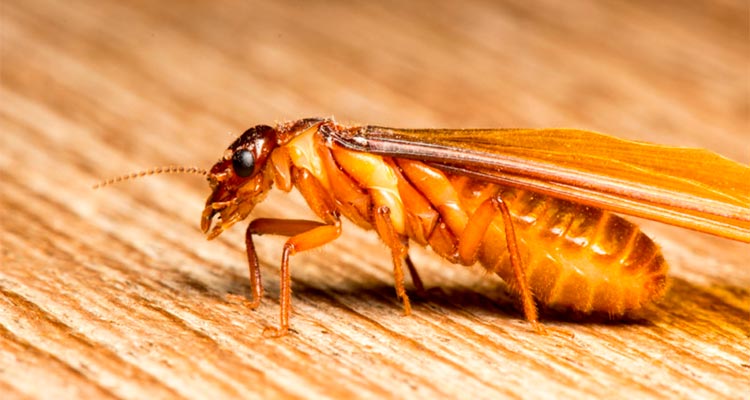
Flying termites are easier to identify once you know the three main features: wings, antennae, and body shape.
- Wings: termites have two pairs of long wings that are roughly equal in length.
- Antennae: termite antennae are straight, not bent or elbowed.
- Body: termites have a broad, straight waist instead of a narrow pinched waist.
Most flying termites measure about 1/4 to 3/8 inch long, though they can look larger because of their wings. Color varies by species. Swarmers may look dark brown, black, tan, beige, or pale.
The easiest clue is wing shape. If the insect has four long wings of equal length and a straight, thick body, it is more likely to be a termite than an ant.
How to Identify Flying Termites
If you found a winged insect in your home, work through these checks before deciding what to do next.
- Look at the antennae and wings. Termites have straight antennae and equal-length wings. Flying ants have bent antennae and uneven wing pairs.
- Check the waist. Termites have broad, straight bodies. Ants have a clearly pinched waist.
- Look for shed wings nearby. After swarmers land, they often drop their wings near windows, doors, baseboards, or light fixtures.
- Check the location. Winged insects indoors, especially near wood or windows, deserve closer inspection.
If you are still unsure, compare what you found with our full guide to flying termites vs flying ants.
Where Do Flying Termites Come From?
Flying termites come from mature termite colonies. They leave the colony during swarming season to mate and start new colonies. Depending on the termite species and climate, swarms may happen after rain, during warm humid weather, or around lights in the evening.
Flying termites often come from:
- subterranean colonies in soil near the home;
- hidden colonies under slabs, crawlspaces, or foundations;
- drywood colonies inside wood, furniture, trim, or framing;
- nearby stumps, dead trees, decks, fences, or landscape timbers;
- active termite areas in wall voids or structural wood.
If you see flying termites inside, the colony may already be established near or beneath the structure. Look for termite mud tubes, termite droppings, shed wings, and hollow or damaged wood before choosing a treatment plan.
Why Do Termites Lose Their Wings?
Once a flying termite lands and finds a mate, the wings have done their job. The termite breaks them off and begins searching for a hidden, protected, moist place to start a new colony.
This is why shed wings matter. A pile of translucent wings near a windowsill, door, baseboard, or light fixture can mean swarmers were recently active nearby.
Once the wings are gone, termites cannot fly again. The new royal pair becomes dependent on moisture, shelter, and a food source. If they find the right conditions, they may begin a new colony.
Do Flying Termites Bite?
Flying termites do not bite people under normal conditions. They are not looking for blood, skin, or food from humans. Their purpose is reproduction, not defense.
The real concern is not a bite. The concern is what flying termites may indicate: a mature termite colony close enough to send swarmers into or around your home.
Flying termites do not bite people, but termite colonies can damage wood. If swarmers appear indoors or near structural wood, compare nearby signs with our guide to termite damage.
Flying Termites vs Flying Ants: How to Tell Them Apart
This is the most common confusion in pest identification. The differences are clear once you know what to look for.

| Feature | Flying Termites | Flying Ants |
|---|---|---|
| Antennae | Straight | Bent or elbowed |
| Wings | Two pairs, roughly equal length | Front wings larger than back wings |
| Waist | Broad, straight body | Pinched waist |
| Damage risk | Can point to wood-damaging termite activity | May point to ants or carpenter ants, depending on species |
For a closer side-by-side guide, see Flying Termites vs Flying Ants: How to Tell the Difference.
Flying Termites Treatment: What Actually Works
If you confirm flying termites in or around your home, the right treatment depends on where the activity is and whether there are other signs such as mud tubes, frass, live termites, or damaged wood.
Termite Bait Stations
Bait stations are a long-term solution for subterranean termite pressure around a home. Stations are placed around the foundation so termites can find the bait, carry it back, and affect the colony over time.
This is a strong option when you see swarms outside the house, especially near the foundation, but do not yet see major indoor damage. Compare options in our guide to termite bait stations for home protection.
Spot Foam Treatment
If you find termites or active galleries in one accessible indoor area, a termite foam or spot treatment may help reach wall voids, cracks, or localized galleries.
Spot treatment is not a whole-house solution. It works best when the source is limited and accessible. See our comparison of termite sprays and foams for spot treatment.
Borate Wood Treatment
Borate treatments protect exposed unfinished wood during repairs, remodeling, attic work, crawlspace work, or new construction. They are useful when wood is reachable before it is closed back up.
See our guide to borate wood treatments for termites for the strongest use cases.
Inspection or Professional Treatment
If flying termites appear indoors, keep coming back, or appear with visible damage, inspection is often the safer first step. The swarmers may be the visible sign of a hidden colony.
Seeing flying termites indoors?
Choose the right termite treatment path before you spend money
Indoor swarmers, shed wings, mud tubes, or damaged wood can point to a hidden colony. Start by matching the signs to the likely termite type, then compare inspection costs, DIY limits, soil treatment, bait stations, and spot-treatment options.
Helpful next steps: inspection cost guide · DIY vs pro decision guide · soil treatment and bait station options
How to Get Rid of Flying Termites: Prevention Steps
Treatment addresses the termites you have. Prevention reduces the chance of new swarmers and helps protect the house long term.
Helpful steps include:
- Fix moisture sources. Repair leaking pipes, dripping faucets, AC drain lines, and clogged gutters.
- Direct water away from the foundation. Wet soil against the foundation can increase subterranean termite pressure.
- Reduce outdoor lighting during swarming season. Flying termites are attracted to light, especially around windows and porch lights.
- Remove wood-to-soil contact. Check deck posts, fence posts, steps, siding, mulch, and stored firewood.
- Inspect foundations and crawlspaces. Look for mud tubes, damaged wood, moisture, and hidden entry points.
- Treat exposed wood during repairs. Use borate wood treatment where appropriate.
For a broader prevention and treatment overview, see our guide on how to get rid of termites.
FAQ
What time of year do flying termites swarm?
Most subterranean termites swarm in spring and early summer, often after warm rain. Drywood termites may swarm later, often from late summer into fall. Exact timing depends on species and climate.
Are flying termites a sign of infestation?
Flying termites can be a sign of a mature colony nearby. Outdoor swarms do not always mean your house is infested, but indoor swarmers are a stronger warning sign and should be investigated.
How do you kill flying termites quickly?
You can vacuum visible swarmers and dispose of the contents outside. A termite-specific foam or spot treatment may help if activity is localized and accessible, but visible swarmers are usually not the whole problem.
Do termite foggers work on flying termites?
No. Foggers and bug bombs may kill exposed insects, but they do not reach the colony, wall voids, soil routes, or hidden galleries. See our guide on why termite foggers do not work.
Will flying termites go away on their own?
The visible swarmers may die or disappear, but the colony that produced them can remain active. If swarmers appeared indoors, inspect for other signs before assuming the problem is gone.
How long do flying termites live?
Unpaired swarmers usually die within hours to a few days from dehydration. Paired termites that find a suitable nesting site may shed their wings and begin a new colony.
Can I kill flying termites with bug spray?
Generic bug spray may kill visible swarmers but will not solve the colony problem. If you see swarmers indoors, look for mud tubes, frass, damaged wood, or repeated activity and choose a termite-specific treatment path.
Conclusion
Flying termites are reproductive termites from a mature colony. They are not a separate species, and they are not usually dangerous to people, but they can be an important warning sign.
If you find flying termites outdoors, inspect the foundation, moisture conditions, and nearby wood. If you find them indoors, take the sign more seriously. Look for shed wings, mud tubes, frass, hollow wood, or recurring activity.
Match the next step to the situation:
- Outdoor swarms near the foundation → bait stations or inspection.
- Visible localized activity indoors → spot treatment sprays and foams.
- Exposed structural wood during repairs → borate treatment.
- Repeated swarms, damage, or uncertainty → compare termite inspection costs and review when to choose DIY or professional termite treatment.
The earlier you confirm what is happening, the easier it is to protect your home.
Related Reading
- Flying Termites vs Flying Ants: How to Tell the Difference
- Termite Swarmers: What They Look Like and What to Do
- Termite Mud Tubes: What They Look Like and What to Do
- Termite Droppings: What Frass Looks Like and What to Do
- Termite Damage: Signs, Pictures, and Repairs
- Best Termite Sprays and Foams for Spot Treatment
- Best Termite Bait Stations for Home Protection
- Best Termiticide for Soil Treatment
- Termite Inspection Cost: What to Expect


Leave a Reply