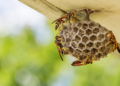
If you’ve spotted a wasp nest on your house, in a tree, under your deck, or near a doorway, you need to act carefully — but not panic. Wasps can become defensive when threatened, and the wrong spray or the wrong technique can make a small nest problem much more dangerous. This guide compares five wasp sprays for common US homeowner situations, from budget aerosols to professional-style pyrethrin formulas, plus the safety rules that help reduce the risk of stings.
Quick Answer: 5 Best Wasp Sprays Compared
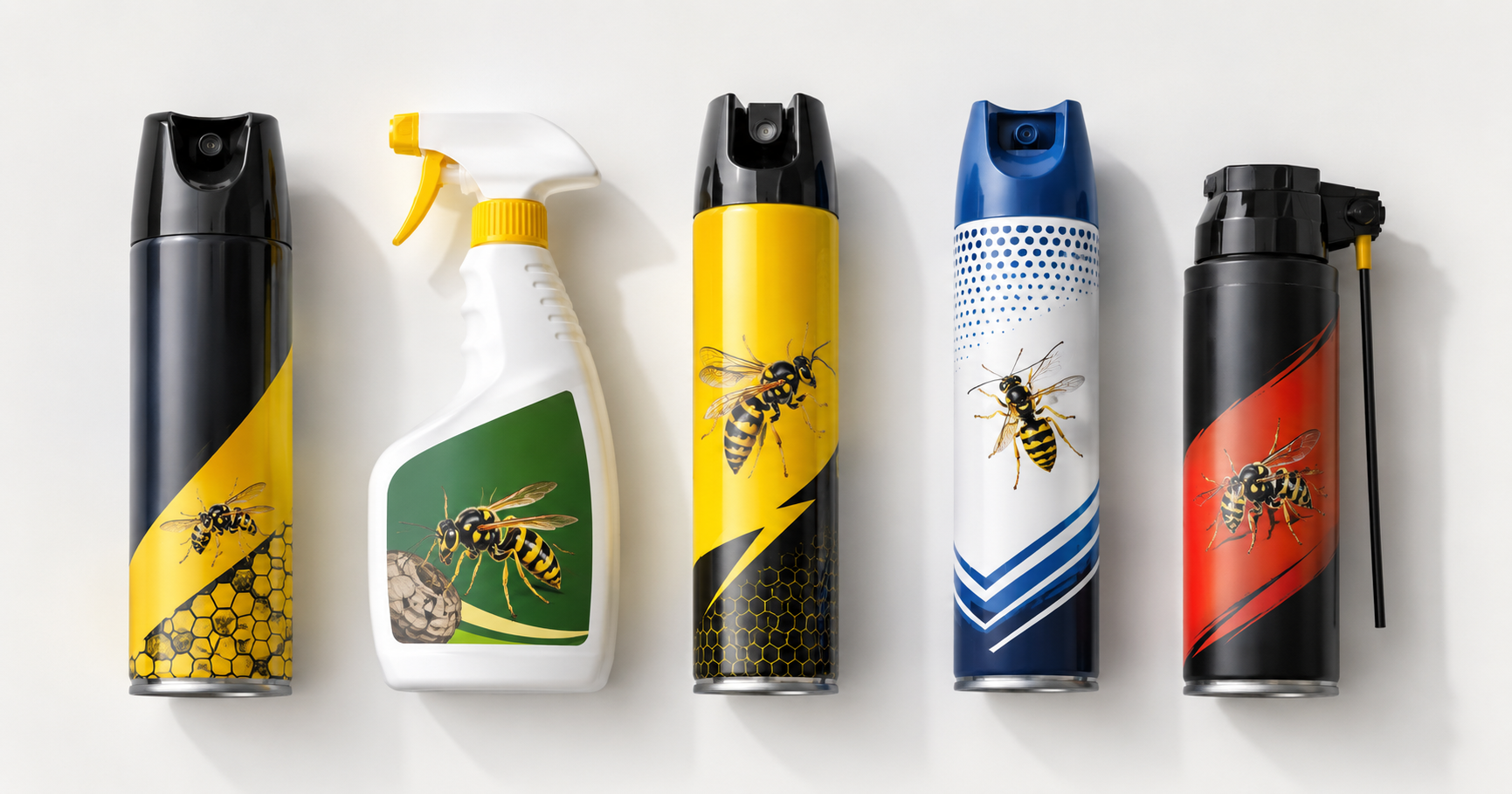
Five wasp sprays to compare for different situations — from budget twin-packs for visible nests to professional-style aerosols for more serious jobs:
Best Budget Pick — Long-Distance Jet
Spectracide Wasp & Hornet Killer (Twin Pack)
A long-distance jet spray is useful when the nest is visible but not close enough to treat safely with a short-range product. This twin pack is a practical choice for many homeowners dealing with paper wasps or hornets on exterior areas of the house. Always follow the label and treat from a safe distance.
Best for Nests — Foam Classic
Raid Wasp & Hornet Killer Foam (14 oz, Pack of 2)
Foam products expand and cling to nest surfaces, which can make them useful for visible nests and some cavity openings where a jet stream may not coat the area well. A two-can pack gives you a backup if the first application does not fully reduce activity.
Best Foaming Alternative
Black Flag Foaming Wasp & Hornet Killer (14 oz, 2 Pack)
A foaming option for homeowners who want to coat a visible nest and keep a spare can on hand. Foam can help cover nest surfaces and reduce wasp activity when it is applied correctly and according to the label.
Best Plant-Based Option to Compare
Wondercide Wasp & Hornet Killer (Essential Oils, 2-Pack)
A plant-based formula made with essential oils. This is an option to compare if you prefer a non-synthetic formula for a small, visible paper wasp nest. It is not the right choice for hidden yellow jacket colonies, large nests, or aggressive activity. Keep people and pets away during application and until treated areas are dry, and follow the product label carefully.
Best Professional-Style Option
PT 565 Plus XLO Pyrethrin Insecticide
A pyrethrin aerosol often used when fast knockdown is needed. This is a more serious product category than a basic homeowner wasp spray, so read the label closely before use, especially around sensitive areas, food-handling spaces, pets, children, and ventilation. Use only where the product label allows.
Prices and availability change frequently — click through to Amazon or the listed retailer for current pricing. PestsGuide.com earns from qualifying purchases.
Why Wasp Spray Is Different From Regular Bug Spray
This is one of the most common mistakes homeowners make. Someone spots a paper wasp nest on the porch, grabs whatever insecticide is under the kitchen sink, sprays it, and then ends up much closer to defensive wasps than they expected.
Regular household bug sprays are usually designed for crawling insects on hard surfaces. They are not the same as a wasp-specific aerosol or foam. Against wasps, the wrong product can fail for three reasons:
- Wrong delivery distance. Many indoor sprays do not travel far enough for a nest under eaves, deck beams, or rooflines. Getting too close increases your sting risk.
- Wrong knockdown speed. Wasp nests require a product labeled for wasps and hornets that can act quickly on direct contact. A slow indoor spray may leave you exposed while the colony becomes defensive.
- Wrong formulation. Wasp sprays use directional jet streams or expanding foam patterns designed to reach nest openings and coat the treated area. A general mist may not reach the nest interior.
Wasp-specific sprays are built for a different job:
- a longer spray distance so you can stand farther away;
- directional spray patterns that are easier to aim at a nest entrance;
- foam or jet delivery designed for visible nests or cavity openings;
- label directions specific to wasps, hornets, yellow jackets, or similar stinging insects.
If you already tried a regular bug spray and the wasps are still there, that does not necessarily mean the nest is impossible to treat. It may mean you used the wrong product category. Choose a wasp-labeled spray and follow the label and safety directions carefully.
How to Choose: Match the Spray to Your Situation
Single visible nest, under eaves or in a tree → Spectracide Twin Pack
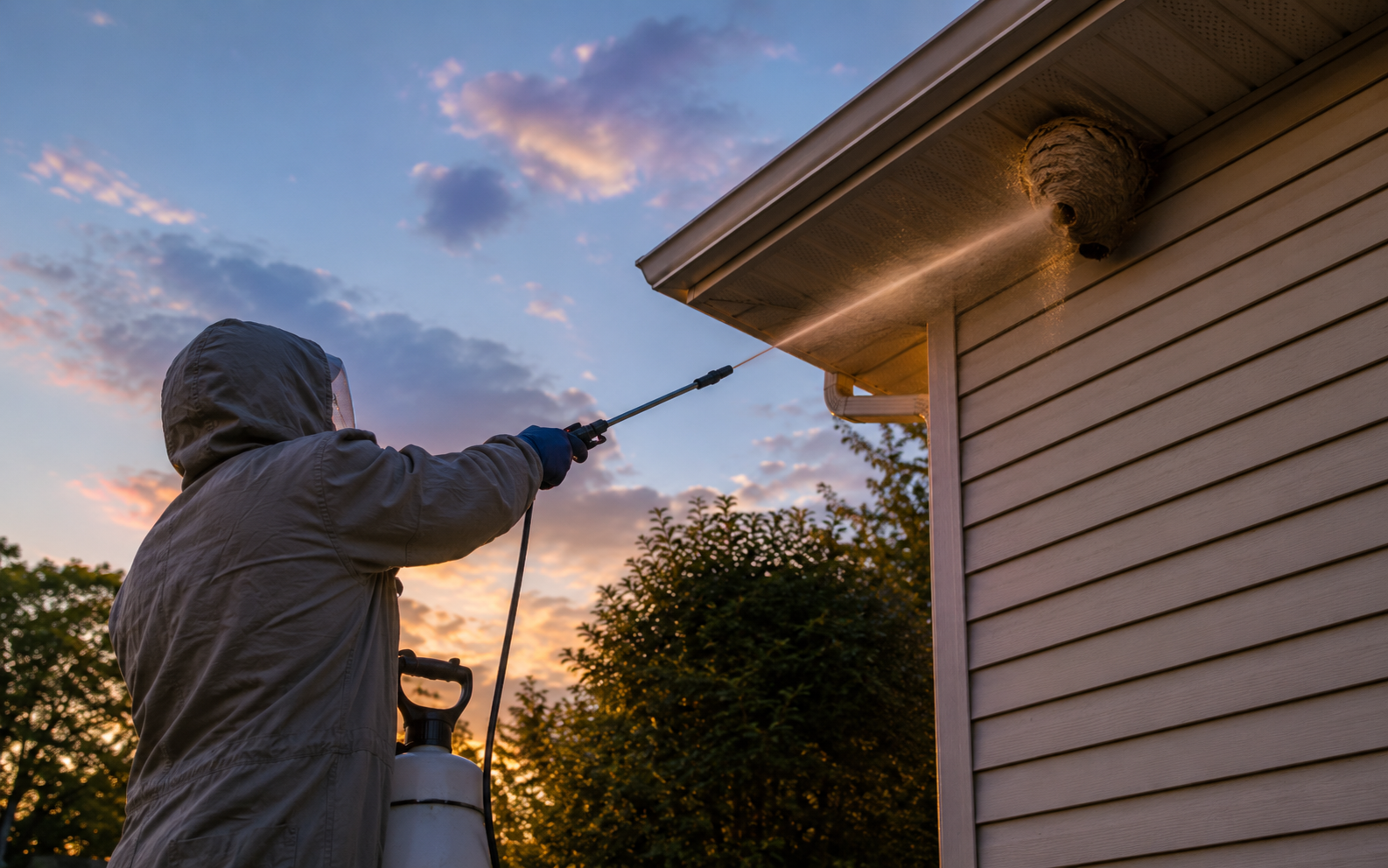
The most common homeowner scenario is a visible paper wasp or hornet nest in an accessible exterior spot. A long-distance jet spray like Spectracide can be useful when you can stand on the ground, aim from a distance, treat the nest, and retreat safely. The twin pack also gives you a backup can if activity continues and the label allows a second application.
Yellow jackets in a wall void or ground burrow → Raid Foam or Black Flag Foam
Yellow jacket nests inside walls, attics, or ground openings can be more difficult than visible paper wasp nests. You may not be able to see the colony, and a jet spray may not coat the right area. Foam expands and clings, which can make it more useful around an opening. Use extra caution: hidden nests can sometimes push wasps into living spaces or create unexpected exit routes.
Small visible nest near outdoor family areas → Wondercide
If you prefer to compare a plant-based option, Wondercide may be worth considering for a small, visible paper wasp nest. The trade-off is that essential-oil sprays may not perform like stronger conventional aerosols on large, hidden, or highly active nests. Keep children and pets away during application and until the treated area is dry.
Large or stubborn nest, sensitive area, or professional-style treatment → PT 565 Plus XLO
Pyrethrin-based aerosols like PT 565 are used when fast knockdown is needed, but this type of product should be handled carefully. It is not a casual “spray and forget” product. Read the label, use only where allowed, ventilate as directed, and avoid food-prep surfaces, pet areas, and sensitive spaces unless the label specifically permits that use.
A foaming option with a spare can → Black Flag Foam
If you want a foaming product and prefer to have a backup can on hand, the Black Flag two-pack is a practical option to compare. Foam coats a visible nest, and the second can is useful if the nest is larger than expected or activity continues and the label allows another application.
Wasp Sprays vs. Wasp Traps — Different Tools
Wasp sprays are for treating an active nest you can see or access safely. Wasp traps catch foraging wasps that fly around your yard, patio, garden, or trash area. They solve different problems.
Sprays are for active nest treatment — you found a nest and need to address it directly. Traps are for season-long pressure reduction — you want fewer foraging wasps around outdoor eating areas or garbage zones.
Most homeowners with an active wasp nest need a spray first, then traps may help reduce foraging pressure for the rest of the season. If you have an active nest, do not rely on traps alone.
How to Use Wasp Spray Safely — Step-by-Step
The product matters, but technique matters too. A strong spray used carelessly can still put you in danger. A modest spray used carefully may solve a small nest problem with less risk.
Step 1: Time it right — spray at dusk or dawn
Wasps are usually less active at dusk and dawn, and more workers are likely to be near the nest. Spraying in the middle of the day can leave returning foragers outside the treated area. A common window is 30-45 minutes after sunset, when activity has dropped but you can still see clearly.
Step 2: Wear protective clothing — full coverage
Wear long pants, long sleeves, closed shoes, gloves, and a hat. Avoid sandals, shorts, loose hair, bright floral patterns, and exposed skin. Protective clothing does not make the job risk-free, but it can reduce the chance of direct skin exposure if a wasp gets close.
Step 3: Plan your exit before spraying
Before pulling the trigger, identify the exact path you will use to leave the area. Keep children, pets, and bystanders inside. Make sure the nest is not between you and your exit. Check wind direction so the spray does not blow back toward your face, skin, or nearby living areas.
Step 4: Spray from the labeled distance
Stand at the distance recommended on the product label. Aim at the nest opening or the area identified on the label. Use a steady application as directed. Do not climb, stretch from a ladder, or stand directly underneath a nest to improve your aim.
Step 5: Leave the area
After application, leave the area calmly and do not stand nearby to watch. Wasps may continue moving for a while, and the nest or treated insects may fall. Stay away from the treated area for the amount of time stated on the product label.
Step 6: Recheck the next day
Inspect from a safe distance the following day. If you see no visible activity for several hours, the nest may be ready to remove. Wear gloves, use a long tool, and place the nest in a sealed trash bag. If you still see wasps entering and exiting, do not knock the nest down. Recheck the product label for reapplication directions or consider professional help.
Common Mistakes That Get Homeowners Stung
- Spraying in the middle of the day. Many workers may be out foraging and can return to a disturbed nest.
- Standing under the nest. Even with a long-range spray, do not stand directly underneath. Treat from the side when the label and layout allow it.
- Using indoor bug spray on outdoor nests. A short-range household spray may not reach or treat the nest properly.
- Wearing shorts and a t-shirt. Exposed skin increases sting risk.
- Knocking the nest down before treating it. A live nest on the ground can be more dangerous than one still attached.
- Having only one can for a larger nest. Some nests require more product or a second treatment, if the label allows it.
- Spraying from a ladder. A ladder plus defensive wasps is a serious fall risk. High nests are usually better handled by a professional.
Yellow Jackets vs. Paper Wasps vs. Hornets — Quick ID
Different wasps can require different strategies.
- Paper wasps — long brown-and-yellow bodies, dangling legs in flight, and open umbrella-shaped nests under eaves. Visible nests may be treatable with a wasp-labeled jet spray if they are small and accessible.
- Yellow jackets — short, stocky, bright yellow-and-black insects often confused with bees. Nests may be hidden in walls, attics, or underground holes. They can be highly defensive, and hidden colonies are often harder to treat safely.
- Hornets — larger wasps, often with gray football-shaped paper nests hanging from branches or structures. Visible nests may still be risky because hornets can defend the area aggressively.
For a deeper identification guide, see our wasps vs bees vs bumblebees article. It is important to confirm you are dealing with wasps and not honeybees or bumblebees before you spray.
When NOT to DIY — Call a Pro
Not every wasp nest is a safe DIY job. Consider professional help in these situations:
- Anyone in the household has a sting allergy — even a small nest is not worth the risk.
- The nest is large or highly active — more wasps means less room for error.
- The nest is above comfortable ground-level reach — do not climb a ladder to spray wasps.
- The nest is inside a wall, chimney, attic, or ceiling void — DIY treatment can sometimes push wasps into living spaces.
- You are dealing with a large ground colony — yellow jacket ground nests can be especially defensive.
- A previous spray attempt failed — disturbed colonies may be more defensive.
Professional wasp removal usually costs more than a can of spray, but it may be the safer choice for high, hidden, large, or allergy-risk nests.
FAQ
How long does wasp spray take to work?
Many wasp sprays are designed for fast knockdown on direct contact, but results depend on the product, nest type, application, and whether the treatment reached the nest interior. If you still see wasps entering and exiting after 24-48 hours, do not knock the nest down. Recheck the label for reapplication instructions or consider professional help.
Will wasp spray affect bees?
Yes, many wasp sprays can harm bees and other pollinators. If you see honeybees or bumblebees instead of wasps, do not spray. Honeybees are usually rounder, fuzzier, and slower-moving than wasps. Contact a local beekeeper, extension office, or pest professional for identification and next steps.
Is wasp spray safe around pets?
Do not treat any pesticide as automatically safe around pets. Standard wasp sprays can be hazardous while wet, and essential-oil products still require caution. Keep pets away during application and until the treated area is dry, or longer if the product label says so. Avoid pet bowls, bedding, toys, kennels, and areas pets may lick.
What if it rains right after I spray?
Rain can reduce the effectiveness of some outdoor applications, especially if it happens soon after treatment. Check the product label for weather and reapplication guidance. A dry window after application is usually preferable.
Can I use leftover wasp spray next year?
Maybe. Aerosol performance can decline if the can was stored in heat, freezing conditions, or direct sun. Check the product label and expiration information. If the can sprays weakly or unpredictably, replace it rather than getting closer to the nest.
Why are the wasps still coming back after I sprayed?
There are a few common reasons: the treatment did not reach the nest interior, the nest has a second entrance, you treated one nest but another is nearby, or the insects you see are foraging wasps from a different colony. If activity continues after a careful label-following application, stop and reassess before trying again.
What’s the difference between jet spray and foam?
Jet spray fires a narrow stream from a longer distance and is best for visible nests you can aim at safely. Foam expands and clings to surfaces, which can make it useful for nest openings, cavities, or visible nests where coating matters. Many homeowners keep one of each, but the right product depends on the nest location and label directions.
Are wasp sprays legal everywhere in the US?
Use only products that are labeled for the target pest and the location where you plan to apply them. Product availability, use sites, and restrictions can vary by state and label. When in doubt, follow the label and check local pesticide rules before applying.
How do I dispose of a treated wasp nest?
Wait until there is no visible activity, then wear gloves and use a long tool to remove the nest. Place it in a plastic trash bag, seal it, and put it in outdoor trash. Do not compost treated nests.
Final Thoughts
The best wasp spray for your situation depends on three things: where the nest is, how large or active it appears, and whether anyone nearby is at elevated risk from stings.
For many homeowners with a small, visible paper wasp or hornet nest, a long-range jet spray such as the Spectracide twin pack is a practical first product to compare. For cavity openings or yellow jacket activity around a hole, expanding foam such as Raid Foam or Black Flag Foam may be a better match.
If you prefer a plant-based option for a small visible nest, Wondercide is worth comparing (also available direct from Wondercide.com), but it still needs careful label-following and should not be used as a casual “safe” shortcut around kids or pets. For professional-style pyrethrin aerosol treatment, PT 565 Plus XLO is a more serious option that should be used only where the label allows.
Whatever product you choose, the main safety rules do not change: treat at low-activity times, wear full coverage, follow the label, keep people and pets away, and plan your exit before you spray.
When the nest is too risky to DIY
Large, hidden, high, or allergy-risk wasp nest?
Some wasp nests are better handled by a professional, especially if the nest is inside a wall or chimney, above safe ground-level reach, unusually active, or near someone with a sting allergy. Compare when it makes sense to hire help in our guide to professional pest control services.