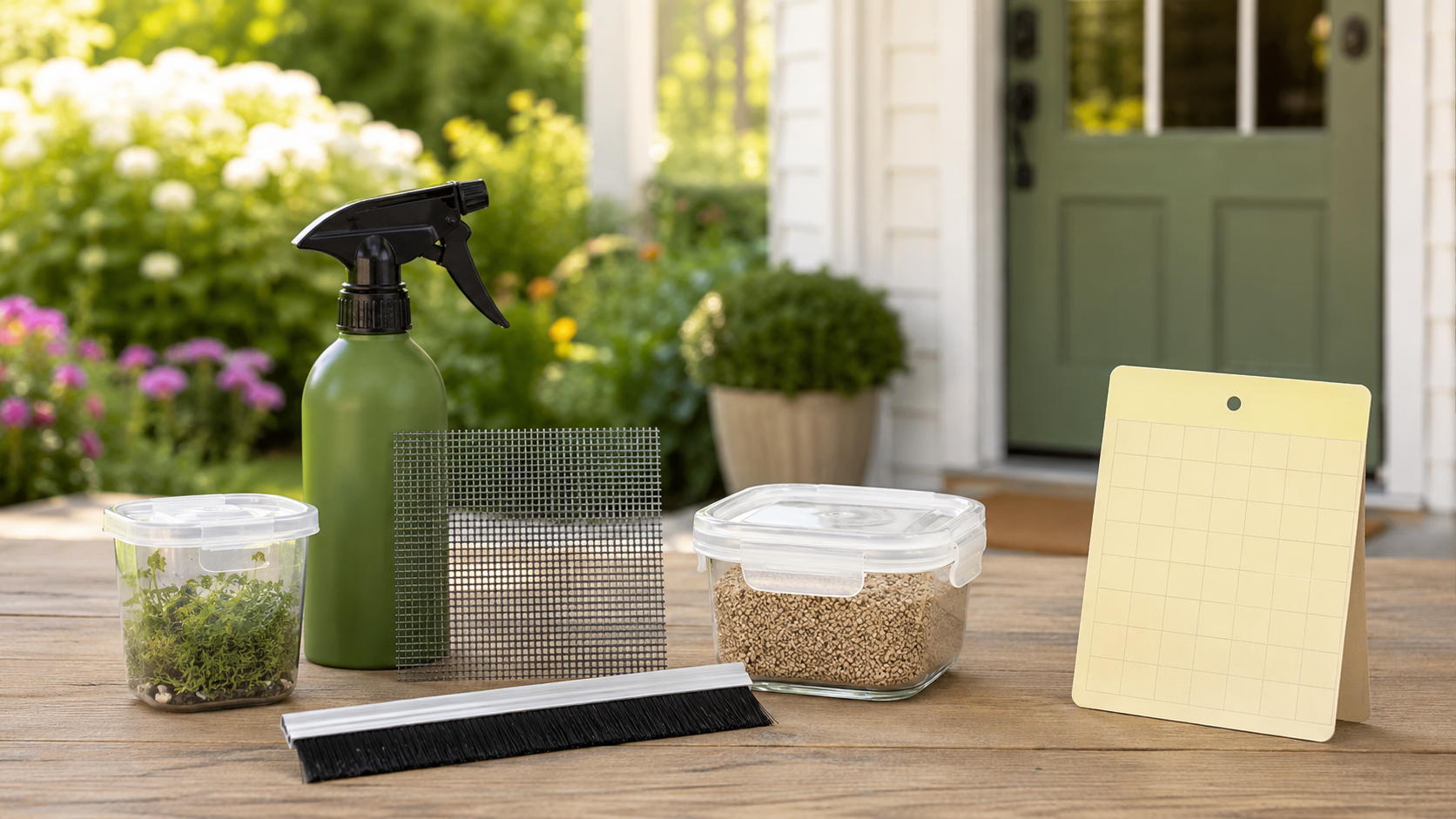
Start Here: What Are You Trying to Control?
- Aphids or soft-bodied pests on plants? Start with beneficial insects or a plant-based spray option.
- Soil larvae or lawn pest stages? Look at beneficial nematodes designed for soil application.
- Bugs getting indoors? Start with barriers, screens, door sweeps, and sealing gaps.
- Kitchen or pantry pests? Focus on food storage, cleaning, and monitoring.
- Rental apartment pests? Choose removable, non-damaging tools where possible.
- Outdoor yard or perimeter pest pressure? Start with the specific problem: beneficial nematodes for certain soil pest stages, neem oil or labeled plant sprays for garden pests, and physical barriers for pests moving toward the home.
Quick Answer: Best Natural Pest Control Products for Homeowners
For most homeowners, natural pest control works best when the product matches the situation. Garden pests, soil pests, indoor entry points, pantry areas, rental apartments, and outdoor yard pressure usually need different tools.
Best for Aphids – Beneficial Insects
Live Ladybugs or Ladybug + Lacewing Options
Beneficial insects may help reduce aphid pressure and other soft-bodied plant pests when released into the right outdoor conditions. They work best when pests are already present and broad-spectrum sprays are avoided around the release area.
Best for Soil Pests – Living Soil Control
Beneficial Nematodes
Beneficial nematodes are microscopic organisms applied to moist soil. They are used for certain soil-dwelling pest stages and may be useful in lawns, garden beds, raised beds, and some container plant situations when the pest and timing match the product directions.
Best Plant-Based Spray – Garden Support
Neem Oil
Neem oil can support a low-toxicity garden pest control routine when used carefully on labeled plants and pests. It works best as part of a broader plan that includes monitoring, pruning, airflow, and avoiding unnecessary plant stress.
Best Outdoor Pressure Setup – DIY First
Nematodes, Neem Oil, Barriers, and Monitoring
For outdoor pest pressure, match the tool to the problem instead of buying a broad yard plan. Use beneficial nematodes for certain soil pest stages, neem oil or labeled plant sprays for garden pests, physical barriers for entry points, and monitoring boards when you need to confirm where pests are active.
Best for Entry Points – Physical Barriers
Door Sweeps, Screens, Mesh, and Exclusion Tools
If pests are entering through doors, windows, vents, garage edges, or small gaps, physical barriers may be a better first step than adding more spray indoors.
Best for Monitoring – Check Activity First
Insect Monitoring Boards
Monitoring boards can help you see where crawling insects are active before choosing a treatment. They are useful near baseboards, under sinks, behind appliances, and near suspected entry points.
Prices and availability change frequently – click through to the retailer for current details. PestsGuide.com may earn from qualifying purchases through affiliate links.
Summary
The best natural pest control product depends on the pest, the location, and the stage of the problem. For garden aphids, beneficial insects or neem oil may help when conditions are right. For certain soil pest stages, beneficial nematodes may be a better fit. For pests entering the home, barriers and monitoring often matter more than sprays. For outdoor yard or perimeter pest pressure, choose the narrowest tool that matches the problem instead of starting with a broad subscription-style plan.
Natural Pest Control Product Comparison
| Problem | Best Product Type | Best Next Step |
|---|---|---|
| Aphids on garden plants | Beneficial insects | Use when aphids are active and garden conditions support release. |
| Soil larvae or lawn pest stages | Beneficial nematodes | Apply to moist soil according to the product directions. |
| Plant pests on leaves | Neem oil or plant-based spray | Use only on labeled plants and avoid spraying during peak pollinator activity. |
| Outdoor yard or perimeter pressure | Beneficial nematodes, plant-safe sprays, barriers, or monitoring | Match the product to the pest stage and location before adding broad outdoor treatments. |
| Bugs entering through gaps | Door sweeps, screens, mesh, seals | Block entry points before relying on indoor sprays. |
| Pantry or kitchen pest activity | Airtight containers and monitoring | Remove food access and check activity zones. |
| Rental apartment pest problems | Removable, non-damaging tools | Use lease-friendly prevention and monitoring steps, then see the renter-specific guide if activity keeps returning. |
Natural Pest Control Starter Setups

If you are not sure which products to combine, start with a setup that matches the area you are trying to protect. These are not fixed kits – they are simple starting points for building a more practical pest control routine.
Garden Plant Pest Setup
- Beneficial insects for active aphids
- Neem oil for labeled plant pests
- Regular leaf inspection
- Pruning and airflow improvement
Indoor Entry Prevention Setup
- Door sweep or draft stopper
- Window screen repair
- Mesh vent covers
- Monitoring boards near baseboards
Kitchen & Pantry Setup
- Airtight containers
- Sealed pet food storage
- Shelf cleaning routine
- Pantry monitoring traps
1. Outdoor Yard and Perimeter Pest Pressure
Outdoor pest pressure is easier to handle when you separate the problem by location. Lawn pests, garden plant pests, mosquitoes, ticks, and insects moving toward the house do not all need the same product.
For soil pest stages, start with beneficial nematodes when the target pest and timing match the label. For garden plants, compare neem oil or other labeled plant-safe sprays. For bugs moving toward doors, windows, vents, or garage edges, physical barriers and exclusion tools are usually the better first step. For mosquito-heavy yards, use a mosquito-specific guide instead of a broad outdoor plan.
DIY outdoor setup
Match the outdoor tool to the pest problem
Use beneficial nematodes for certain soil-dwelling pest stages, neem oil for labeled garden plant pests, and barriers or exclusion tools when pests are entering around the home perimeter.
2. Beneficial Insects for Aphids and Soft-Bodied Garden Pests

Beneficial insects are a common biological pest control option for outdoor gardens. Ladybugs and lacewings are often used where aphids and other soft-bodied pests are active on plants. They are most useful when there is already a food source and when the garden is not being disrupted by broad-spectrum sprays.
Release timing and conditions matter. Beneficial insects may leave if there are no pests to feed on, if the weather is unfavorable, or if the plants do not provide enough cover. For better results, release them in the evening or early morning, lightly mist plants if the product directions allow it, and avoid applying incompatible sprays nearby.
- Useful for active aphid pressure on outdoor plants
- Fits biological and low-toxicity garden routines
- Can support a more balanced garden approach
- Good option for roses, vegetables, herbs, and ornamentals when pests are present
- May leave if there is no active food source
- Not useful for pantry pests or indoor entry problems
- Weather, timing, and release conditions matter
- May be affected by broad-spectrum sprays
Best for: Aphids and soft-bodied pests on outdoor garden plants.
Or see a ladybug + lacewing option at DoMyOwn →
3. Beneficial Nematodes for Soil and Lawn Pest Stages

Beneficial nematodes are microscopic organisms applied to soil with water. They are used for certain soil-dwelling pest stages and may be helpful when the pest life cycle includes larvae or immature stages below the surface.
They are living organisms, so application conditions matter. Soil usually needs to be moist, direct sun should be avoided during application when the product directions say so, and storage instructions should be followed carefully. Beneficial nematodes are not a general solution for every pest, but they can be a useful soil-focused option when matched to the right situation.
- Targets certain pest stages in soil
- Useful for lawns, beds, raised beds, and some container situations
- Works below the surface where some pest problems begin
- Fits biological pest control plans
- Requires correct moisture and timing
- Not useful for adult pests already flying indoors
- May not work well in dry or unfavorable soil conditions
- Must be matched to the target pest and life stage
Best for: Certain soil-dwelling pest stages in lawns, garden beds, raised beds, and container plant situations.
4. Neem Oil for Plant-Based Garden Pest Support

Neem oil is often used by homeowners who want a plant-based spray option for certain labeled garden pests. It is not a living biological control like ladybugs or nematodes, but it is often used alongside biological and low-toxicity pest control strategies.
Use neem oil thoughtfully. Avoid spraying during the hottest part of the day, avoid open blooms where pollinators are actively visiting, and test sensitive plants before broader use. More product is not better. Correct dilution, timing, and coverage are important.
- Plant-based option for certain labeled garden pests
- Can support a low-toxicity garden routine
- Useful when combined with inspection and prevention
- Commonly used on garden plants when label directions allow
- Not suitable for every plant or pest
- Can affect sensitive plants if misused
- Should not be sprayed carelessly around pollinator activity
- Does not fix structural or indoor entry problems
Best for: Certain labeled plant pests as part of a broader garden pest control routine.
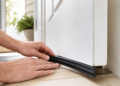
5. Door Sweeps, Screens, and Physical Barriers

For many indoor pest problems, the best first product is not a spray. It is a barrier. Insects and other pests may enter through gaps under doors, damaged screens, garage-door edges, vents, utility openings, and window frames.
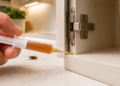
Physical barriers can reduce pest entry without adding unnecessary spray indoors. Common options include door sweeps, weather stripping, screen repair, mesh vent covers, garage-door seals, and gap filler for small cracks.
Need Help Choosing Entry-Point Barriers?
If pests are entering through doors, windows, vents, or garage gaps, start with a dedicated barrier guide before buying random products.
See exclusion tools at DoMyOwn →
6. Airtight Food Storage and Pantry Pest Prevention

In kitchens and pantries, the most useful low-toxicity products are often storage and sanitation tools. Pantry moths, beetles, ants, and other food-area pests are easier to manage when access to food is reduced.
Airtight containers, sealed pet food storage, regular shelf cleaning, and simple monitoring traps can help you spot activity earlier. This approach does not replace correct pest identification, but it can reduce the conditions that allow pantry pests to spread.
Trying to Pest-Proof the Kitchen or Pantry?
Start with food storage, cleaning, entry-point checks, and monitoring before adding more products.
7. Renter-Friendly Pest Control Tools

Renters often need pest control products that do not damage the property. That usually means removable barriers, monitoring traps, sealed storage, draft stoppers, plug-in or non-permanent tools, and careful documentation of recurring pest activity. For apartment-specific limits, see our pest control for renters guide.
The goal is to reduce pest access and monitor activity without drilling, altering the property, or applying products in ways that may conflict with a lease. For recurring problems, renters should also document activity and communicate with the landlord or property manager when needed.
Need Renter-Friendly Pest Control Options?
Choose removable and non-damaging tools first, especially if you are in an apartment or rental home.
8. Insect Monitoring Boards and Simple Inspection Tools

Monitoring boards are not a complete pest control plan, but they can help you understand where crawling insects are active. They are commonly placed near baseboards, under sinks, behind appliances, in garages, and near suspected entry points.
For a low-toxicity pest control routine, monitoring matters because it helps reduce guessing. If activity shows near a door, the real solution may be a door sweep. If activity appears near a pantry shelf, storage and cleaning may matter more. If activity keeps increasing, the pest may need a more targeted plan.
- Helps identify where crawling insects are active
- Useful near baseboards, appliances, sinks, and entry points
- Supports inspection before choosing a treatment
- Can help check whether prevention steps are working
- Does not solve the root cause by itself
- Not a replacement for exclusion or sanitation
- May not identify the pest without closer inspection
- Should be placed where children and pets cannot access them
Best for: Monitoring crawling insect activity and identifying problem areas before choosing a product.
See insect monitors at DoMyOwn →
How to Choose the Right Natural Pest Control Product
The best product is the one that matches the pest, the location, and the stage of the problem. A product that helps with aphids on roses will not necessarily help with pantry moths in a kitchen. A soil treatment will not block insects entering through a door gap. A monitoring board may show activity, but it will not repair a torn window screen.
Before buying anything, ask three questions:
- Where is the pest problem? Garden, lawn, kitchen, bathroom, garage, pantry, apartment, outdoor perimeter, or entry point?
- What type of pest are you seeing? Flying insects, crawling insects, larvae, soft-bodied plant pests, mosquito/tick yard pressure, or signs of pests entering indoors?
- Do you need control, prevention, monitoring, or a guided plan? Some products support active pest reduction, while others help block entry, show whether pests are still present, or create a lower-toxicity outdoor routine.
When Natural Pest Control Products Work Best
Natural and low-toxicity pest control products work best when the pest problem is still manageable and the product matches the situation. They are especially useful for prevention, early pest pressure, garden support, monitoring, reducing entry points, and outdoor yard pressure that does not require emergency treatment.
They usually work best when combined with:
- correct pest identification;
- cleaning and sanitation;
- sealing gaps and entry points;
- proper food storage;
- regular inspection;
- targeted product use instead of random spraying.
When Natural Products May Not Be Enough
Some pest problems should not be handled with natural products alone. If pests are inside walls, damaging wood, biting people, contaminating food, nesting near entrances, or returning despite repeated prevention steps, you may need a more targeted plan.
Natural products may not be enough for:
- termites or suspected structural pest damage;
- bed bugs in sleeping areas;
- rodent activity in walls, attics, or kitchens;
- large roach infestations;
- wasp, hornet, or yellow jacket nests near people;
- recurring pests caused by plumbing leaks, building gaps, or sanitation issues outside your control.
When DIY Prevention Is Not Solving the Problem
If pest activity keeps coming back or you are not sure what you are dealing with, start with identification before buying more products. For termite signs, wood damage, mud tubes, swarmers, or droppings, use a termite-specific inspection path instead of relying on general natural pest control products.
Not Sure What Pest You Have?

Choosing a product is easier when you know what pest you are dealing with. If you are seeing small insects, droppings, plant damage, pantry activity, or bugs near windows and doors, start with identification before buying more products.
Start With Identification
If the pest is not clear, do not choose a product based only on where you found it. Look at the pest’s shape, size, location, damage signs, droppings, plant symptoms, or entry points before buying more products.
Common Mistakes to Avoid
Using the right product for the wrong pest
Ladybugs are useful for aphids, not pantry moths. Beneficial nematodes are used in soil, not on kitchen counters. Door sweeps help with entry points, not active plant pests. Match the product to the pest and location.
Expecting instant results from biological control
Biological pest control often works gradually. It may reduce pest pressure over time, but it is not always a fast fix.
Skipping prevention
If pests keep entering through gaps, sprays and traps may only provide temporary relief. Exclusion and sanitation are often the foundation of a better plan.
Using too many products at once
Combining products without a plan can create problems. For example, spraying broadly after releasing beneficial insects can affect the helpful insects you just added.
Ignoring label directions
Even natural and plant-based products must be used correctly. Follow directions for dilution, timing, storage, application, and safety precautions.
FAQ: Natural Pest Control Products
What is the best natural pest control product for homeowners?
There is no single best product for every pest. Beneficial insects may help with aphids on garden plants, beneficial nematodes may help with certain soil pest stages, neem oil may support plant pest control when used correctly, physical barriers may be better for pests entering the home, and mosquito-specific or perimeter-specific products may fit outdoor yard pressure.
Are natural pest control products safe?
Many natural and low-toxicity products can be useful when used correctly, but they still need to be handled with care. Always follow label directions and avoid unnecessary exposure around children, pets, food surfaces, and pollinators.
Do ladybugs really work for aphids?
Ladybugs can help reduce aphid pressure when aphids are active and the garden conditions encourage them to stay. They are not a guaranteed one-step solution, but they can be part of a useful biological control plan.
Are beneficial nematodes good for all pests?
No. Beneficial nematodes are used for certain soil-dwelling pest stages. They are not a solution for every insect and will not stop adult pests already moving around indoors.
Is neem oil enough to control garden pests?
Neem oil can help with certain labeled plant pests, but it works best as part of a broader routine that includes inspection, pruning, airflow, proper watering, and avoiding unnecessary stress on plants.
What should I use for outdoor yard pest pressure?
Start by identifying the target pest and where it is active. Beneficial nematodes may fit certain soil pest stages, neem oil may support labeled garden plant pest control, mosquito products may be better for biting insects, and barriers or exclusion tools may be better when pests are moving toward the house.
What should I use for bugs coming into the house?
Start with exclusion. Check door gaps, window screens, vents, garage-door edges, utility openings, and cracks. Door sweeps, mesh, seals, and storage changes may help reduce repeated pest entry.
What natural pest control products are best for renters?
Renters should usually start with removable and non-damaging tools such as sealed storage containers, monitoring boards, draft stoppers, removable screen repair, and cleaning routines. For recurring problems, documentation and landlord communication may also be important.
Final Thoughts
The best natural pest control product depends on the pest problem you are trying to solve. For aphids and soft-bodied garden pests, beneficial insects may be useful when conditions are right. For soil-dwelling pest stages, beneficial nematodes may be a better match. For certain plant pests, neem oil can support a low-toxicity routine when used carefully. For indoor pest entry, barriers, sealed storage, and monitoring tools may matter more than sprays. For outdoor yard pressure, choose a product or guide that matches the specific pest instead of starting with a broad plan.
A strong natural pest control plan starts with identification, prevention, and the right product for the right situation. Use biological and low-toxicity tools where they fit, avoid overusing products, and move to a more targeted solution when the pest problem is serious, recurring, or potentially damaging.