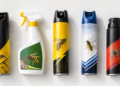
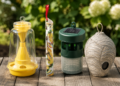
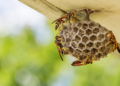
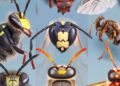
If wasps are circling your patio, showing up near trash cans, or starting to build nests around your home, a trap can help reduce wasp pressure before the problem becomes harder to manage. Wasp traps work by attracting foraging wasps into a container or sticky surface they cannot easily escape. They are best used for prevention, seasonal pressure reduction, and outdoor problem areas — not as a replacement for treating an active nest.
This guide compares five wasp traps and deterrent-style options for common US homeowner situations, from reusable yellowjacket traps to sticky traps, solar hanging traps, and visual nest decoys.
Quick Answer: 5 Best Wasp Traps Compared
Five wasp control options to compare for different situations — from reusable bait traps to low-maintenance sticky traps and visual deterrents for early-season prevention:
Best Overall — Multi-Season Reusable
RESCUE! Reusable Yellowjacket Trap (2-Pack with Attractant)
A reusable yellowjacket trap with included attractant and clear viewing chambers. This is a practical choice if you deal with yellowjacket activity in the same outdoor areas year after year and want a refillable system instead of a single-season disposable trap.
Best Budget — Liquid Bait Trap
Spectracide Wasp, Hornet & Yellowjacket Trap
A budget-friendly refillable trap designed for wasps, hornets, and yellowjackets. It is best used outdoors, away from patios and doors, where it can pull foraging wasps toward the trap instead of toward people.
Best Sticky Option — No Liquid Bait
RESCUE! VisiLure TrapStik for Wasps (2-Pack)
A sticky trap that uses a visual lure pattern instead of liquid bait. It can be useful around eaves, sheds, and low-traffic outdoor areas where wasps, mud daubers, or carpenter bees are active. The bird guards help reduce bird bycatch risk, but placement still matters.
Best Solar — Multi-Pack Value
Outdoor Hanging Solar Wasp Traps (2-Pack)
Reusable hanging traps with solar-powered lights and DIY bait options. These can be useful for larger yards where you want more than one trap placed around the property perimeter. Results depend heavily on bait choice, placement, and season.
Best Prevention — Visual Deterrent to Compare
DECYOOL Paper Wasp Nest Decoy (4-Pack)
A visual nest decoy designed to make an area look less inviting for new nest building. This is not a trap and will not remove an active nest. It is best used early in the season, before wasps have already established nests around eaves, sheds, porches, or garages.
Prices and availability change frequently — click through to Amazon for current pricing. PestsGuide.com earns from qualifying purchases.
Why You Need a Wasp Trap, Not Just Wasp Spray
Wasp spray and wasp traps solve different problems. One of the most common mistakes is buying one when you really needed the other.
Wasp spray is for active nests and immediate threats — for example, a visible nest on your eaves, under a deck, near a doorway, or in another spot where wasps are defending a colony. If you already have a confirmed nest, see our companion guide to the best wasp sprays.
Wasp traps solve a different problem: prevention and pressure reduction. They catch foraging wasps before they become a bigger nuisance around outdoor living areas. In some cases, early-season traps may also catch queens before colonies become established, but results vary by species, timing, bait, and placement.
The timing principle many homeowners miss is this: traps usually work best before the problem is obvious. Early-season placement can help reduce future pressure. By midsummer, nests may already be established, food sources are abundant, and traps may only catch part of the local wasp activity.
If you already have established nests, deal with the nest first, then use traps to help reduce foraging pressure and discourage repeat activity around the same areas.
How to Choose: Match the Trap to Your Situation
You want a multi-season solution and do not mind paying upfront → RESCUE! Reusable Yellowjacket Trap
The RESCUE! Reusable Yellowjacket Trap is a good option to compare if you have recurring yellowjacket activity around the same property each year. It comes with attractant for the first use, and refills can keep the trap running during the season.
This type of reusable trap makes the most sense for coastal homes, rural properties, homes with outbuildings, or yards where yellowjackets tend to show up in late summer. It does require maintenance: you need to check the trap, replace attractant, and empty it carefully.
You want a budget trap for this summer → Spectracide Wasp, Hornet & Yellowjacket Trap
Spectracide’s wasp trap is a lower-cost option for homeowners who want a simple liquid-bait trap. It is most useful when wasps are actively foraging for sweet baits, which is often later in the season.
If a trap does not catch much, the problem may be bait timing or placement rather than the trap itself. A single trap on a large property may not make a noticeable difference. For better results, place traps away from patios and entrances, and use more than one trap when the property size or wasp pressure justifies it.
You do not want to deal with liquid bait → RESCUE! VisiLure TrapStik
The TrapStik uses a visual lure and sticky surface rather than liquid bait. That makes it simpler to hang and easier to ignore until it needs replacement. It can be useful near eaves, sheds, fence lines, and other low-traffic areas where wasps or mud daubers are active.
The trade-off is that sticky traps need careful placement. Keep them away from children, pets, walkways, and bird activity. Even with bird guards, sticky traps should not be treated as risk-free for non-target animals.
You have a large yard and want multiple traps cheaply → Solar Wasp Trap 2-Pack
Multi-pack reusable hanging traps can be useful when you need coverage in more than one area. The solar version includes small lights, and you provide your own bait such as sugar water, fruit juice, beer, or another bait mixture.
The advantage is flexibility. You can test different bait types and move traps around the perimeter until you find the locations with the most activity. The downside is maintenance: DIY bait needs to be refreshed, and traps need to be emptied carefully.
You want to discourage new nests before they form → DECYOOL Paper Wasp Nest Decoy
Nest decoys are not traps. They do not catch wasps, remove existing nests, or treat active colonies. They are a visual deterrent to compare if you want a low-cost prevention tool before nesting starts.
Use them in early spring around eaves, porch ceilings, sheds, detached garages, and other places where paper wasps have built before. If wasps have already started a nest, a decoy is unlikely to solve that active problem.
Where to Place Wasp Traps and Where Not To
Placement matters more than the trap brand. A good trap in the wrong spot can catch very little or, worse, draw wasps toward the place you are trying to protect.
The 20-foot rule: Wasp traps should usually be placed at least 20 feet away from outdoor living areas such as patios, decks, doorways, grills, and picnic tables. A trap attracts wasps toward itself, so the attraction zone should be away from people.
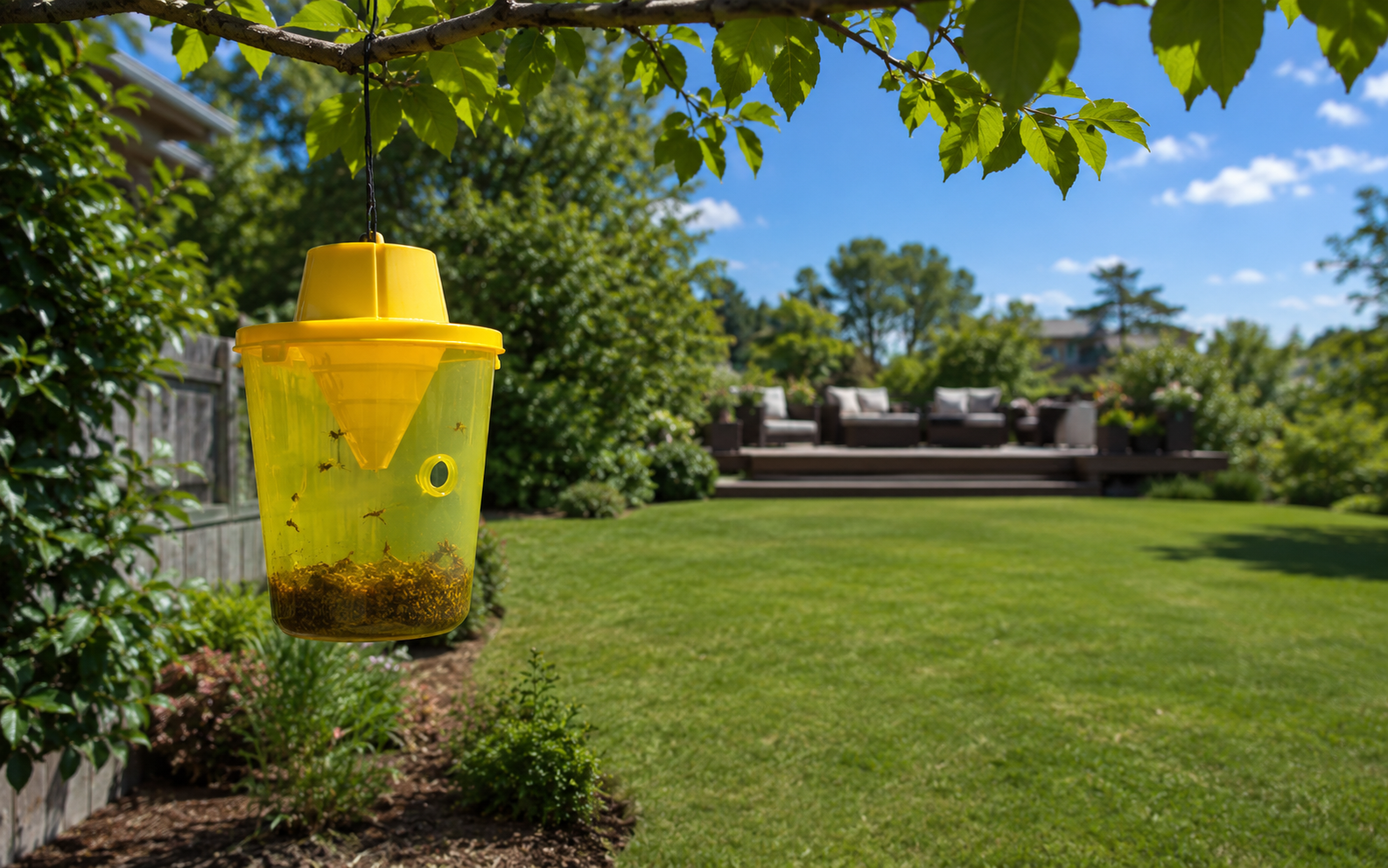
Common good placement spots:
- property perimeter, especially the side facing wooded areas, fields, or alleys;
- near outdoor trash cans and compost bins, but not directly beside seating areas;
- around outbuildings such as sheds, detached garages, or barns;
- 15-30 feet apart from each other if using multiple traps;
- 4-5 feet off the ground, unless the product label says otherwise;
- near known nest sites from previous years, but not directly on an active nest.
Common bad placement:
- directly on a patio, deck, or table where people sit;
- right next to doorways or windows;
- near flowering plants where beneficial pollinators are active;
- close to known active nests where wasps may be defensive rather than foraging;
- in dense shade if the trap depends on visual or heat attraction;
- in high-wind exposure where the trap can fall or bait scent disperses too quickly.
What Bait Works for Wasps?
Wasps may respond to different baits at different times of year. Using the wrong bait for the season is one reason traps sometimes appear to “not work.”
Spring and early season — more protein interest:
Early queens and workers may be more interested in protein sources. Possible baits include:
- a small piece of raw chicken, beef, or fish;
- wet cat food;
- a small piece of lunch meat.
Summer and fall — more sugar interest:
Later in the season, many wasps become more interested in sweet foods and carbohydrates. Possible baits include:
- sugar water;
- cola or fruit juice;
- beer;
- apple cider vinegar mixed with sugar;
- overripe fruit such as banana, peach, or pear.
Commercial traps may use their own attractants, so always follow the product instructions first. If you are using a DIY liquid bait, a small drop of dish soap can reduce surface tension and help prevent insects from escaping. Keep all baited traps away from children, pets, and outdoor eating areas.
When Wasp Traps Do Not Work Well
Some situations are beyond what trapping can solve. Recognizing this early can save time and reduce the risk of stings.
Established nests on your house. If wasps are actively defending a nest near a patio, door, window, or walkway, traps are not the main solution. Use a wasp-labeled spray if the nest is small, visible, and safe to treat, or consider professional help. After the active nest is handled, traps may help reduce new foraging pressure.
Yellowjacket nests in the ground. Ground-nesting yellowjackets can be highly defensive. Surface traps may catch foragers, but they may not solve a large or hidden ground colony. If the nest is near foot traffic, children, pets, or a doorway, professional treatment may be safer.
Large hornet nests in trees. Large aerial nests can contain many defensive wasps. Traps may not make a meaningful difference once the nest is established. If the nest is far from people, leaving it alone may be an option. If it is close to living areas, call a professional.
Carpenter bees drilling into wood. Carpenter bees are not the same as social wasps. They do not respond to many wasp baits, and active boring damage may require a different approach. Sticky traps may catch some carpenter bees, but wood damage usually needs direct prevention and repair.
Safety: Wasp Traps Around Pets and Children
Wasp traps may seem safer than sprays, but they still need careful placement and handling. A trap is designed to attract stinging insects, so you do not want it near children, pets, doors, patios, play areas, or outdoor dining spaces.
Sticky traps and pets. Sticky surfaces can be very difficult to remove from fur. Hang sticky traps out of reach of dogs, cats, children, and wildlife. If a pet touches adhesive, follow the product instructions. Oils such as vegetable oil may help loosen some adhesives, but contact a veterinarian if the glue is near the eyes, mouth, or skin irritation appears.
Trapped live wasps. Bait traps can contain dead, dying, and still-active wasps. Do not open a trap casually. Wear gloves, follow the product instructions, and wait until there is no activity inside before emptying it.
Pollinators you do not want to harm. Sweet liquid baits can sometimes attract bees and other beneficial insects. To reduce that risk, avoid placing traps near flowers, flowering trees, vegetable gardens in bloom, or known beehives. If you live near a beekeeper, use extra caution with sweet baits.
Dead wasps can still sting if handled. Do not empty trap contents into open compost or where pets can investigate. Use gloves and dispose of trap contents in a sealed bag according to the product directions.
How Many Traps Do You Need?
One trap may help in a small yard, but larger properties or heavier wasp activity usually need more than one placement point. The right number depends on yard size, layout, food sources, and where wasps are coming from.
General starting points:
- Small urban yard: 1-2 traps placed away from patios, doors, and play areas.
- Typical suburban yard: 2-3 traps around the perimeter or near problem zones such as trash areas.
- Larger lot: 3-5 traps may be needed, especially around outbuildings, compost, or wooded edges.
- Rural property or acreage: multiple traps around barns, sheds, animal areas, and outdoor workspaces may be more useful than one trap near the house.
Start with the areas where wasps are already foraging, then adjust placement after a week or two. If one trap catches nothing but another fills quickly, move the low-performing trap rather than assuming the product failed.
Common Mistakes That Keep Wasps Coming Back
- Hanging traps too close to where people gather. Move traps away from patios, decks, grills, doors, and tables.
- Waiting until the nest is already established. Traps are better for prevention and pressure reduction than active nest removal.
- Using the wrong bait for the season. Protein may work better early; sweet bait often works better later.
- Buying one trap for a problem that needs several. A single trap may not cover a large yard or multiple activity zones.
- Expecting nest decoys to remove wasps. Decoys are visual prevention tools, not treatment for active nests.
- Replacing attractant too rarely. Many lures lose effectiveness after a few weeks. Follow the refill schedule on the product.
- Confusing wasp traps with wasp spray. Traps reduce foraging pressure. Spray or professional treatment is for active nests.
FAQ
Do wasp traps actually work?
Yes, wasp traps can help reduce local wasp pressure when they are placed correctly and matched to the season. They do not eliminate every wasp in the area, and they may not solve an active nest. Think of them as a prevention and pressure-reduction tool rather than a complete wasp-control plan.
Are wasp traps better than wasp spray?
They solve different problems. Spray is for treating an active nest you can safely access. Traps catch foraging wasps over time and may help reduce activity around outdoor areas. Serious wasp problems may require both: spray or professional treatment for the nest, then traps to reduce ongoing pressure.
When should I hang wasp traps?
Early spring is often the best time to start because queens are beginning to search for nest sites. Traps can still be useful in summer and fall, but by then nests may already be established. If you start late, use realistic expectations and focus on reducing activity around problem areas.
Will wasp traps catch honeybees?
They can, especially if the trap uses sweet bait and is placed near flowers or hives. To reduce bee bycatch, keep sweet traps away from flowering plants and known beehives. Protein bait may be less attractive to bees, depending on the season and species.
Can wasps figure out and avoid traps?
Wasps do not become “trap-shy” the way some rodents can become cautious around bait stations or traps. However, a trap that is full, dirty, poorly placed, or using stale bait may become less effective. Empty and refresh traps according to the product directions.
What is the difference between a wasp trap and a yellowjacket trap?
Yellowjackets are a type of wasp, but some traps and lures are designed specifically for yellowjackets. General wasp traps may use broader food-based attractants, while yellowjacket traps may use more targeted lures. If yellowjackets are your main problem, compare traps labeled specifically for yellowjackets.
How do paper wasp nest decoys work?
Paper wasp nest decoys are visual deterrents. They are designed to make an area look occupied, which may discourage some wasps from starting a new nest nearby. They work best as early-season prevention and should not be relied on to remove an active nest.
Where should I place a wasp trap on a patio?
Do not place it on the patio itself. Put the trap at least 20 feet away from where people sit, eat, grill, or walk. The trap attracts wasps toward itself, so you want that attraction zone away from people.
Can I make my own wasp trap?
Yes. A common DIY trap uses a plastic bottle with the top inverted like a funnel and a sweet or protein bait inside. DIY traps can catch wasps, but commercial traps may be easier to hang, empty, refill, and place safely.
What happens if I get stung while emptying a trap?
Most wasp stings cause pain, redness, and swelling for a day or two. Wash the area, apply a cold compress, and monitor symptoms. Get emergency help if you have trouble breathing, throat tightness, dizziness, widespread hives, swelling of the face or mouth, or any known sting allergy. People with known allergies should not handle wasp traps or active wasp problems themselves.
Final Thoughts
The best wasp trap for your home depends on three things: how much wasp activity you have, when in the season you are starting, and how much maintenance you are willing to do.
For recurring summer yellowjacket activity, a reusable system such as the RESCUE! Reusable Yellowjacket Trap is a strong option to compare because it can be refilled and reused. For a budget-friendly seasonal trap, the Spectracide Wasp, Hornet & Yellowjacket Trap may be enough for smaller yards or lower-pressure areas.
If you want a no-liquid-bait option, the RESCUE! VisiLure TrapStik is worth comparing, especially around eaves and outbuildings where sticky placement can be controlled. For larger yards, the Outdoor Hanging Solar Wasp Traps give you multiple placement points. And for early-season prevention, the DECYOOL Paper Wasp Nest Decoy may be useful as a visual deterrent before wasps start building.
Whatever you choose, remember the main rule: traps reduce pressure; they do not replace nest treatment. If you have a large, hidden, high, or highly active nest, deal with the source first.
When traps are not enough
Still seeing heavy wasp activity after moving and refreshing traps?
If traps do not reduce wasp pressure after consistent placement, the source may be a hidden yellowjacket nest, a large hornet nest, or another colony you have not found yet. For large, hidden, high, or allergy-risk nests, compare when it makes sense to hire help in our guide to professional pest control services.