
Mice in the garage are not just a storage-room nuisance. A garage often has pet food, bird seed, cardboard, warm corners, door gaps, and parked vehicles. That makes it one of the easiest places for mice to feed, nest, and then move into the house, attic, walls, or car.
The fastest practical fix is a sequence: remove food, reduce nesting material, trap along active wall routes, clean droppings safely, and seal entry points after activity drops. Repellents and ultrasonic devices can support the plan, but they should not be the main solution.
If mice have already reached your vehicle, use our separate guide on how to get mice out of a car. If you hear activity above the garage or in the ceiling, compare this with how to get rid of mice in the attic.
PestsGuide.com may earn from qualifying purchases or qualified referrals through affiliate links in this article.
- For fresh droppings along walls: start with several snap traps. Compare Victor M150 snap traps on Amazon.
- For repeated traffic along the same route: use an enclosed multi-catch trap such as the Victor Tin Cat multi-catch trap on Amazon.
- For cleanup: use disposable gloves and a disinfectant spray. Do not sweep or vacuum dry droppings first.
- For the garage-door gap: replace damaged weatherstripping or compare a garage door sweep.
- For small utility gaps: use exclusion material such as copper mesh, then seal appropriately after active trapping.
Signs of Mice in the Garage
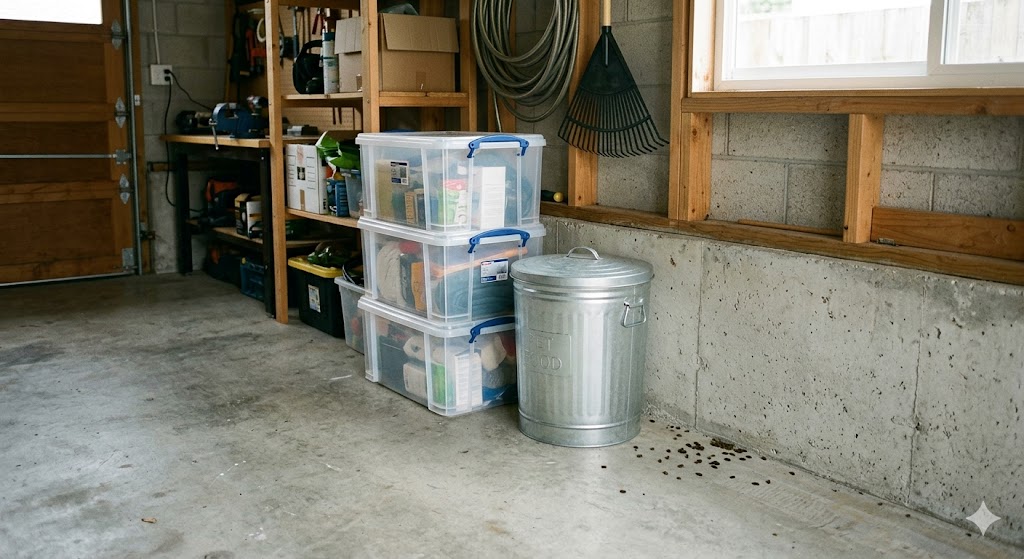
You may not see a live mouse during the day. Most garage mouse problems show up through small clues along walls, shelves, storage areas, and food sources.
- Small dark droppings near walls, corners, shelves, or stored food
- Chewed cardboard, seed bags, pet food bags, insulation, or plastic
- Shredded paper, fabric, leaves, or cotton used as nesting material
- Musty urine odor in boxes, cabinets, or closed storage areas
- Scratching sounds at night
- Greasy rub marks along wall edges or baseboards
- Mouse activity near the car, engine bay, trunk, or cabin filter area
Why Garages Attract Mice
Garages are attractive because they are usually less sealed than living spaces. A small gap under a garage door, around a pipe, beside a vent, or at the foundation edge can give mice access. Once inside, they look for food and protected nesting spots.
Common garage attractants include:
- dog food, cat food, bird seed, grass seed, or livestock feed;
- cardboard boxes and paper piles;
- old blankets, cushions, rags, stored clothing, or holiday decorations;
- trash, recycling, spilled seed, and crumbs;
- warm engines and protected car spaces in cold weather;
- gaps around garage doors, side doors, vents, and utility lines.
Cleaning alone may not remove mice once they are established, but poor sanitation lets them thrive. The strongest garage plan combines sanitation, trapping, and exclusion.
First 24 Hours: What to Do Now
- Protect food sources. Move pet food, bird seed, grass seed, snacks, and animal feed into metal cans or thick sealed bins.
- Remove nesting material. Throw away unnecessary cardboard, paper, fabric scraps, and soft clutter from floor-level storage.
- Find the active paths. Look along walls, behind shelves, near the garage door, around appliances, and beside stored food.
- Set several traps. Place traps along walls rather than in the middle of the floor. Mice usually travel edges.
- Check the car. Look under the hood, in the trunk, and around the cabin filter area for nesting material or droppings.
- Clean droppings safely. Do not sweep or vacuum dry droppings before disinfecting them.
Where to Inspect First
Use a flashlight and check the garage slowly. The goal is to find food, nesting material, droppings, and likely entry points.
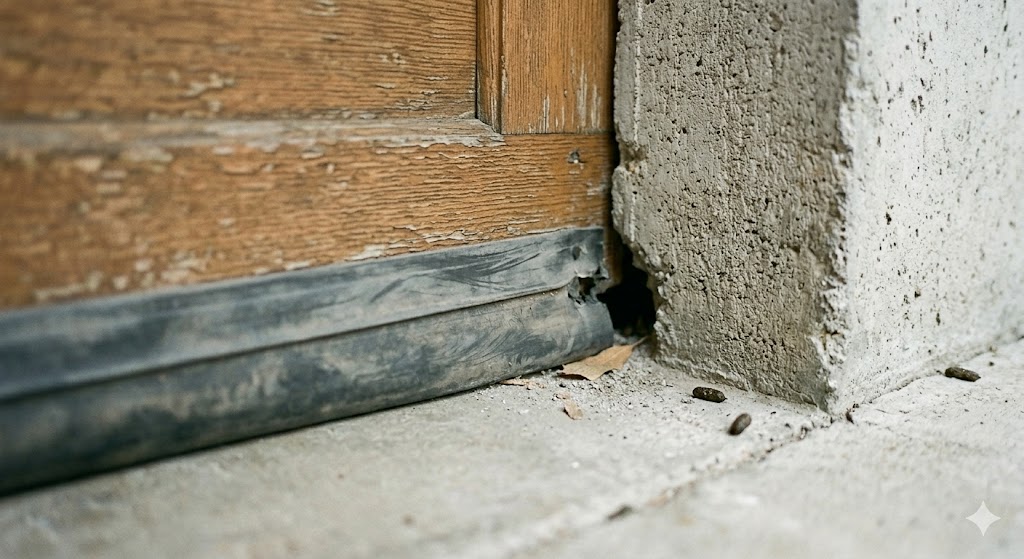
- Garage door corners and the rubber bottom seal
- Side doors, thresholds, and weatherstripping
- Vents, dryer vents, utility openings, and pipe penetrations
- Behind water heaters, freezers, washers, refrigerators, and shelves
- Inside tool cabinets, drawers, storage bins, and old furniture
- Near pet food, bird seed, grass seed, fertilizer, trash, and recycling
- Inside or near the car, especially if it is parked for long periods
Best Garage Mouse Control Options Compared
| Situation | Best option | Why it fits | Where to compare |
|---|---|---|---|
| Fresh droppings along walls or shelves | Snap traps | Fast, easy to monitor, and useful for confirming whether mice are still active. | Victor M150 on Amazon |
| Repeated traffic near storage or wall edges | Several traps along travel paths | One trap is rarely enough in a garage. Mice usually run the same edge routes. | Best mouse traps |
| You want an enclosed or multi-catch option | Tin-style multi-catch trap | Good for garage routes where mice travel repeatedly and you want an enclosed trap body. | Victor Tin Cat on Amazon |
| Gaps around the garage door | Door seal / sweep replacement | If light shows under the garage door, mice can investigate that edge and keep re-entering. | Garage door sweep on Amazon |
| Small gaps around pipes, vents, or utility lines | Exclusion material | Sealing entry points is what keeps new mice from replacing the ones you catch. | Copper mesh on Amazon or pest barriers guide |
Garage Mouse Shopping Kit
For most garage problems, you do not need a complicated setup. You need enough traps to cover the active routes, basic cleanup supplies, and exclusion materials for the gaps that are letting mice back in.
- Primary trap: Victor M150 snap traps are the simple low-cost starting point for droppings along garage walls, shelves, and food storage areas.
- Enclosed multi-catch option: the Victor Tin Cat fits garages, utility spaces, and storage areas where mice keep using the same route.
- Cleanup supplies: use disposable gloves and disinfectant spray before wiping droppings or nesting material.
- Entry-point supplies: use a garage door sweep for door-bottom gaps and copper mesh for small utility gaps after trapping is underway.
Do not make poison, peppermint oil, or an ultrasonic repeller your first purchase for an active garage problem. Start with traps and cleanup. Use exclusion materials after you know where mice are traveling and activity has started to drop.
Remove Food and Nesting Sources
This step makes every other method work better. If mice can keep eating spilled seed and nesting in cardboard, traps and repellents will underperform.
- Store pet food and bird seed in hard containers with tight lids.
- Keep trash and recycling closed.
- Replace cardboard storage with sealed plastic bins where possible.
- Move stored items off the floor and leave space along walls for inspection.
- Vacuum spilled food only after droppings have been disinfected and removed.
- Remove old fabric, insulation scraps, paper piles, and soft clutter.
Use Traps Along Garage Travel Paths
Traps are usually the best first control method for a garage. They let you confirm activity, remove mice from accessible areas, and avoid dead-mouse odor in walls, boxes, insulation, or vehicle spaces.
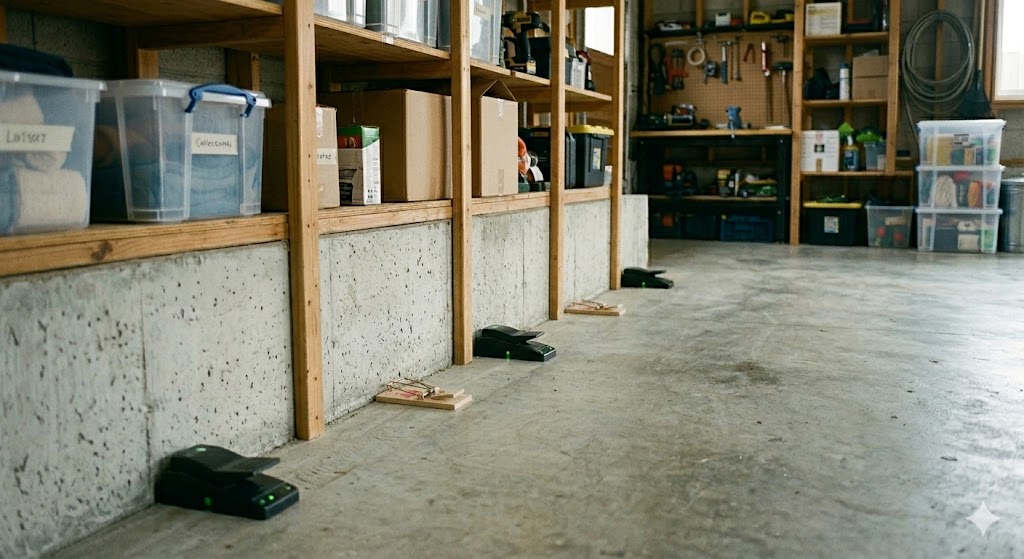
For garages, place traps along walls, behind shelving, near droppings, beside the garage door edges, and close to stored food sources. Mice usually travel protected edges instead of open floor space.
Best Simple Starting Point
Victor M150 Snap Traps
A straightforward low-cost option when you find fresh droppings along garage walls, shelves, food storage, or door edges. Use several traps at once rather than relying on one.
Best Enclosed Multi-Catch Alternative
Victor Tin Cat Mouse Trap
Useful for repeated mouse traffic along the same garage wall or storage route. The enclosed design is a better fit for garages, utility spaces, and storage rooms than open living areas.
Do not place one trap in the middle of the garage and expect it to solve the problem. Use several traps along the same paths mice already use: walls, corners, garage door edges, storage shelves, and food-source areas.
Seal Entry Points, But Time It Correctly
Traps remove the mice already using the garage. Exclusion stops new mice from replacing them. The timing matters: if you seal everything too early while mice are still inside, you may trap them in walls, storage areas, or the garage itself.
A practical sequence is:
- Clean and remove food sources.
- Set traps along active paths.
- Check traps daily until activity slows.
- Seal likely entry points.
- Keep monitoring for new droppings for one to two weeks.
Focus on the garage door seal, side-door threshold, vents, utility openings, foundation gaps, and exterior trim. If light passes under a door, mice may be able to investigate that gap too. For a broader entry-point checklist, use the pest control barriers guide.
Should You Use Poison in a Garage?
Poison is not the first choice for most garage mouse problems. Loose bait is risky around pets, children, and non-target animals. Poison can also lead to dead mice in walls, storage boxes, insulation, or vehicle areas.
If rodenticide is used, it should be in a labeled bait station and used exactly according to the product label. For a safety-first comparison, read best mouse poison. For this garage page, traps and exclusion are the better primary recommendations.
Do Ultrasonic Repellers, Peppermint Oil, or Kitty Litter Work?
Repellents are best treated as support, not as the main solution. Peppermint oil, strong smells, predator scents, and ultrasonic devices may discourage mice temporarily in some areas, but they do not remove food, nesting material, or entry points.
If you use a repellent, use it after cleaning and trapping. Do not rely on it while pet food, bird seed, cardboard, or open gaps are still available. If you still want a plug-in support device, compare options in our ultrasonic rodent repeller guide.
Garage Mice Can Move Into Your Car
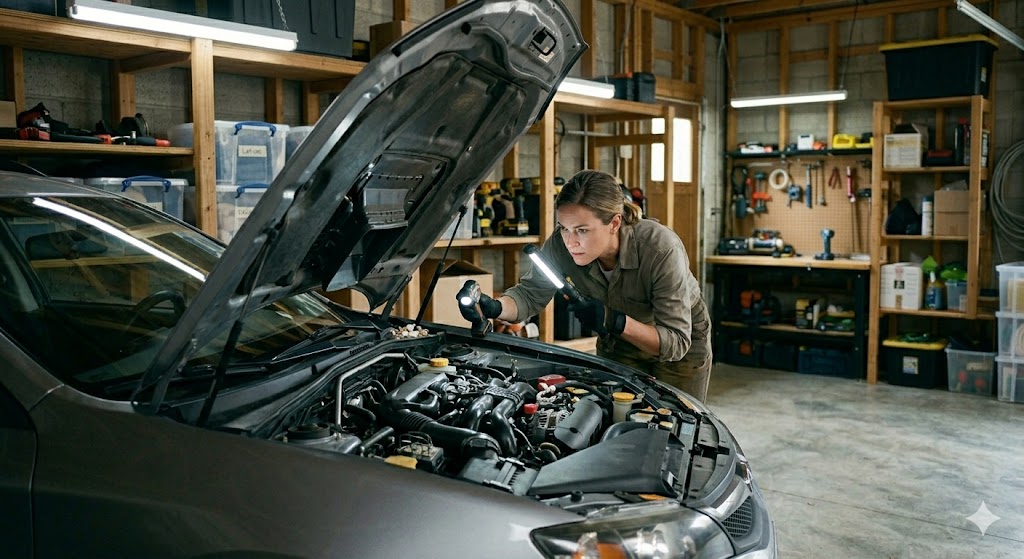
A mouse problem in the garage can turn into a car problem quickly. Warm engines, cabin air filter areas, trunks, and stored items inside vehicles can attract mice, especially when the car sits unused.
Check the car if you notice garage activity:
- open the hood and look for nesting material, seed shells, or droppings;
- check the cabin filter area if the vents smell musty or foul;
- look in the trunk, spare tire well, glove box, and under seats;
- do not store snacks, pet food, or bird seed near the car;
- if you see chewed wires, have the vehicle inspected before driving.
Use this guide if the car is already involved: mice in car.
How to Clean Mouse Droppings in a Garage Safely
Do not sweep or vacuum dry mouse droppings. That can stir contaminated dust into the air. Wet rodent urine and droppings with disinfectant before wiping them up.
- Ventilate the garage if you can do so safely.
- Put on rubber or plastic gloves.
- Spray droppings, urine spots, and nesting material with disinfectant until wet.
- Let the disinfectant sit according to the label.
- Use paper towels to wipe up the droppings and nesting material.
- Place waste in a covered trash container.
- Disinfect hard surfaces afterward.
- Wash gloved hands, remove gloves, and wash hands again.
If there is heavy contamination, insulation involvement, or a strong urine odor, professional cleanup may be safer than a quick DIY wipe-down.
DIY vs Professional Mouse Control Cost
Most small garage mouse problems are cheaper to start with DIY traps and cleanup. Professional help becomes more valuable when mice keep returning, the car is involved, or you cannot find the entry points.
| Problem | Typical DIY Cost | Typical Pro Cost | Best first move |
|---|---|---|---|
| A few droppings near storage or food | $10-40 for traps and storage cleanup | $150-300+ | DIY traps and sealed food bins |
| Repeated activity along garage walls | $25-75 for several traps and basic sealing | $200-500+ | Traps plus entry-point inspection |
| Mice entering the car | $25-100 for garage control, but vehicle damage can cost much more | $250-700+ | Inspect garage and vehicle quickly |
| Recurring mice after trapping | More traps may not solve hidden entry points | $300-1,500 for exclusion work | Deeper rodent inspection and exclusion plan |
If activity is limited to one accessible garage area, start with food control, several traps, cleanup, and obvious gap sealing. If mice keep coming back after a serious trapping effort, stop buying random repellents and find the entry point.
When DIY Stops Being Enough
DIY is reasonable when you see a small number of droppings and can identify the likely garage entry points. A deeper inspection makes more sense when the problem keeps returning or has spread beyond the garage.
Treat the problem as bigger than a simple garage cleanup if:
- mice keep returning after trapping;
- you hear scratching in walls, ceiling voids, or the attic;
- you see chewed wiring or vehicle damage;
- there are many droppings or a strong urine odor;
- you cannot find where mice are entering;
- mice are moving from the garage into the house.
If wall sounds are part of the problem, compare the plan with our guide to mice in walls. If the activity is overhead, use the attic guide before sealing roofline or soffit openings.
Frequently Asked Questions
What is the fastest way to get rid of mice in a garage?
The fastest practical method is to remove food and nesting sources, set several traps along walls and active paths, then seal entry points once activity drops. One trap or one repellent usually is not enough.
Where should I place mouse traps in the garage?
Place traps along walls, behind shelves, near droppings, beside the garage door edges, and close to stored food sources. Mice prefer edges and protected paths rather than open floor space.
Will mice leave if I clean the garage?
Cleaning helps, but it may not be enough by itself. Mice can survive on small food sources and may keep using the garage if entry points and nesting areas remain.
Should I use poison in the garage?
Poison is usually not the best first step in a garage. Traps let you confirm removal and avoid dead-mouse odor in walls, boxes, or vehicles. If poison is used, it should be in labeled bait stations and kept away from children, pets, and non-target animals.
Do mice in the garage mean mice are in my car?
Not always, but the risk is real. Check under the hood, cabin filter area, trunk, and interior storage areas if you see droppings or nesting material in the garage.
Final Thoughts
Mice in the garage are best handled with a practical sequence: remove food, reduce nesting material, trap along active paths, clean droppings safely, and seal entry points. Repellents can support the plan, but they should not replace traps and exclusion.
If you are dealing with a small, accessible garage problem, start with cleanup and traps. For simple snap traps, compare Victor M150 snap traps on Amazon. For repeated mouse traffic or an enclosed multi-catch setup, compare the Victor Tin Cat mouse trap on Amazon.
If mice keep coming back, the real issue is probably outside access, hidden nesting, or a route into another part of the house. In that case, inspect the garage door seal, vents, utility gaps, attic route, and wall voids before the problem spreads to the house or car.