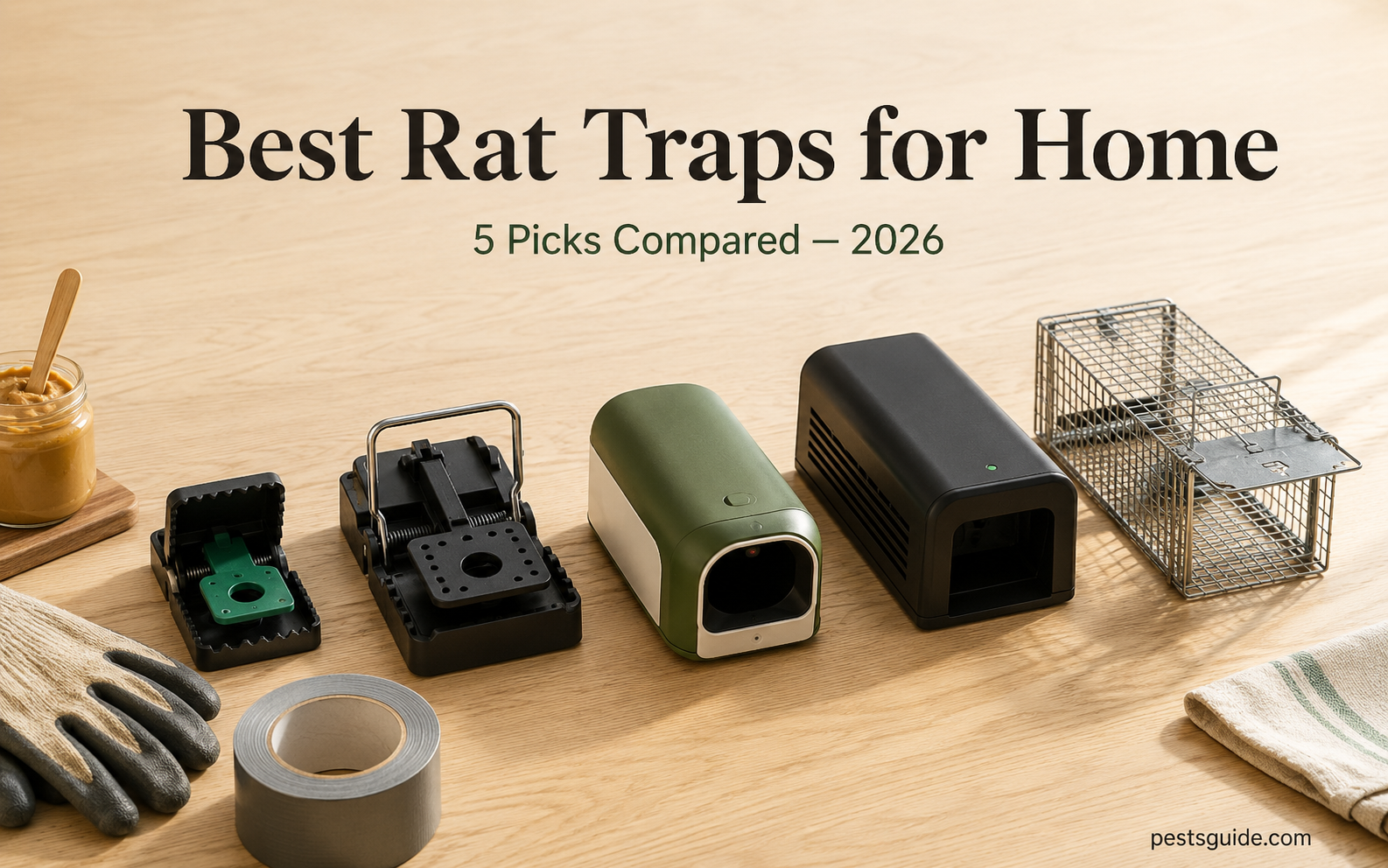
If you’ve confirmed rats in your home, choosing rat traps that work matters more than most homeowners realize. Mouse traps don’t work on rats — they’re too small, too weak, and rats often pull the bait off without triggering them. The wrong trap means weeks of frustration and a growing infestation. This guide compares five of the best rat traps for common US home situations in 2026, with practical snap traps first, a humane live-catch option for limited cases, and premium electric or smart traps where they make sense.
Quick Answer: 5 Best Rat Traps That Work
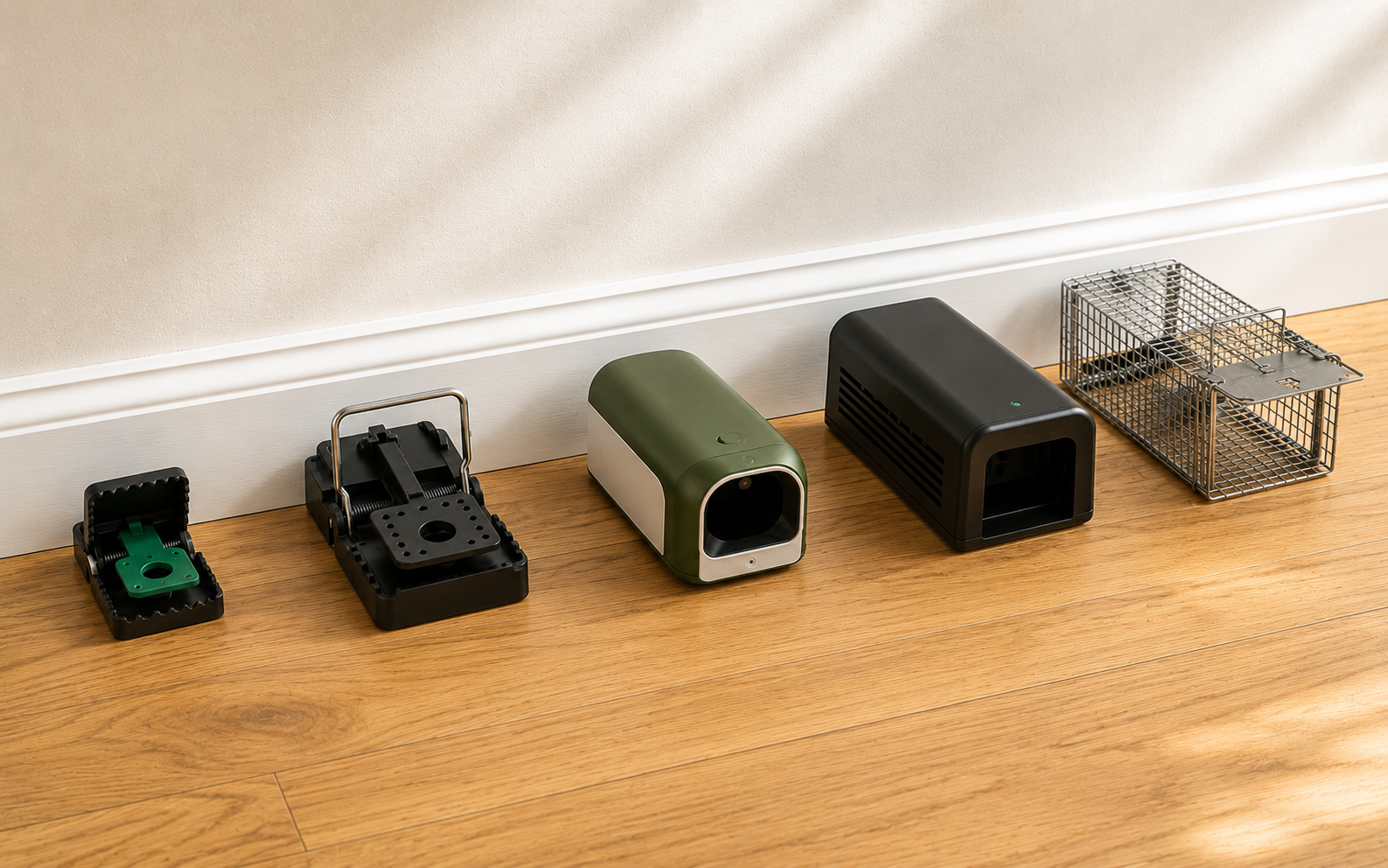
Five rat-specific options, with proven mechanical snap traps first, a live-catch trap for limited humane-control situations, and specialty electric or smart options lower down:
Best Budget Multi-Pack
Tomcat Rat Snap Trap (8-Pack)
Pre-baited plastic snap traps designed specifically for Norway and roof rats. The 8-pack lets you place multiple traps along rat runways at once — the standard approach for active infestations.
Best Standard Pick — Professional-Style
Victor M326 Power-Kill Rat Trap (6-Pack)
Victor is a widely used rat-control brand in the US. The M326 has a precision trigger that helps reduce escapes, and the larger trip pedal accommodates adult rat size. Reusable.
Best Humane Rat Trap — Live Catch
Kensizer Humane Rat Trap (Live Catch)
Metal cage trap that catches rats alive without a kill bar. Best only for homeowners who can check traps frequently and follow local rules for handling or release. Live-catch traps are not a low-effort solution for active infestations.
Best Electric — No-See, No-Touch
Victor Indoor Electronic Rat Trap (2-Pack)
Battery-powered enclosed unit designed to deliver a lethal shock quickly. The sealed design means you do not have to see or touch the rat directly — you empty the unit into the trash. Best for homeowners with low tolerance for handling kills.
Specialty Premium — Self-Resetting, Toxin-Free
Goodnature Smart Trap (Bluetooth Connected)
CO2-powered, self-resetting trap that can fire repeatedly from one cartridge without daily rebaiting. Bluetooth tracks activity through a mobile app — useful for sheds, garages, attics, and properties you do not check daily, but overkill for many indoor problems.
Prices and availability change frequently — click through to Amazon for current pricing. PestsGuide.com earns from qualifying purchases (Amazon Associates).
Why You Need a Rat Trap (Not a Mouse Trap)
This is the single most common mistake we see. Homeowners spot droppings, assume “rodents,” buy a 6-pack of cheap mouse traps from the hardware store — and weeks later wonder why nothing is working.
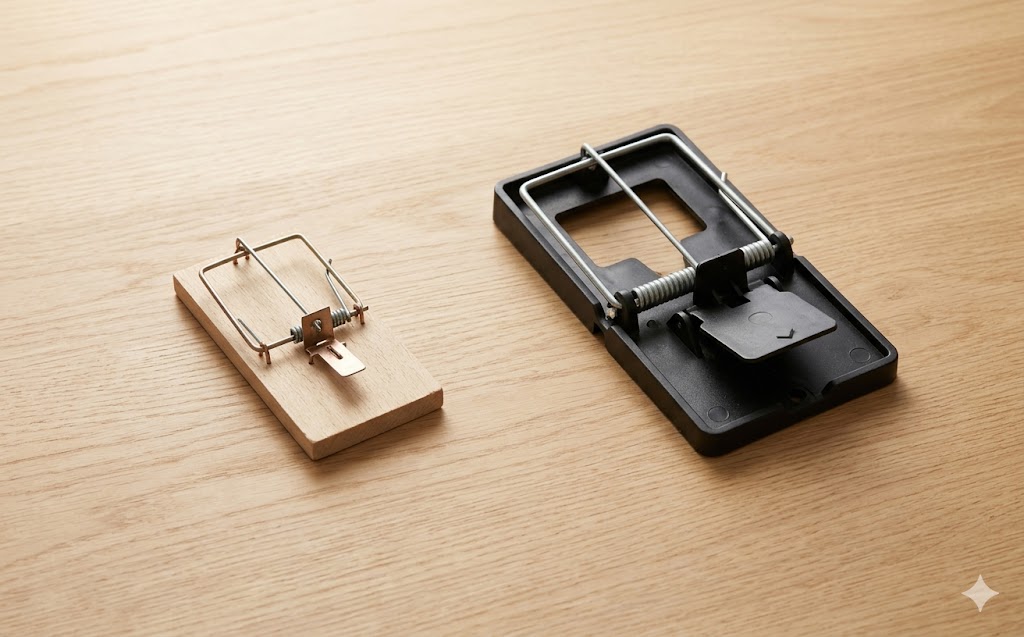
Rats and mice are not interchangeable. A Norway rat can weigh 8-16 ounces and measures 7-10 inches in body length. A house mouse weighs less than an ounce and measures 2-4 inches. A mouse trap’s trigger requires 0.1-0.2 oz of pressure and uses a small, weak spring. A rat can pull the bait off, set off the trap with its nose, escape unharmed — and learn to avoid that style of trap.
Rat-specific traps have:
- A larger trip pedal (about 2 inches wide vs less than 1 inch for mouse traps)
- A stronger spring (rat traps deliver 18-22 lbs of force vs 4-7 lbs for mouse traps)
- A bigger kill bar designed to break a rat’s neck or spine on contact
If you’re not sure whether you have rats or mice, look at the droppings. Mouse droppings are 1/8 to 1/4 inch long and look like grains of rice. Rat droppings are 1/2 to 3/4 inch long and look like raisins or olive pits. If you have rat droppings, use rat-sized traps.
 How to Choose: Match the Trap to Your Situation
Active infestation with multiple sightings → Tomcat 8-Pack or Victor M326 6-Pack
If you’re seeing rats during the day, hearing scratching in multiple rooms, or finding droppings in more than one area, you have an established population. The standard pest control approach is to deploy at least 6-8 traps simultaneously along the rat runways (typically walls, baseboards, behind appliances). One or two traps will not solve an active infestation. Buy in bulk.
Pets, young children, or strong personal preference for non-lethal → Kensizer Live Catch
Live-catch traps require a real commitment. You must check the trap at least once every 12 hours (a trapped rat without water can suffer quickly, defeating the humane intent). You also need to follow your local rules for handling, release, or euthanasia; in some areas, relocating rats is restricted or discouraged because they are invasive and can spread disease. And you must accept that if you have an active infestation, live-catch traps alone will not solve it — you’ll need a much larger trap deployment than with kill traps.
That said, for households with toddlers crawling on the floor, or homeowners who simply don’t want to use a kill trap, the Kensizer is a reasonable choice for one or two rats if you can check it often and handle the next step safely.
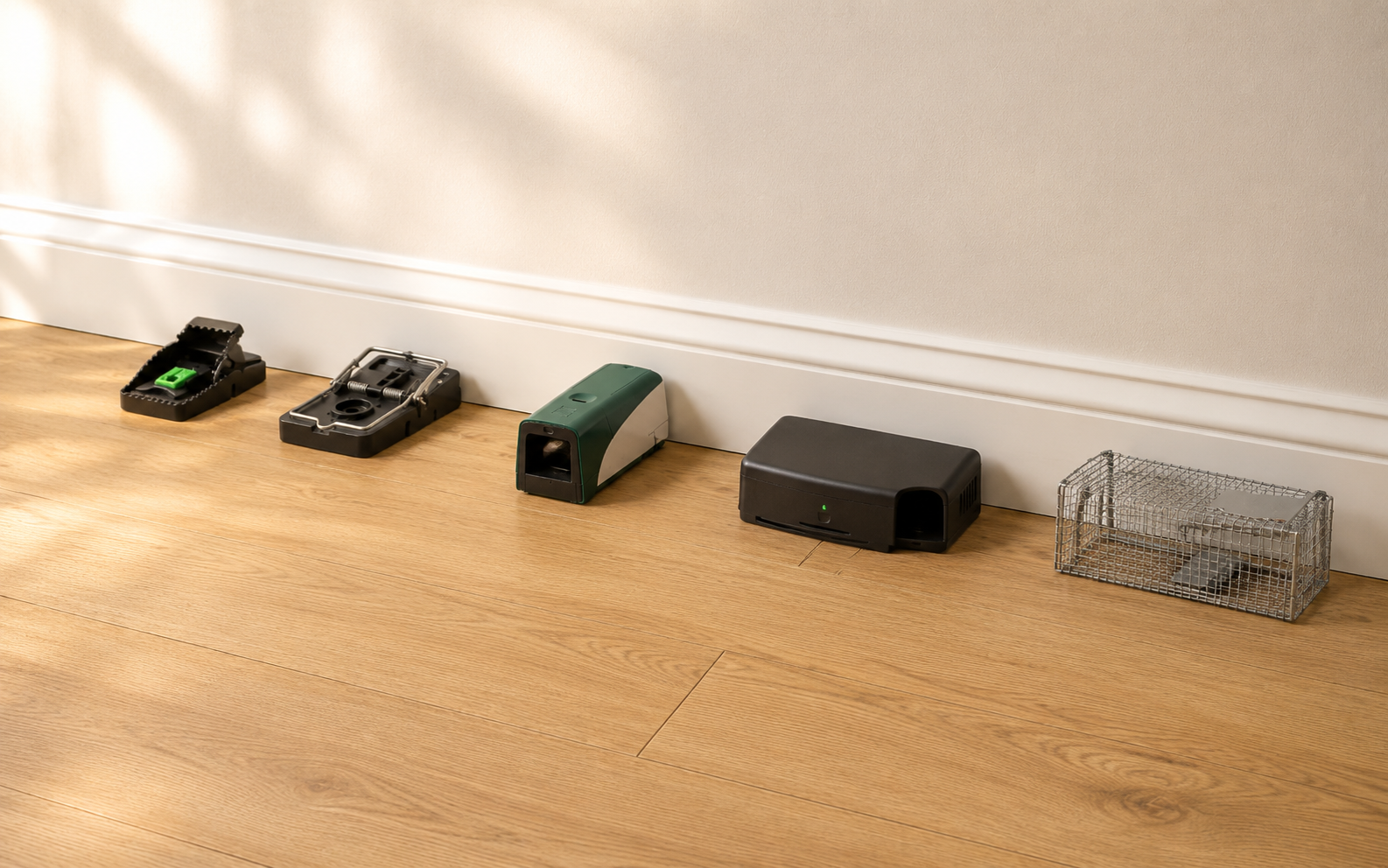 You don’t want to see or touch dead rats → Victor Electronic 2-Pack
This is the most common reason homeowners hesitate to deal with rats themselves. The Victor electronic rat trap solves it by enclosing the kill inside a sealed plastic box. When the rat enters, it completes a circuit and receives a lethal shock. You see a green light, dump the carcass into the trash without ever touching it, and reset the trap with a fresh battery cycle.
It is significantly more expensive per trap than snap traps, but for many homeowners that’s worth it for the no-contact experience.
Shed, garage, attic, or vacation property → Goodnature Smart Trap
The Goodnature is overkill for an average household with 1-3 rats. Where it earns its premium price is in situations where you can’t check traps daily: sheds, detached garages, attics, basements, second properties, or commercial buildings. One CO2 cartridge can fire repeatedly without daily rebaiting. The Bluetooth app tells you when the trap fires, so you can show up only when there’s work to do.
Term: “Humane”
A word of caution. The Victor electronic trap markets itself as “humane” — but only because it is designed to kill quickly without prolonged suffering. It does kill. If you are searching for “humane rat trap” because you don’t want the rat to die, you want a live-catch trap like the Kensizer, not an electric one. This is one of the most common buyer confusions on Amazon, leading to disappointed reviews.
What Bait Actually Works (Not Cheese)
Cheese is a Tom and Jerry myth. Rats are far more attracted to high-calorie, fatty, or sweet foods. The most consistent baits in our experience and in pest control research are:
- Peanut butter — the gold standard. Sticky enough that the rat has to work for it, ensuring it triggers the trap. Use a small dab (pea-sized), not a glob.
- Bacon or bacon grease — high-fat content rats can smell from across a room. Works especially well in cold weather when rats need extra calories.
- Hazelnut spread (Nutella) — combines sweetness and stickiness; works particularly well in summer.
- Dried fruit — raisins, dried cranberries. Use when rats appear to be avoiding nut-based baits.
- Slim Jim or jerky pieces — meaty baits that survive multiple days without spoiling.
Rotate bait every 3-4 days. If rats see (and survive) the same bait twice, they may start avoiding it.
 How and Where to Place Rat Traps
Trap placement matters more than trap brand. Even the best rat trap in the wrong spot can catch nothing for weeks.
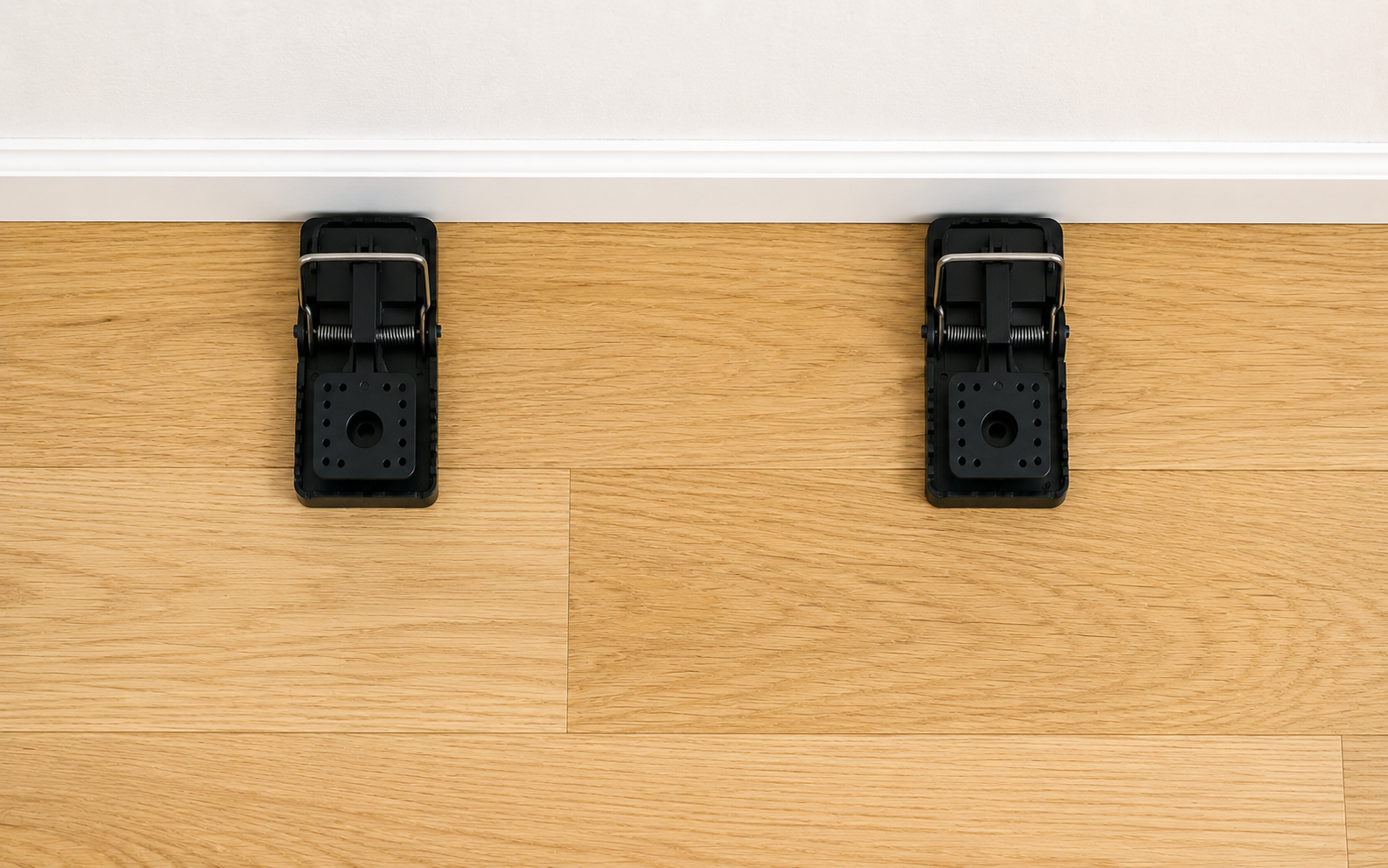
Rats run along walls — they don’t cross open spaces. Place traps with the trigger pedal closest to the wall, perpendicular to the wall, so the rat runs into the bait while moving along its normal route. Two traps placed about 2-3 feet apart, parallel to each other, create a kill zone that’s hard for rats to bypass.
 Common placement spots:
- Behind the refrigerator, stove, and washing machine
- Under the kitchen sink and inside lower cabinets
- Along baseboards in rooms where you’ve seen droppings
- In the attic, near insulation edges and rafters
- In the garage, near doors and along the perimeter
- In crawl spaces, near foundation vents and pipes
Wear gloves when handling traps, dead rodents, and contaminated areas. Gloves reduce direct contact with rodent urine, droppings, saliva, and nesting material, and they also keep bait and traps cleaner during setup.
Common Mistakes That Keep Rats Alive
- Setting just one or two traps. Active infestations require 6-8 minimum. Rats are neophobic — they’re suspicious of new objects in their environment. Multiple traps overwhelm their caution.
- Placing traps in the middle of a room. Rats hug walls. A trap in open floor space might as well be invisible.
- Pre-baiting too lightly. Many pest control pros recommend placing baited but unset traps for 2-3 days first, letting rats eat freely. Once rats are confident, set the traps. Catch rate jumps significantly.
- Using cheese, hot dogs, or fresh meat that spoils. Rats avoid spoiled bait. Stick to peanut butter, dried meat, or shelf-stable options.
- Removing dead rats with bare hands. Rats can carry pathogens. Always use gloves and double-bag the carcass before disposal.
- Giving up after 3-4 days. Rat trapping can take 1-3 weeks for a full infestation. Patience and consistency win.
Safety: Traps Around Pets and Children
Snap traps can cause real injury to dogs, cats, and toddlers. Even a rat-sized snap trap won’t break a dog’s leg, but it can break a finger or cause severe bruising. If you have pets or young children, you have three good options:
- Place traps inside covered bait stations — enclosed plastic boxes that only rats can enter (Tomcat sells compatible ones)
- Place traps only in inaccessible areas — attics, crawl spaces, behind appliances
- Use the Victor Electronic trap — the kill chamber is enclosed, which reduces contact when the trap is used exactly as directed
Avoid live-catch traps in homes with curious dogs — a trapped, stressed rat in a cage is something dogs may try to attack, leading to bites and injuries on both sides.
 FAQ
FAQ
How long does it take to get rid of rats with traps?
For a small population (1-3 rats), expect 3-7 days with 4-6 traps deployed. For an established infestation (5+ rats, droppings in multiple rooms), expect 2-4 weeks with 8+ traps. If you’re not catching anything after 5 days, your placement is likely wrong — move the traps.
Can rats learn to avoid traps?
Yes. This is often called “trap shyness” or neophobia. Rats can be cautious around new objects, and a near miss can make them harder to catch. The solution is to improve placement, pre-bait unset traps for a few days, and rotate trap style only if the first setup keeps failing.
Do glue traps work for rats?
Technically yes, but CDC guidance advises against glue traps and live traps for routine home rodent removal because frightened rodents may urinate and increase disease-exposure risk. Glue traps can also injure rats and lead to prolonged suffering. The traps in this guide prioritize snap/electronic options for faster control, with live-catch included only for homeowners who understand the extra handling and legal responsibilities.
What’s the best trap for an attic infestation?
For hard-to-check attic areas, the Goodnature Smart Trap is the specialty option — you set it up, get phone notifications, and avoid climbing up to inspect every day. For many attic problems, a 6-pack of Victor M326 placed along rafters and near insulation edges is the better-value starting point.
Should I use traps or poison?
For indoor rat problems, traps are usually the safer and faster first step. Poison can take days to work, and rats may crawl into walls or attics before dying — leading to odor and cleanup problems. Traps give you immediate confirmation and avoid secondary-poisoning concerns for pets or wildlife. If you use rodenticide outdoors, use only EPA-registered products in locked bait stations and follow the label exactly, or hire a licensed professional.
Can I reuse a snap trap after it’s killed a rat?
Yes. Wipe the trap with soapy water, dry it, and re-bait. Don’t use bleach — the strong smell deters rats. Some pest control pros prefer to dispose of plastic snap traps after 3-5 kills because the wood/plastic absorbs scent over time, but this is optional.
What if I have rats outside but not inside?
Outdoor rat populations are often managed with exclusion, sanitation, habitat cleanup, and, when needed, locked bait stations rather than exposed snap traps that can harm wildlife and pets. This guide focuses on indoor trapping. For outdoor rat problems near sheds, woodpiles, or compost, consult a professional or check our rats overview guide.
How do I dispose of a trapped rat?
Wear disposable gloves. Use the trap to drop the rat directly into a plastic bag (don’t touch it). Tie the bag, place it inside a second bag, and put it in your outdoor trash. Wash hands thoroughly. Disinfect the trap area with a 10% bleach solution before re-setting.
Final Thoughts
The best rat trap for your home depends on three things: how many rats you have, where they are, and how comfortable you are with the kill process.
For most homeowners with an active indoor problem, the right move is a multi-trap deployment — 6-8 Victor M326 snap traps placed along walls and behind appliances. Cheap, effective, and fast. If you can’t stomach handling kills, swap in Victor Electronic traps for the same placement strategy at higher cost per trap.
For attics, sheds, garages, or properties you do not check daily, the Goodnature Smart Trap is a specialty option for low-check locations, but it is overkill for most routine indoor rat problems.
For a single rat in a household where kill traps are not acceptable, the Kensizer Live Catch trap is the humane-control option — provided you commit to checking it twice a day and follow local rules for what happens after capture.
If traps don’t work after 2 weeks of consistent effort, the infestation is likely larger than a simple trap purchase can solve. The usual causes are poor placement, a food source that is still available, rats nesting in a wall or attic, or new rats entering from the garage, crawlspace, roofline, or foundation.
Before buying more traps, reset the plan: use 6-8 rat-sized traps at once, place them directly on runways, remove pet food or birdseed, and inspect the entry points that keep feeding the problem.
Next step: start with the rats control hub, check the rats in the garage guide if activity starts near storage or doors, and use the entry-point barrier checklist before sealing gaps.