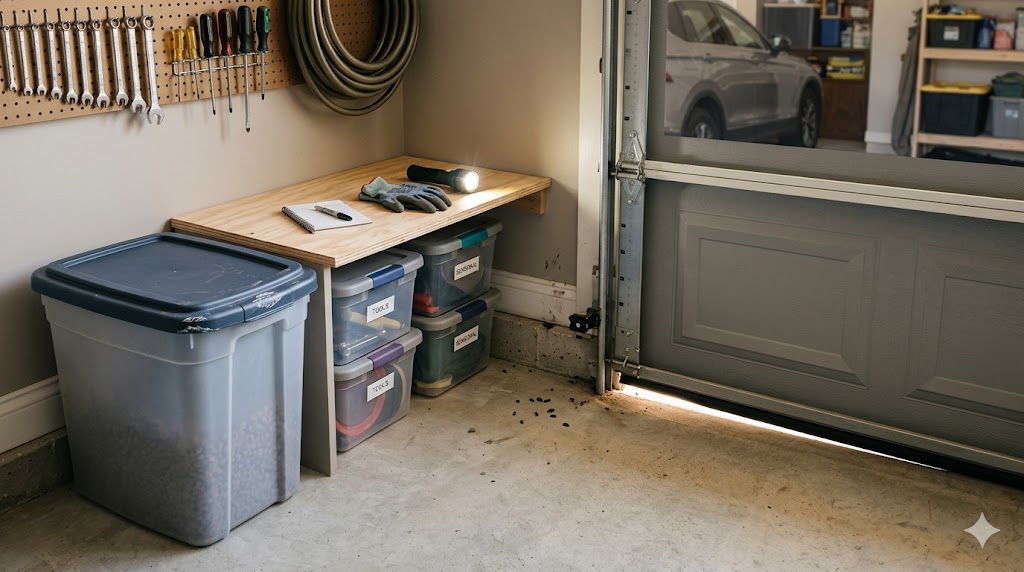
Rats in the garage are not just an inconvenience. They can chew wiring, damage stored items, contaminate surfaces with droppings, and move from the garage into the main house if the entry points stay open.
The best approach is simple: remove food sources, set enough rat-size traps, clean safely, and seal the garage so new rats cannot get in. For most homeowners, traps and exclusion are a better first step than rodenticide.
PestsGuide participates in Amazon Associates and other affiliate programs. This does not affect the price you pay.
Quick Answer: Best First Steps for Rats in the Garage
If you see rat droppings, hear scratching at night, or find chewed bags, boxes, or wires, do not start with rodenticide. Start with traps, cleanup, and sealing.
- Set 4-6 rat-size traps along walls and behind stored items.
- Remove pet food, bird seed, grass seed, and garbage from the garage or store them in sealed containers.
- Check the garage door bottom seal and utility gaps where rats may be entering.
- Clean droppings safely only after wetting them with disinfectant. Do not sweep dry droppings.
- Keep trapping for 7-10 days after the last catch to confirm the problem is controlled.
Recommended First Buys
Start with traps, cleanup, and sealing — not rodenticide
For most garage rat problems, you do not need a long list of products. You need enough rat-size traps, safe cleanup supplies, and materials to close the gaps where rats are getting in.
Best first trap
Tomcat Rat Snap Trap 8-Pack
Good default choice because you can set several traps at once along walls, corners, and behind storage items.
No-touch option
Victor Indoor Electronic Rat Trap
Better if pets or kids may access the garage, or if you prefer enclosed disposal instead of open snap traps.
Stop new rats
Copper Mesh + Garage Door Seal
Traps handle current rats. Sealing the door bottom and utility gaps helps prevent the next ones from getting in.
24-48 Hour Action Plan
- Confirm activity. Look for droppings, gnaw marks, greasy wall smudges, shredded nesting material, or sounds at night.
- Remove food sources. Store pet food, bird seed, grass seed, and pantry overflow in sealed metal or thick plastic containers.
- Set several rat-size traps. Use at least 4-6 traps in a one-car garage and 6-10 traps in a two-car garage.
- Place traps along walls. Rats usually travel beside walls, behind objects, and through corners — not across open floor.
- Check the garage door and utility gaps. Do a quick entry-point audit before assuming the problem is solved.
- Clean droppings safely. Wet droppings with disinfectant first. Do not sweep or vacuum dry droppings.
- Keep monitoring. Continue trapping until you have no new signs for 7-10 days.
Best Trap Type for Your Situation
| Situation | Best Option | Why |
|---|---|---|
| Standard garage rat problem | Tomcat Rat Snap Trap 8-pack | Affordable, reusable, and lets you set multiple traps at once. |
| Pets or kids may access the garage | Victor Indoor Electronic Rat Trap | Enclosed design reduces open-floor trap exposure. |
| Recurring activity | Goodnature Smart Trap | Useful when you need longer monitoring and fewer manual checks. |
| No-kill household | Kensizer Humane Rat Trap | Live-catch option, but it must be checked frequently. |
For a deeper comparison, see our best rat traps guide.
Signs of Rats in the Garage
Most homeowners notice signs before they see a live rat. Focus on fresh activity and where it appears.
Droppings
Rat droppings are usually dark, oval, and larger than mouse droppings. You may find them along walls, behind storage boxes, near pet food, near bird seed, or around a parked car.
Chew marks
Rats chew cardboard, plastic bags, wood edges, insulation, electrical wires, and vehicle wiring. Chewed wires in a stored car can become expensive quickly, so inspect the engine bay if you see droppings near a vehicle.
Sounds at night
Scratching, scurrying, or scraping sounds near the garage door, walls, ceiling, or stored items can point to active rodent movement.
Grease marks and tracks
Rats often use the same routes repeatedly. Look for dark smudges along baseboards, walls, pipes, and dusty surfaces.
Where Rats Get Into a Garage
A rat does not need a large opening. Common garage entry points include:
- worn rubber seal under the garage door;
- gaps at the bottom corners of the garage door;
- openings around electrical conduits, gas lines, cables, and plumbing;
- foundation cracks near the wall-to-floor joint;
- damaged vents or missing screens;
- attic access from an attached garage;
- dense vegetation, wood piles, or clutter next to the garage exterior.
If rats keep returning after trapping, the problem is usually an open entry point or a food source that has not been removed.
Where to Place Rat Traps in the Garage
Trap placement matters more than the brand. A good trap in the wrong place may catch nothing.
- Along walls: place traps parallel to the wall with the trigger end facing the wall.
- In corners: corners are common turning points.
- Behind objects: workbenches, freezers, shelves, storage bins, and tool chests create hidden rat routes.
- Near droppings: fresh droppings usually mark active travel paths.
- Avoid open floor: rats are less likely to cross exposed space.
How many traps do you need?
- Small one-car garage: 4-6 traps
- Standard two-car garage: 6-10 traps
- Large garage or workshop: 10-15 traps
Do not rely on one trap. Multiple traps placed in the right paths usually work better than one expensive trap in a random spot.
Best Bait for Rat Traps
Peanut butter is the most practical bait for garage rat traps because it sticks to the trigger and is hard to steal without activating the trap.
Other useful bait options include:
- peanut butter with bird seed pressed into it;
- bacon grease;
- small pieces of dried fruit;
- nuts or sunflower seeds if rats are already feeding on seed bags.
Avoid using large chunks of bait that rats can grab without touching the trigger.
Pre-baiting tip
If rats avoid new traps, place bait on the traps without setting them for 2-3 nights. Once the rats start feeding comfortably, set the traps. This can help with cautious rats in garages where traps have failed before.
Should You Use Rat Poison in the Garage?
For most home garages, rat poison is not the best first choice. Poisoned rats can die inside walls, ceiling spaces, insulation, or vehicle cavities, which creates odor and removal problems. It can also create risks for pets, children, and non-target wildlife.
Use traps first. If the problem is large, recurring, or spreading into the house, consider a licensed pest control professional instead of placing loose rodenticide in the garage.
How to Clean Rat Droppings Safely
Do not sweep or vacuum dry droppings. That can spread contaminated dust into the air.
- Put on disposable gloves.
- Spray droppings and contaminated surfaces with disinfectant.
- Let the area sit for 5-10 minutes.
- Wipe up with paper towels.
- Double-bag waste and place it in an outside trash bin.
- Disinfect the area again after removal.
- Wash hands thoroughly after removing gloves.
For heavier contamination, follow the CDC’s rodent cleanup guidance, including ventilating enclosed spaces before cleanup and using disinfectant before wiping up droppings.
How to Seal the Garage Against Rats
Trapping controls the rats currently inside. Sealing prevents the next rats from entering.
Garage door bottom
Stand inside the garage during daylight and look for light under the door. If you see gaps, replace the bottom seal. Pay special attention to the bottom corners, where rodents often enter first.
Utility gaps
For gaps around pipes, conduits, gas lines, and cables, pack copper mesh into the opening, then seal over it with an appropriate exterior-grade sealant or foam.
Vents and screens
Repair damaged vent covers and use 1/4-inch hardware cloth where appropriate. Thin plastic screening is usually not enough for rodents.
Exterior clutter
Move wood piles, stacked boxes, unused pots, and dense vegetation away from the garage walls. Rats are more likely to approach entry points when they have cover.
How to Protect a Car Parked in the Garage
Rats may nest in engine bays, chew wiring, or leave droppings near air filters and insulation. If you see droppings near a parked car, inspect before driving.
- Do not leave food, wrappers, pet treats, or bird seed in the car.
- Open the hood and check for droppings, shredded material, or chewed wires.
- Place traps around the car along walls and nearby travel paths, not inside the vehicle cabin.
- If the car sits for long periods, inspect it more often.
For a full vehicle-specific guide, see mice and rats in a parked car.
When DIY May Not Be Enough
Most garage rat problems can be handled with traps, cleanup, and sealing. Get help if:
- you keep catching rats but new droppings appear;
- rats are also showing up inside the house;
- you cannot find the entry point;
- there is heavy contamination;
- wiring damage has already happened;
- children, pets, or vulnerable household members may be exposed.
If rats keep coming back
Fix the source, not just the trap count
Recurring rats usually mean an open gap, a food source, or hidden shelter near the garage. Traps control current activity, but sealing and storage changes prevent the next round.
FAQ
How long does it take to get rid of rats in the garage?
For a small to moderate problem, expect 2-3 weeks: early catches in the first week, fewer signs in the second or third week, and continued monitoring after that.
Do rats leave the garage on their own?
Usually no. If the garage provides food, shelter, or easy entry, rats are likely to stay or return.
Can rats damage a parked car?
Yes. Rats can chew wiring, shred insulation, leave droppings, and nest in engine areas. Inspect stored vehicles if you see droppings nearby.
What smells keep rats away?
Strong scents like peppermint may make an area less attractive for a short time, but they rarely solve a garage rat problem by themselves. Traps, food removal, and sealing are more reliable.
Why do rats keep coming back after trapping?
Usually because an entry point is still open or food is still available. Trapping handles current rats; sealing prevents new ones.
Are rat traps safe around pets and kids?
Open snap traps should not be placed where pets or children can reach them. Use enclosed electric traps, place traps behind barriers, or choose live-catch traps if safety access is a concern.
Bottom Line
To get rid of rats in the garage, start with the basics: remove food, set enough rat-size traps along walls, clean droppings safely, and seal entry points. Do not rely on rodenticide as your first move, and do not assume one trap will solve the problem.
The garages that stay rat-free are usually the ones with tight door seals, sealed utility gaps, protected food storage, and less clutter. Handle those four areas, and most garage rat problems become much easier to control.