
If you found small dark droppings on a windowsill, floor, patio, porch, garage shelf, or kitchen counter, you may be wondering whether they came from a lizard, mouse, rat, snake, or another pest. The easiest clue is the white tip: lizard poop is usually dark or black with a white chalky end.
That white part is not an egg or parasite. It is uric acid, the solid form of reptile urine. Lizards and geckos release waste through the same opening, so their droppings often appear as a dark pellet with a pale white cap.
This guide explains what lizard poop looks like, how to compare it with mouse, rat, bat, bird, and snake droppings, whether lizard feces can be harmful, and how to clean it up safely.
Quick Answer
- Lizard poop is usually dark brown or black with a white tip. The white part is uric acid.
- It is often small and pellet-shaped. Size varies depending on the lizard or gecko species.
- Mouse and rat droppings usually do not have a white chalky tip. They are more uniform in color.
- Snake droppings may include a white urate portion too, but they are usually larger and less pellet-like.
- Use gloves and damp cleanup methods. Do not dry sweep droppings from counters, floors, or food areas.
What Does Lizard Poop Look Like?
Lizard droppings are usually black, dark brown, or grayish with a white or cream-colored tip. The dark part is feces. The white part is uric acid, which reptiles use to remove urinary waste without losing as much water.
This is why lizard poop often looks like a small two-toned pellet. It may appear:
- on windowsills;
- near doors or sliding glass tracks;
- on patios, porches, and outdoor furniture;
- inside garages or sheds;
- behind appliances or furniture;
- near lights where insects gather;
- in kitchens, bathrooms, or laundry rooms if lizards get indoors.
Lizard poop can sometimes be confused with mouse droppings, rat droppings, bird poop, bat guano, or snake droppings. The white tip is the most helpful first clue, but location, size, and shape also matter.
Lizard Poop Images
Click on the image to enlarge.
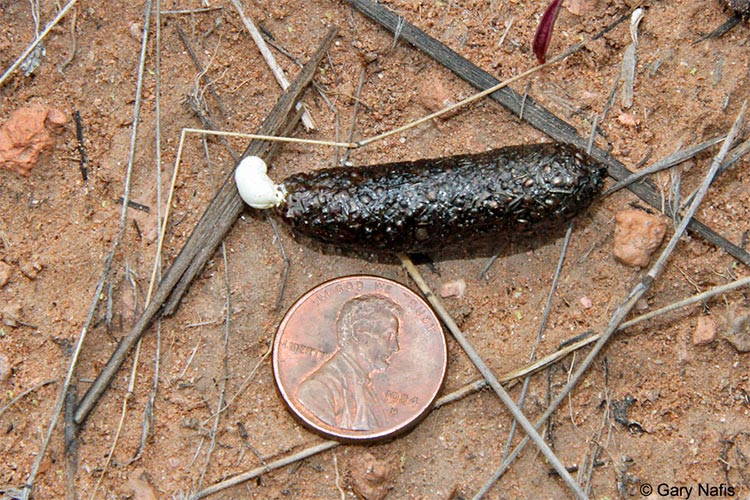
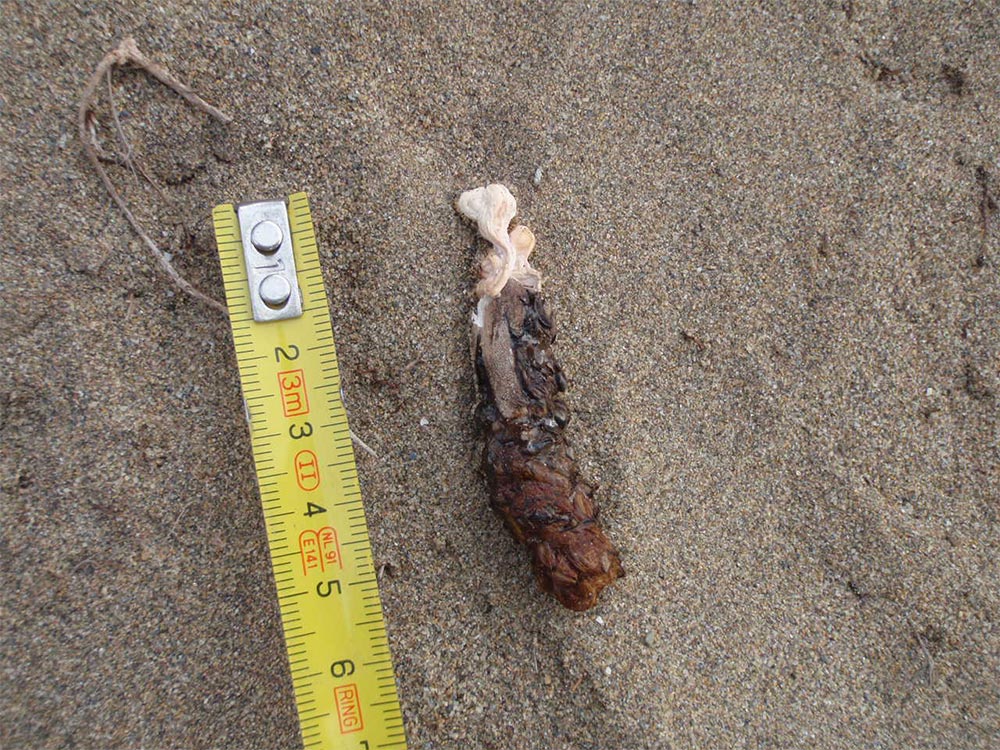
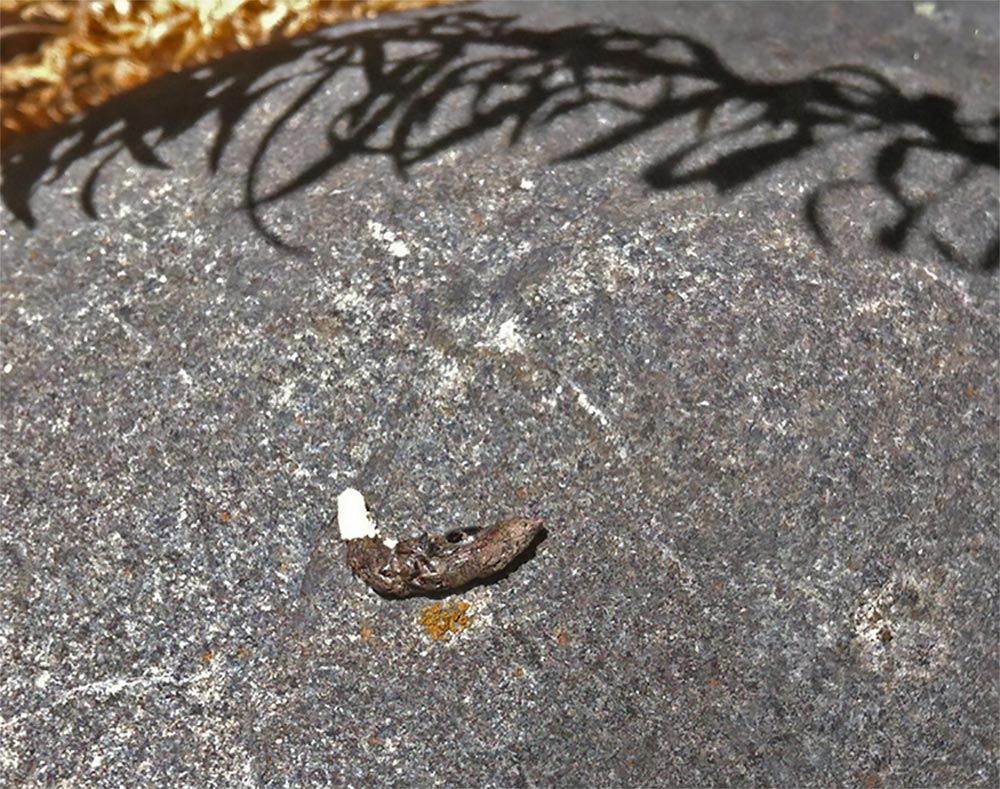
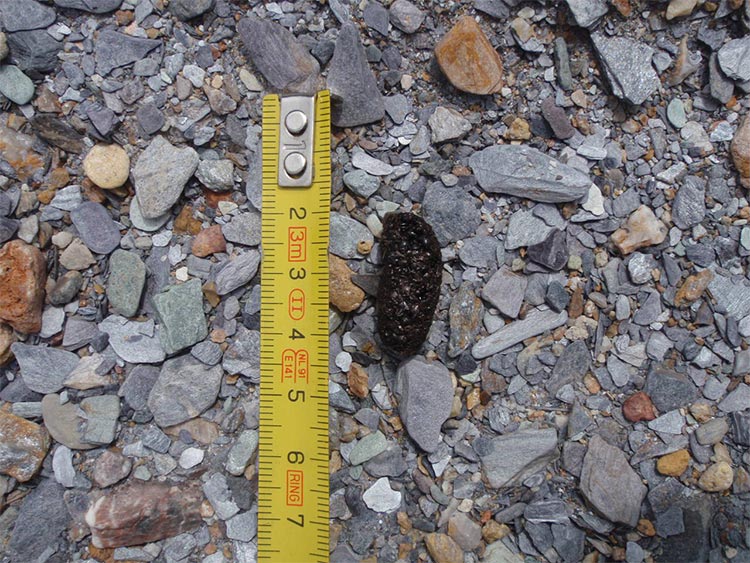
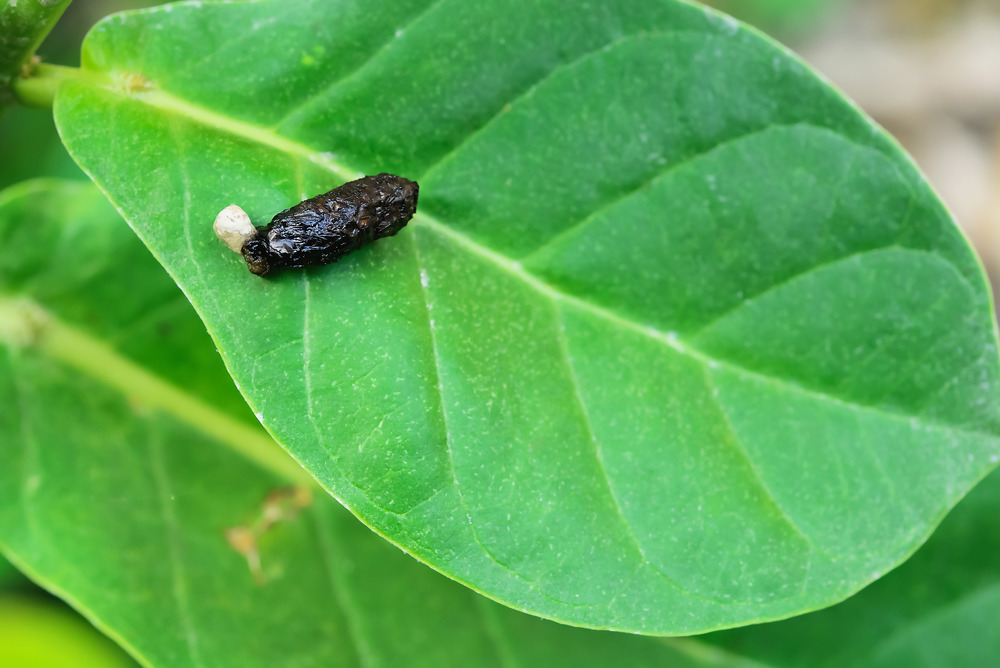

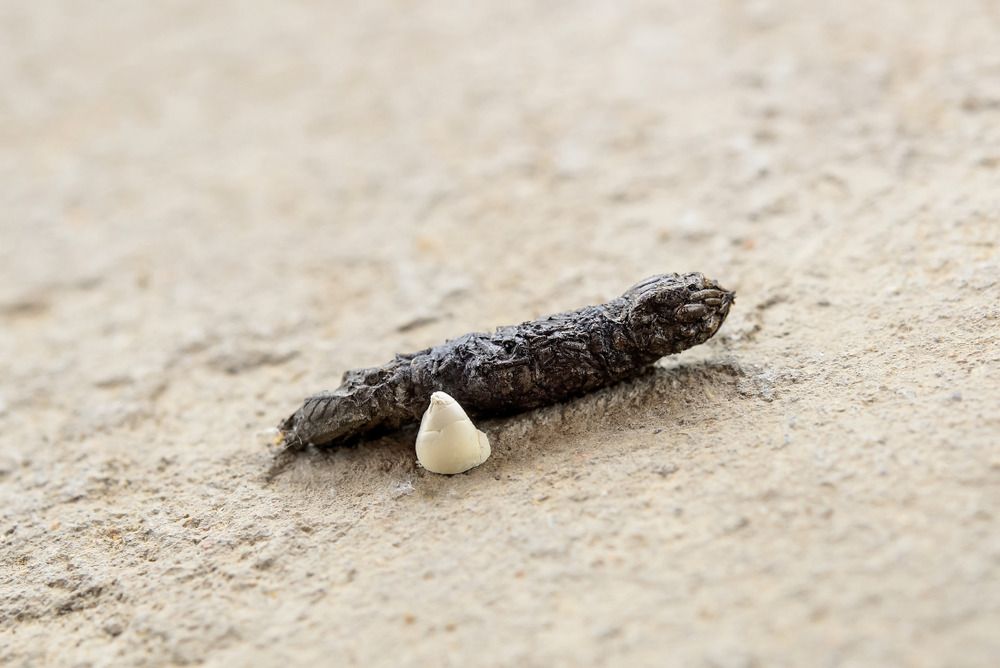
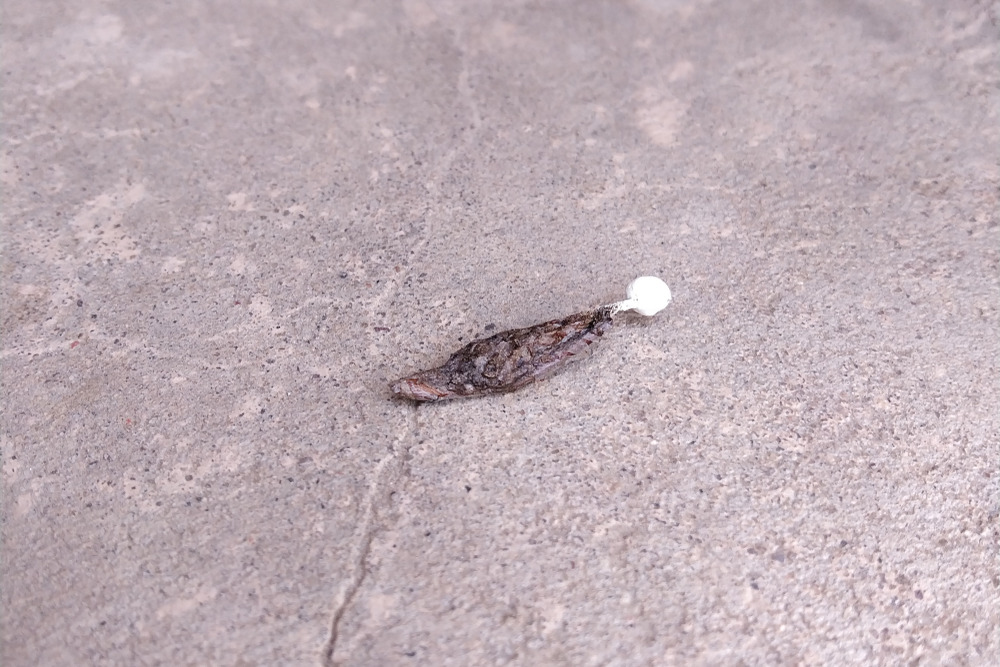
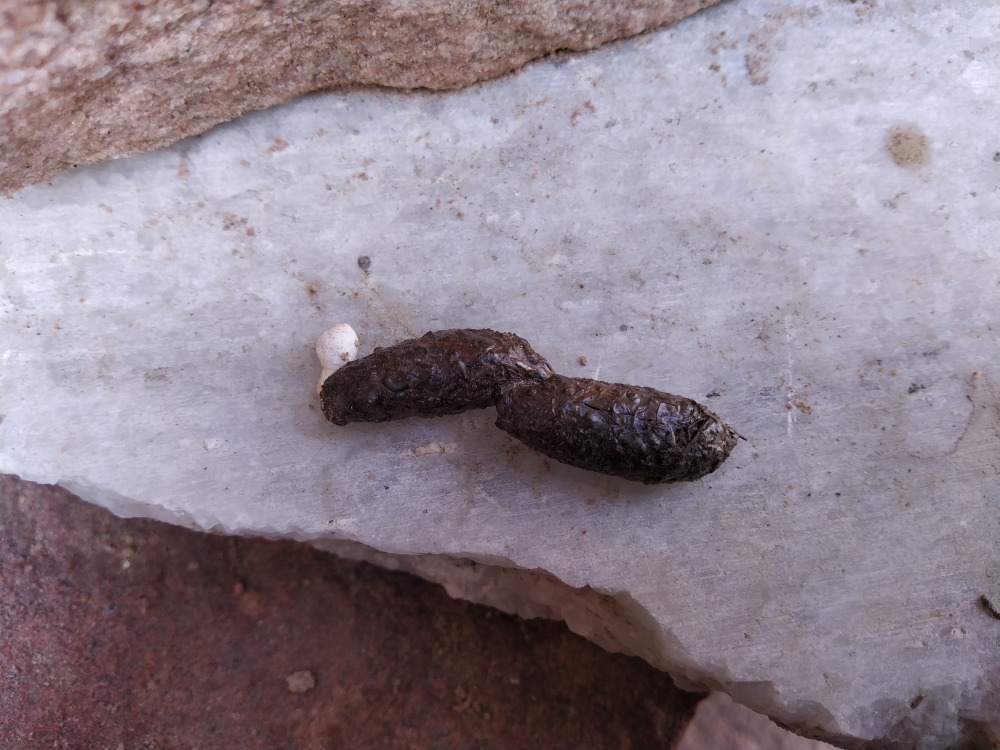
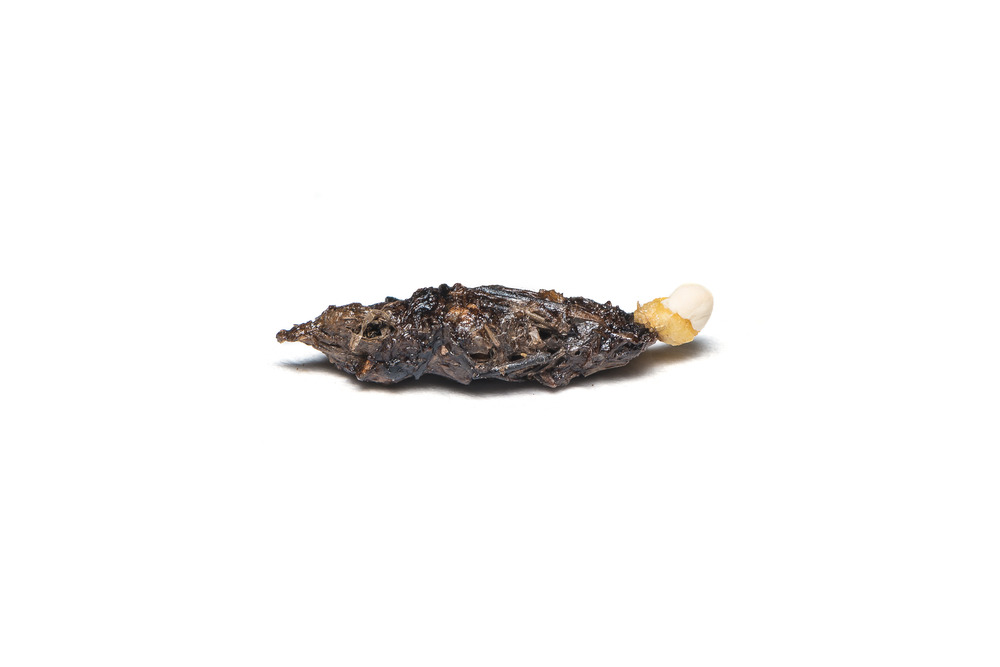
Lizard Poop vs Mouse, Rat, Bat, Bird, and Snake Poop
Use this table as a quick comparison. If you are not sure, do not handle droppings with bare hands.
| Dropping Type | Typical Look | Main Clue |
|---|---|---|
| Lizard or gecko | Dark pellet with a white chalky tip | White uric acid cap attached to dark feces |
| Mouse | Small dark pellets, usually pointed at the ends | No white tip; often found in cabinets, drawers, pantries, or along walls |
| Rat | Larger dark pellets, thicker than mouse droppings | Bigger size; no white cap; often found near garages, attics, crawlspaces, or food storage |
| Bat | Small dark crumbly pellets | Crumbles easily and may contain shiny insect fragments; often below roosting areas |
| Bird | Loose or splattered dark and white waste | Usually wetter or splattered, not a firm pellet with a neat white tip |
| Snake | Larger, less regular waste with white urates | Often bigger than lizard poop and may contain hair, bones, or irregular material |
Lizard Poop vs Mouse Poop
Mouse droppings are usually small, dark, and pellet-shaped. Fresh mouse poop may look dark brown or black, while older droppings can fade or dry out. Mouse droppings typically do not have a white chalky tip.
Location is also a clue. Mouse droppings are commonly found inside cabinets, drawers, pantries, garages, attic spaces, and along wall edges. If you see many uniform dark pellets without white tips, consider mice as a possibility.
Lizard Poop vs Rat Poop
Rat droppings are larger and thicker than mouse droppings. They are usually dark and more blunt or capsule-shaped. Like mouse droppings, rat droppings usually do not have the white uric acid cap that lizard droppings often show.
If the droppings are large, numerous, and found near food, insulation, garages, attics, crawlspaces, or exterior gaps, rodents may be more likely than lizards.
Lizard Poop vs Snake Poop
Snake droppings can sometimes include a white urate portion, which is why they may be confused with lizard poop. However, snake droppings are usually larger, less pellet-like, and more irregular.
Snake waste may also contain undigested material such as hair, bones, or other prey remains. Lizard poop is usually smaller and more compact.
Lizard Poop vs Bat Guano
Bat droppings can look like small dark pellets, but they usually do not have the same attached white tip as lizard poop. Bat guano often crumbles easily and may contain shiny insect fragments.
If droppings appear under rooflines, attic openings, shutters, porch ceilings, or repeated roosting spots, bats may be worth considering.
Are Lizard Feces Toxic?
Lizard feces can carry germs, including Salmonella. The New York State Department of Health notes that reptiles and amphibians can carry Salmonella and spread it through contact with their bodies, habitats, or waste. You can read their public health guidance here: Salmonella and reptiles/amphibians.
For most homeowners, the practical risk is highest when droppings are found on:
- kitchen counters;
- cutting boards;
- food storage areas;
- children’s play areas;
- pet bowls;
- bathroom surfaces;
- vegetables, fruit, or garden harvests.
Avoid dry sweeping lizard droppings, especially indoors. Dry droppings can break apart and create dust. Use damp cleanup methods instead.
How to Clean Up Lizard Poop Safely
If you find lizard droppings indoors, clean the area carefully.
- Keep children and pets away from the area.
- Wear disposable gloves.
- Dampen the droppings first. Use a paper towel sprayed with disinfectant or soapy water so the waste does not become airborne dust.
- Pick up the droppings with a paper towel.
- Dispose of the waste in a sealed bag.
- Disinfect the surface. Pay extra attention to counters, floors, windowsills, and food-contact areas.
- Wash your hands well after cleanup.
If droppings are on produce from a garden, discard visibly contaminated produce or wash intact produce carefully before use. Do not eat food that may have been directly contaminated by droppings.
Why Do Lizards Poop Around the House?
Lizards and geckos often enter or stay near homes because they are hunting insects. If you see droppings in the same area repeatedly, there may be a food source or entry point nearby.
Common attractants include:
- porch lights that attract moths and small insects;
- gaps under doors;
- cracks around windows or sliding doors;
- open garage doors;
- insects in kitchens, bathrooms, or laundry rooms;
- moist areas near plants, drains, or outdoor water sources;
- cluttered storage areas where lizards can hide.
Finding one dropping may not mean you have an infestation. Repeated droppings in the same spot usually mean lizards are using that area regularly.
How to Keep Lizards Out
The best way to reduce lizard droppings is to make the area less attractive and harder to enter.
Helpful steps include:
- Seal entry points. Add door sweeps, repair gaps around windows, and seal cracks around utility lines.
- Reduce insects. Lizards follow their food source, so reducing insects often reduces lizard activity.
- Adjust outdoor lighting. Use lower-intensity or warmer outdoor lights where possible to reduce insect attraction.
- Clean food areas. Keep counters, pet food, and crumbs cleaned up.
- Reduce clutter. Garages, sheds, and patios with boxes or debris give lizards hiding places.
- Use physical exclusion first. Avoid relying on glue traps outdoors because they can harm lizards and other non-target animals.
For a full removal guide, see how to get rid of lizards around the house.
Choose the right lizard deterrent or exclusion option
Compare sprays, door sweeps, screen-repair products, gap fillers, outdoor lighting, and iguana deterrents in our guide to the best lizard repellents and exclusion products.
When It Might Not Be Lizard Poop
Do not assume every small dropping with a light area is from a lizard. If droppings keep appearing and you cannot identify the source, consider the location and pattern.
It may not be lizard poop if:
- the droppings are all dark with no white tip;
- you find many pellets in drawers, cabinets, or pantries;
- droppings are concentrated near attic insulation or roof gaps;
- there are gnaw marks, scratching sounds, or food damage;
- droppings are very large or irregular;
- you see live rodents, bats, or snakes nearby.
If the signs point to rodents, treat the situation differently. Rodent droppings can indicate a larger indoor pest problem and should not be handled casually.
FAQ
What does lizard poop look like?
Lizard poop is usually a small dark pellet with a white or cream-colored tip. The dark part is feces, and the white part is uric acid.
Why does lizard poop have a white tip?
The white tip is uric acid, which is how reptiles remove urinary waste. It is normal for lizard and gecko droppings to have this white end.
Is lizard poop dangerous?
It can carry germs such as Salmonella, so avoid touching it with bare hands. Use gloves, damp cleanup methods, and disinfect surfaces after removal.
Does lizard poop look like mouse poop?
It can look similar, but mouse poop usually does not have a white chalky tip. Mouse droppings are often more uniform and are commonly found in cabinets, drawers, pantries, and along walls.
Where do lizards usually poop?
Common places include windowsills, patios, porches, garages, door tracks, behind furniture, near lights, and areas where insects gather.
How do I stop lizards from pooping on my porch?
Reduce insects, adjust outdoor lighting, seal gaps, clean hiding spots, and remove clutter. If insects gather around porch lights, lizards may keep returning to hunt them.
Can I vacuum lizard poop?
It is better to avoid dry vacuuming or sweeping. Dampen the droppings first and pick them up with disposable paper towels, then disinfect the surface.
Conclusion
Lizard poop is usually dark with a white chalky tip. That white tip is the main clue that separates it from many mouse or rat droppings. Still, identification can be tricky because several pests leave small dark droppings around homes.
Use the full pattern: shape, size, location, white tip, repeated activity, and nearby signs. Clean droppings safely, reduce insects, seal entry points, and monitor whether droppings return. If the droppings do not match lizards, check for rodents, bats, birds, or snakes before choosing a control method.