Fleas are not always obvious at first. You may notice itchy ankles, a pet scratching more than usual, tiny dark specks in bedding, or a small insect jumping near a rug. Those clues matter because flea control works best when you confirm the problem before buying sprays or treating the wrong area.
This guide shows the most common signs of fleas in your home, where to inspect first, how to tell flea clues from bed bug clues, and what to do next if the signs point to an active flea problem.
Affiliate and referral disclosure: PestsGuide may earn a commission from qualifying purchases or referrals through links in this article. This does not change your price or our editorial recommendations.
Quick Answer
The most common signs of fleas are pets scratching or biting at their skin, dark flea dirt in fur or bedding, small itchy bites around ankles and lower legs, tiny jumping insects near rugs or furniture, and activity around pet beds, carpets, baseboards, and shaded outdoor resting areas.
If several signs point to fleas, move to a full treatment plan instead of treating one spot at random: How to Get Rid of Fleas.
1. Pets Are Scratching, Biting, or Grooming More Than Usual
Pets are often the first place people notice a flea problem. A dog or cat may scratch, bite at the base of the tail, lick the belly or legs, shake, or seem restless. Some pets react strongly to flea bites, while others show fewer signs even when fleas are present.
Check areas where fleas are easier to spot:
- the base of the tail;
- the belly and inner thighs;
- around the neck and ears;
- under collars or harness areas;
- pet bedding and favorite resting spots.
Do not use a flea product on a pet just because you suspect fleas. Match the product to the animal, species, weight, age, and label directions. For cats, young animals, older pets, pregnant animals, or pets with health issues, ask your veterinarian first.
2. You Find Flea Dirt in Fur, Bedding, or Rugs
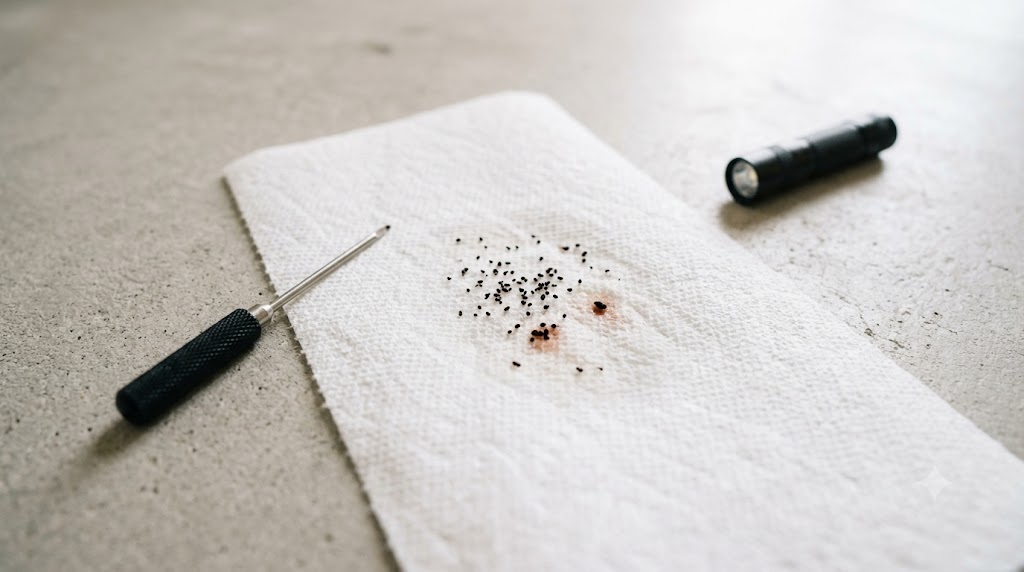
Flea dirt looks like tiny black or dark brown specks. It may appear in pet fur, pet bedding, rugs, blankets, or the places where a pet sleeps.
A simple check can help: place the specks on a damp white paper towel. If they smear reddish brown, the material may be flea dirt. That does not replace a full inspection, but it is a useful clue because flea dirt is digested blood left by adult fleas.
Look for flea dirt in:
- pet beds and blankets;
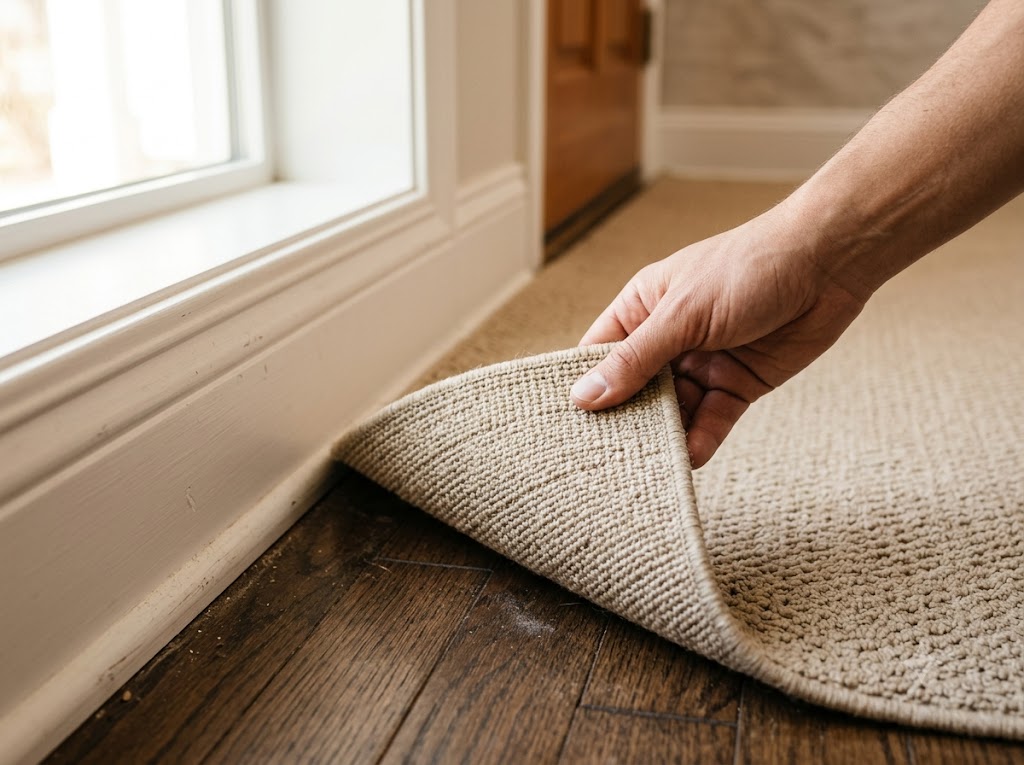
- carpet edges near resting areas;
- sofa cushions and pet-favorite furniture;
- rugs near doors, beds, and couches;
- floor cracks and baseboard edges.
 3. Small Itchy Bites Appear Around Ankles or Lower Legs
Flea bites often show up around ankles, feet, lower legs, or areas close to floors and pets. They may look like small itchy red bumps, sometimes clustered in groups.
Bites alone are not enough to prove fleas. People react differently, and similar marks can come from mosquitoes, bed bugs, mites, or skin irritation. Use the bite pattern together with inspection clues: pet scratching, flea dirt, jumping insects, or activity around rugs and bedding.
If bites are the main clue you noticed first, use the full bite guide to compare location, symptoms, and next inspection steps: Flea Bites.
If bite reactions are severe, spreading, infected-looking, or connected to other symptoms, seek medical advice.
4. You See Tiny Insects Jumping Near Rugs or Furniture
Adult fleas are small and fast. They do not fly, but they can jump. If you see a tiny dark insect jump from a rug, pet bed, blanket, or floor edge, fleas become more likely.
Good places to inspect include:
- light-colored rugs;
- pet bedding;
- carpet near sofas and beds;
- baseboards and floor cracks;
- entry rugs near doors to patios or yards.
A flashlight can help when checking carpet edges and baseboards. Move slowly; fleas and flea dirt are easier to miss when you only scan the middle of the floor.
5. Fleas Keep Appearing Near Pet Beds, Carpets, or Baseboards
Flea problems are rarely only about the adult fleas you see. Eggs and immature stages can end up in protected places where pets rest or where fabrics meet floor edges.
Common indoor hiding areas include:
- pet beds and washable blankets;
- carpet edges and rugs;
- upholstered furniture where pets sleep;
- floor cracks and baseboards;
- under beds, sofas, and low furniture;
- entryways between the yard and home.
This is why vacuuming and washing bedding matter. A single visible flea may be only one part of the life cycle.
6. Fleas Return After You Clean One Room
If fleas keep coming back after you clean one room, the source may be wider than that room. Pets, pet bedding, rugs, indoor resting areas, shaded yard hot spots, wildlife activity, or untreated rooms can keep the cycle going.
When fleas return, check whether the problem is tied to:
- a pet that has not been treated on the right schedule;
- pet bedding that was not washed;
- carpet edges that were not vacuumed repeatedly;
- outdoor resting spots such as patios, decks, dog runs, or shaded grass;
- wildlife near crawlspaces, sheds, fences, or decks.
Recurring activity often means the flea life cycle is still active in bedding, carpets, floor edges, or shaded outdoor hot spots. For a clearer breakdown of eggs, larvae, pupae, and adult fleas, read Flea Life Cycle.
Flea Signs vs Bed Bug Signs
Flea bites and bed bug bites can look similar. The inspection pattern is usually more useful than the bite alone.
| Clue | More like fleas | More like bed bugs |
|---|---|---|
| Bite location | Ankles, lower legs, feet, areas close to floors and pets | Exposed skin after sleep: arms, shoulders, neck, face, legs |
| Where signs appear | Pets, pet bedding, rugs, carpet edges, baseboards, shaded outdoor pet areas | Mattress seams, bed frame, headboard, nearby cracks, dark spotting near sleeping areas |
| Movement | Tiny insects that jump | Crawling insects, usually hidden near beds during the day |
For a deeper comparison, read Bed Bug Bites vs Flea Bites.
Where to Inspect First
Start with the places most connected to pets, resting areas, and floor edges:
- Pet bedding: check seams, folds, blankets, and nearby floor edges.
- Rugs and carpets: focus on edges, corners, under furniture, and where pets lie down.
- Baseboards: inspect cracks, gaps, and dusty corners.
- Furniture: check sofa cushions, pet-favorite chairs, and low fabric surfaces.
- Entryways: inspect rugs and thresholds near doors to yards, patios, decks, or garages.
- Outdoor hot spots: check shaded areas where pets rest, wildlife passes, or organic debris stays damp.
What to Do If the Signs Point to Fleas
If the signs line up, avoid treating one surface and stopping there. Flea control works best as a coordinated plan:
- treat every pet with the right label-directed product and veterinarian guidance when needed;
- wash pet bedding and washable fabrics;
- vacuum rugs, carpets, furniture, floor cracks, and baseboards repeatedly;
- treat indoor rooms only where the product label allows;
- target shaded yard hot spots if fleas keep coming from outside;
- follow up, because eggs and immature stages can continue developing after the first round.
For the complete step-by-step plan, go to How to Get Rid of Fleas.
If your inspection points to fleas and you are ready to choose a product by source, compare options in Best Flea Treatments.
Choose Treatment by Where You Found the Signs
If your inspection points to an active flea problem, match the treatment to the source. These are not replacements for pet-specific label directions or veterinarian guidance; they are starting points by area.
When to Call a Professional
Consider professional help if you cannot confirm the pest, bites continue after cleaning and pet treatment, several rooms are involved, the yard has heavy wildlife pressure, or someone in the home has strong bite reactions or medical vulnerability.
A professional can also help when the signs could point to another pest, such as bed bugs, mites, carpet beetles, or mosquitoes.
FAQ
What is the first sign of fleas in a house?
Often it is a pet scratching more than usual, small itchy bites around ankles, flea dirt in bedding, or a tiny jumping insect near a rug or pet bed.
Can you have fleas without pets?
Yes. Pets are common hosts, but fleas can also be connected to wildlife, previous occupants, used fabrics, shared buildings, or protected indoor areas after a prior infestation.
Where do fleas hide indoors?
Fleas and immature stages are most likely near pet bedding, rugs, carpets, upholstered furniture, floor cracks, baseboards, and areas where pets rest.
Do flea bites always mean there are fleas in the house?
No. Bite marks alone are not enough to identify fleas. Check for pets scratching, flea dirt, jumping insects, and activity near rugs, bedding, or floor edges.
Should I treat the yard if I see flea signs indoors?
Treat the yard only if inspection suggests fleas are coming from outdoor hot spots, such as shaded pet areas, patios, decks, dog runs, or wildlife paths. Indoor signs still need pet care, washing, vacuuming, and follow-up.