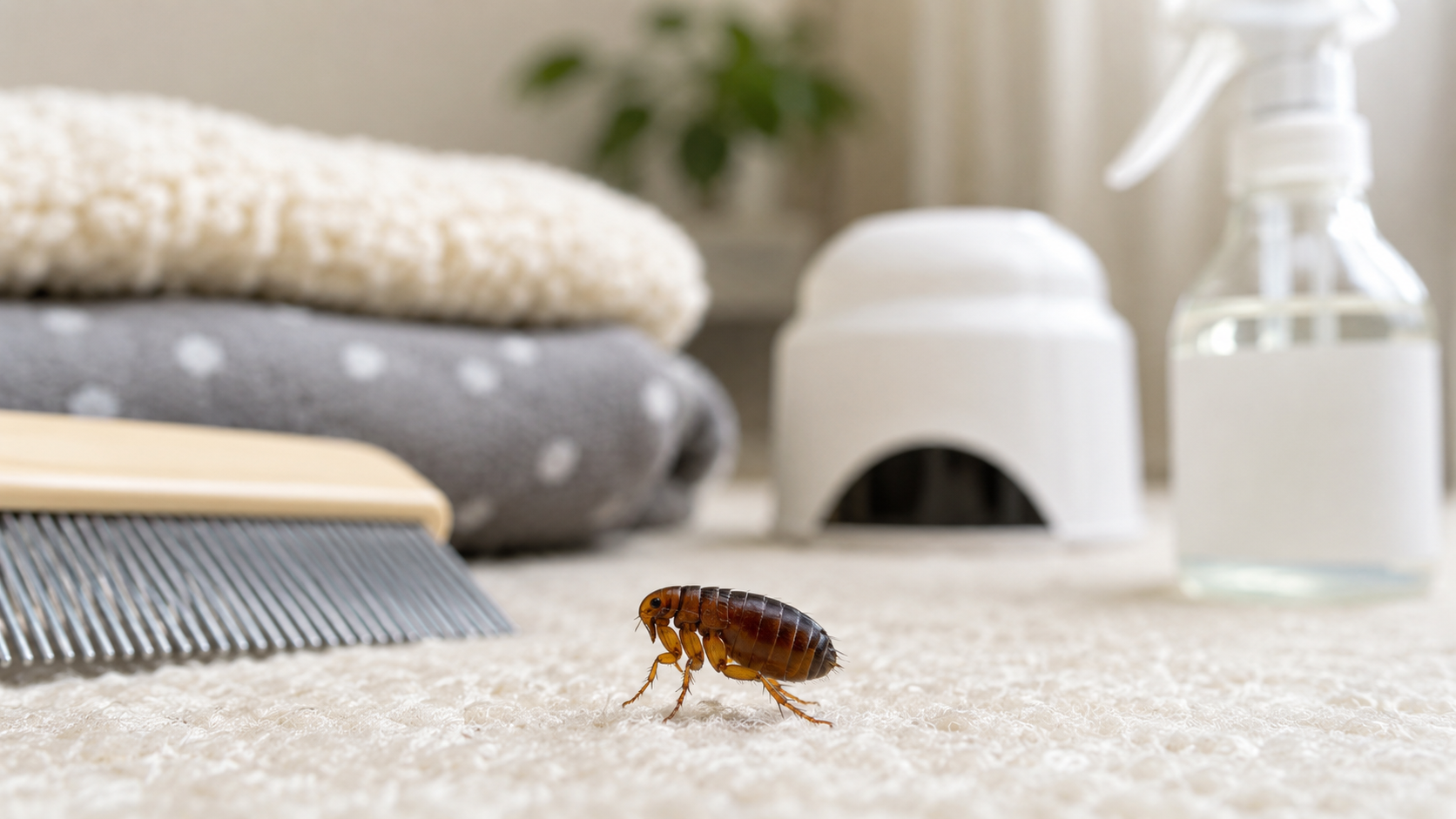
The best flea treatment depends on where the problem is coming from. Fleas on pets, bites around ankles, flea dirt in bedding, activity in carpets, and shaded yard hot spots do not all need the same first move. A good plan usually combines pet care, cleaning, indoor source control, outdoor hot-spot treatment, and follow-up.
This guide compares flea treatment options by situation: pets and bedding, carpets and baseboards, yard hot spots, whole-property problems, monitoring traps, grooming support, and dust-style crack-and-crevice support.
Affiliate and referral disclosure: PestsGuide may earn a commission from qualifying purchases or referrals through links in this article. This does not change your price or our editorial recommendations.
Quick Answer
For most flea problems, do not start with one random spray. First confirm the source, treat every pet with veterinarian guidance, wash bedding, vacuum carpets and floor edges, and then choose products by where fleas are active.
Best starting points: Wondercide Flea & Tick Spray for pets + home signs, Wondercide Yard Refill Starter Kit for shaded outdoor hot spots, Wondercide Complete Control Kit for pets + home + yard, an indoor flea trap for monitoring, a low-cost flea comb for pet checks, a grooming combo for long-haired pets, and Harris diatomaceous earth only where dust use fits the label and household situation.
Best Flea Treatments by Situation
Use this table to choose the right treatment type before buying anything.
| Situation | Best fit | Why |
|---|---|---|
| Pets, bedding, and indoor resting areas | Wondercide Flea & Tick Spray for Pets + Home | A pet-and-home spray option when signs are tied to pet resting areas, bedding, carpets, and furniture. |
| Shaded yard hot spots | Wondercide Flea & Tick Yard Refill Starter Kit | Best fit when fleas keep returning from patios, decks, dog runs, shaded grass, or outdoor pet zones. |
| Pets + home + yard together | Wondercide Complete Control Flea & Tick Kit | A whole-property option when the source is not limited to one room or one outdoor area. |
| Room monitoring | Indoor electric flea trap | Useful for checking whether adult fleas are still active after cleaning and treatment. |
| Low-cost pet checks | Flea comb with rubber handle | A simple inspection tool for checking pets for adult fleas, flea dirt, and debris. |
| Long-haired or matted pets | Pet grooming combo with metal comb | Useful for detangling and coat support when fur makes inspection harder. |
| Dry cracks, edges, and dust-compatible areas | Harris diatomaceous earth with duster | A dust-style support option for labeled areas, used carefully and kept away from breathing exposure. |
1. Best for Pets + Home Signs: Wondercide Flea & Tick Spray for Pets + Home
This is the best fit when flea signs are tied to pets, bedding, rugs, carpets, furniture, and indoor resting areas. It belongs in the plan after you confirm that fleas are likely and after you have started pet-safe, label-directed control.
Use it when:
- pets are scratching, biting, or grooming more than usual;
- flea dirt appears in fur, bedding, or rugs;
- flea signs are connected to sofas, pet beds, blankets, or carpets;
- you want one product category that can support both pet and home use, as directed by the label.
Do not use any pet product casually. Match the product to the animal, species, weight, age, health status, and label directions. For cats, young animals, older pets, pregnant animals, or pets with medical issues, ask your veterinarian first.
2. Best for Yard Hot Spots: Wondercide Flea & Tick Yard Refill Starter Kit
Fleas in the yard are usually not a whole-lawn problem. They are more likely in shaded, humid areas where pets rest, wildlife passes, or organic debris stays damp. That makes a yard kit most useful when you know where the outdoor source is.
Best fit for:
- shaded pet areas;
- patio and deck edges;
- dog runs, kennels, and outdoor bedding areas;
- fence lines and crawlspace edges where wildlife moves;
- yards where fleas keep returning after indoor cleaning.
Clean outdoor debris first, then treat only where the label allows. Yard products do not replace pet treatment, washing bedding, vacuuming, and indoor follow-up.
3. Best Whole-Property Option: Wondercide Complete Control Flea & Tick Kit
Choose a whole-property option when fleas are not limited to one place. If pets, bedding, rugs, indoor furniture, and yard hot spots all seem connected, buying separate pieces can be confusing. A kit can make sense when you need a coordinated pets + home + yard approach.
Best fit when:
- flea signs appear in more than one room;
- pets move between indoor and outdoor resting areas;
- you see bites indoors and flea activity near shaded outdoor zones;
- you want a single Wondercide-centered setup instead of choosing separate products.
This still does not replace veterinarian guidance for pet treatment. Think of the kit as a property-control option, not a medical pet-care plan.
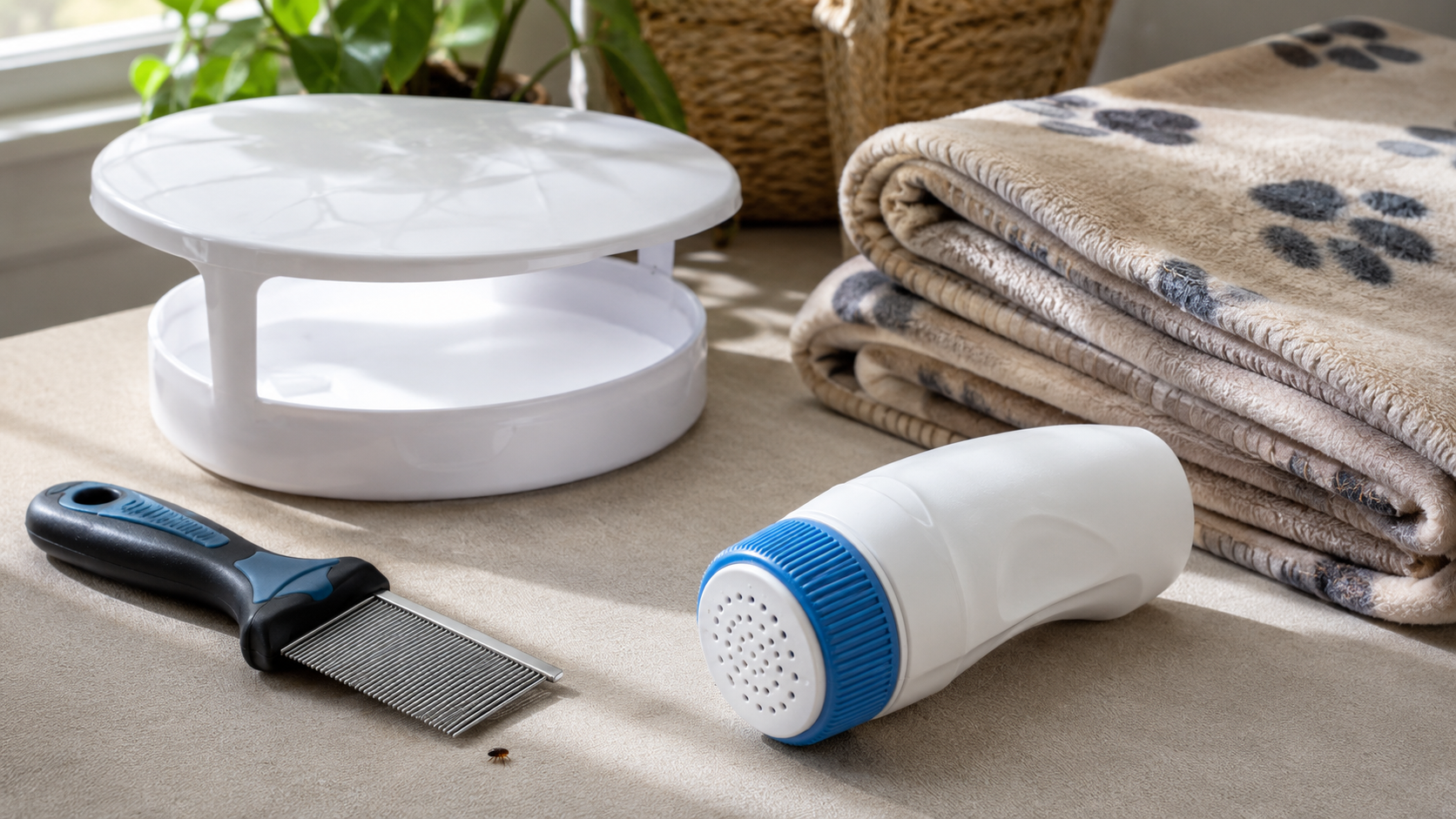
4. Best for Monitoring Adult Fleas: Flea Trap for Inside Your Home
An indoor flea trap is not a full flea treatment by itself. Its best role is monitoring. It can help you see whether adult fleas are still active in a room after cleaning, pet treatment, and follow-up.
Best fit for:
- checking activity near rugs, sofas, and pet resting areas;
- monitoring one room after vacuuming and washing bedding;
- confirming whether adult fleas are still emerging;
- supporting inspection when bites continue but you are not seeing fleas easily.
Use traps as a signal, not as the only control method. If the trap keeps catching fleas, go back to the full life-cycle plan: pets, bedding, carpets, baseboards, yard hot spots, and follow-up.
5. Best Low-Cost Flea Check Tool: Flea Comb with Rubber Handle
A flea comb is one of the simplest tools for checking whether pets are part of the flea problem. It can help you look for adult fleas, flea dirt, and debris in the areas where fleas are easier to find.
Best fit for:
- checking pets during the first inspection;
- looking around the tail base, belly, neck, and collar area;
- confirming whether dark specks may be flea dirt;
- supporting grooming while you coordinate pet treatment with a veterinarian;
- households that want a cheap, low-risk inspection tool before buying more products.
A comb is not a complete flea treatment. Use it as an inspection and grooming support tool, not as a replacement for veterinarian-guided flea control.
6. Best for Long-Haired Pets: Pet Grooming Combo with Metal Comb
This product is better described as grooming support than a dedicated flea treatment. The metal comb can help with checking fur and working through tangles, while the deshedding brush can help with coat maintenance. That can be useful when pets are part of the flea inspection process but longer or matted fur makes checking harder.
Best fit for:
- long-haired pets where fur makes inspection difficult;
- detangling or dematting before a closer flea check;
- coat maintenance while you coordinate pet treatment with a veterinarian;
- households that want grooming support in addition to a basic flea comb.
Important: this is not a replacement for a veterinarian-recommended flea product, and it is not the same as solving an active infestation. Use grooming tools gently, especially on irritated or sensitive skin.
Check Grooming Combo on Amazon
7. Best Dust-Style Support: Harris Diatomaceous Earth Food Grade with Duster
Diatomaceous earth is a dust-style option, so it needs careful placement. It is not a spray, and it should not be treated casually around breathing zones, pets, children, bedding, or high-traffic areas. The included duster is useful because dust products work best when applied lightly and precisely, not in heavy piles.
Best fit for:
- dry cracks and crevices where the label allows use;
- edge zones that are not easy to wash;
- supporting a broader plan that already includes pet treatment, washing, and vacuuming;
- households that understand dust precautions and can keep exposure controlled.
Avoid overapplication. Read and follow the label, avoid inhaling dust, and keep people and pets away from treated areas as directed.
Check Harris Diatomaceous Earth on Amazon
What to Use First
If you are not sure where to start, use the source of activity:
- Pet scratching + flea dirt: start with veterinarian-guided pet treatment, washing bedding, vacuuming, and a pets + home product only as the label allows.
- Fleas near rugs or sofas: wash fabrics, vacuum repeatedly, monitor with a trap, and treat indoor areas only where appropriate.
- Fleas after yard time: inspect shaded pet areas, patios, decks, and fence lines before using a yard product.
- Fleas in several zones: consider a whole-property kit and a written follow-up schedule.
- Unclear bites: inspect before buying products. Start with Flea Bites and Signs of Fleas in Your Home.
How to Avoid Wasting Money on Flea Products
Most flea product mistakes come from treating the wrong stage or the wrong area. Before adding more products, check whether the basic plan is complete.
- Every pet should be handled on the same timeline with veterinarian guidance.
- Pet bedding and washable fabrics should be washed repeatedly.
- Carpets, rugs, furniture, floor cracks, and baseboards need repeated vacuuming.
- Indoor products should be used only where the label allows.
- Yard treatment should target shaded hot spots, not open sunny lawn at random.
- Follow-up matters because eggs, larvae, and pupae can keep the cycle going.
For the stage-by-stage reason fleas keep emerging, read Flea Life Cycle.
FAQ
What is the best flea treatment for the whole house?
The best whole-house plan is not one product. Treat pets with veterinarian guidance, wash bedding, vacuum repeatedly, target indoor resting areas, check shaded yard hot spots, and follow up. A whole-property kit can help when pets, home, and yard are all involved.
Are flea traps enough to get rid of fleas?
No. Flea traps are best for monitoring adult activity. They can help show whether fleas are still present, but they do not replace pet treatment, washing bedding, vacuuming, source control, or follow-up.
Should I treat the yard for fleas?
Treat the yard only when inspection points to outdoor hot spots, such as shaded pet areas, patios, decks, dog runs, crawlspace edges, or wildlife paths. Open sunny lawn is usually less important.
Is diatomaceous earth enough for fleas?
Diatomaceous earth can be a support tool in labeled dry areas, but it is not a complete flea plan. It should be used carefully and not as a substitute for pet treatment, washing, vacuuming, and follow-up.
Can I use the same flea product on dogs and cats?
Do not assume that. Pet flea products must match the animal and label directions. Some ingredients used for dogs can be dangerous for cats. Ask your veterinarian if you are unsure.
What should I buy first for fleas?
If pets are involved, start with veterinarian-guided pet treatment and environmental cleaning before buying multiple products. If the source is unclear, use inspection tools and monitoring before treating the wrong area.