
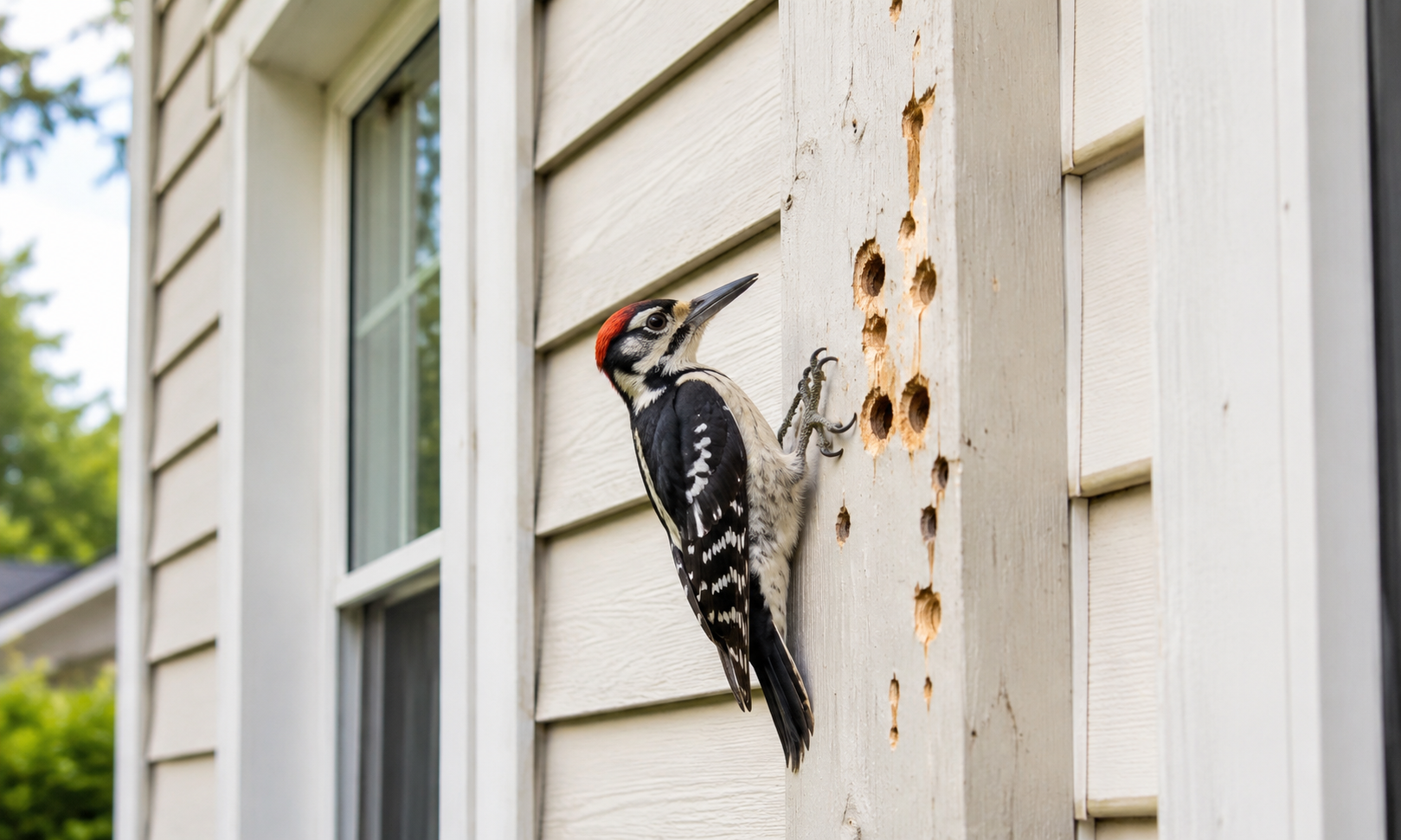
Woodpecker damage to siding can look minor at first: a few small holes, shallow peck marks, or a damaged strip of trim near the roofline. But if the bird keeps returning to the same spot, the damage can spread quickly and may also point to insects, hollow-sounding siding, or a potential nesting area.
This guide explains what woodpecker damage to siding looks like, what homeowners should check first, and when deterrents, repairs, or professional help may be needed.
Quick Answer
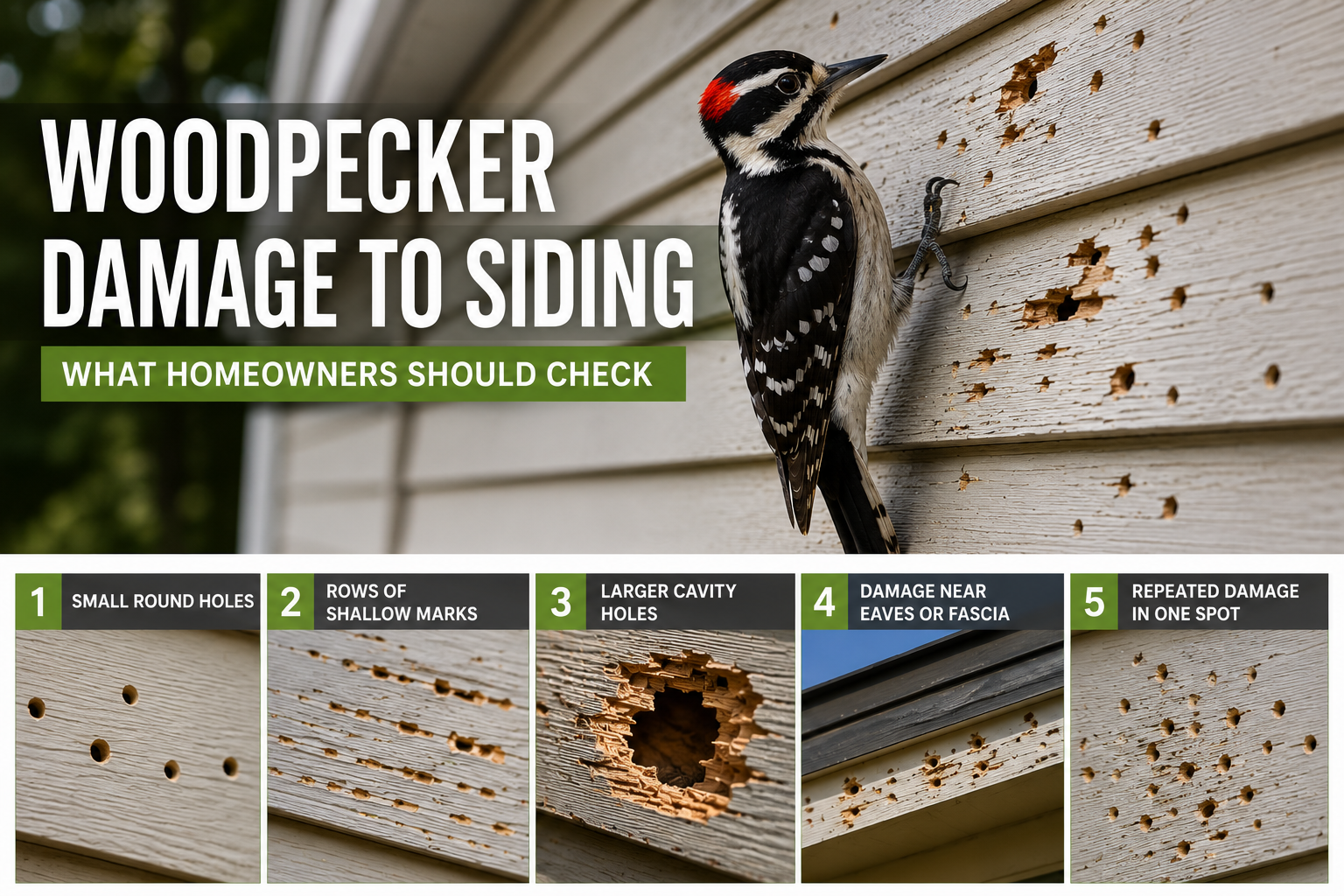
Woodpecker damage to siding usually appears as small round holes, rows of shallow peck marks, larger cavities, or repeated damage on wood siding, trim, fascia, or eaves. The bird may be looking for insects, drumming to mark territory, or testing a surface for nesting. Before choosing a deterrent, check the pattern, location, and whether new damage keeps appearing.
If you are not sure why the bird is pecking your house, start with our full woodpecker guide for homeowners. If you already know you need deterrent options, see our guide to the best woodpecker deterrents for homes.
What Woodpecker Damage to Siding Looks Like
Woodpecker damage does not always look the same. The pattern can give you clues about why the bird is targeting your home and how urgent the problem may be.
| Damage pattern | What it may suggest | What to check next |
|---|---|---|
| Small round holes | The bird may be searching for insects or testing the surface. | Check for insect activity, soft wood, or repeated pecking in the same area. |
| Rows of shallow marks | This may be exploratory pecking or surface drumming. | Look for repeated activity during morning hours or mating season. |
| Larger cavity-like holes | The bird may be attempting to create a nesting or roosting cavity. | Avoid sealing the hole until you know whether the cavity is active. |
| Damage near fascia, eaves, or roofline | The area may be hollow-sounding, insect-prone, or attractive for shelter. | Inspect for moisture damage, gaps, insects, and repeated access points. |
| Repeated damage in one exact spot | The location may be especially attractive to the bird. | Use deterrents early and repair only after activity is under control. |
 Why Woodpeckers Peck Siding
Woodpeckers do not usually peck siding at random. In many cases, they are responding to sound, food, territory, or shelter. Understanding the reason can help you choose the right response.
They may be looking for insects
If woodpeckers repeatedly target wood siding, trim, or fascia, they may be investigating insects under the surface. This does not always mean you have a serious infestation, but it is a reason to inspect the area carefully.
Check for soft wood, moisture damage, small insect holes, sawdust-like material, or other signs that insects may be present behind or near the siding.
They may be drumming for territory
Woodpeckers sometimes drum on surfaces that create a loud sound. This can include siding, gutters, metal flashing, vents, or other parts of the home. Drumming is often more about communication than feeding.
If the damage is shallow and the bird returns at similar times of day, especially during seasonal activity, drumming may be part of the issue.
They may be testing a nesting or roosting spot
Larger holes or repeated pecking in one sheltered area may suggest that the bird is testing the siding for a cavity. This is more concerning than light surface marks, because sealing or repairing an active cavity at the wrong time can create legal and practical problems.
They may be attracted to hollow sounds
Some siding, trim, and fascia areas produce a hollow or resonant sound. Woodpeckers may return to these areas because the surface responds strongly when pecked.
What to Check Before You Repair the Siding
Before patching the holes, take a few minutes to inspect the pattern and location. Repairing too soon may not solve the problem if the bird keeps returning.
- Location: Is the damage on siding, trim, fascia, eaves, or near the roofline?
- Pattern: Are the holes small and scattered, or is there one larger cavity?
- Fresh activity: Are new marks appearing every day or every few days?
- Time of day: Does the pecking happen mostly in the morning?
- Insect signs: Do you see soft wood, insect holes, debris, or moisture damage?
- Nesting signs: Is the bird entering a hole or spending time inside it?
- Access risk: Is the damage high on the home where ladder work may be unsafe?
Important: Do not seal a large cavity until you are sure there is no active nesting or trapped bird inside. If the situation is unclear, contact a local wildlife professional or your state wildlife agency for guidance.
When Deterrents May Help
Deterrents are usually most useful when the damage is recent, the bird has not created an active cavity, and you are trying to make the area less attractive before the behavior becomes established.
Common options include reflective deterrents, visual scare devices, netting, surface protection, and other humane methods designed to discourage repeated pecking without harming the bird.
If woodpeckers keep returning to the same siding, trim, or roofline area, compare options in our guide to the best woodpecker deterrents for homes.
When Deterrents May Not Be Enough
Deterrents are not a complete repair plan. If the siding is already damaged, the underlying cause may need to be addressed first.
Deterrents may not be enough if:
- large holes are already present;
- the bird appears to be entering a cavity;
- damage is close to the roofline, fascia, or eaves;
- there are signs of insects or moisture damage;
- the same area has been repaired before and damaged again;
- the repair requires unsafe ladder work.
In those cases, the best next step may be a siding inspection, wildlife guidance, or professional repair before adding deterrents.
How to Prevent More Woodpecker Damage
The best prevention plan usually combines inspection, repair, and humane deterrents. One method alone may not work if the bird is strongly attracted to the same area.
1. Identify the damaged zone
Mark the exact area where pecking is happening. If new marks appear nearby, the bird may be shifting along the same siding section.
2. Check for insects or moisture
If the wood is soft, damp, or insect-damaged, deterrents may not solve the root problem. The bird may continue investigating the area until the underlying issue is fixed.
3. Use deterrents early
Visual deterrents and surface protection tend to work better before a bird becomes strongly attached to a spot. The longer the behavior continues, the harder it may be to interrupt.
4. Repair holes after activity is controlled
Once you are confident the bird is no longer using the area, repair exposed siding to reduce weather damage and prevent the spot from attracting more attention.
5. Avoid harmful methods
Woodpeckers are protected birds in the United States, and harmful control methods can create legal problems. Focus on exclusion, deterrents, repairs, and professional guidance when needed.
When to Call a Professional
Call a professional if the damage is spreading, the holes are large, the area is high or unsafe to access, or you suspect insects, moisture, or nesting activity inside the siding.
You may also need help if deterrents have failed several times or if the bird keeps returning immediately after repairs.
Need help deciding what to do next? If the damage is significant, keeps returning, or may be connected to insects, moisture, or nesting activity, it may be safer to compare local pest or wildlife control professionals before starting repairs. See our guide to the best pest control services.
Final Thoughts
Woodpecker damage to siding is not always a sign of a major problem, but it should not be ignored if the bird keeps returning. Start by checking the damage pattern, the location, and whether there may be insects, moisture, or a possible cavity behind the siding.
For a broader explanation of woodpecker behavior, read our full woodpecker guide for homeowners. For product options, compare the best woodpecker deterrents for homes.
FAQ
Is woodpecker damage to siding serious?
It can be minor if the damage is shallow and recent. However, repeated pecking, large holes, or damage near the roofline may require inspection and repair.
Why does a woodpecker keep pecking the same spot?
The spot may have insects, a hollow sound, shelter, or a surface the bird finds useful for drumming. Repeated damage in one area usually means the location is attractive for a specific reason.
Should I repair woodpecker holes right away?
Small surface damage can often be repaired once activity stops. Larger holes should not be sealed until you are sure there is no active nesting or bird activity inside.
What is the best deterrent for woodpeckers on siding?
The best option depends on the location and reason for pecking. Reflective deterrents, barriers, netting, and surface protection may help when used early and placed close to the problem area.
Are woodpeckers protected?
Yes. In the United States, native woodpeckers are generally protected under federal bird protection laws. Homeowners should focus on humane deterrents, exclusion, repair, and professional guidance when needed.


