Cockroaches are one of the hardest household pests to get rid of – not because they are tough to kill, but because the ones you see are a fraction of the ones you don’t. For every roach on your kitchen floor at night, dozens more are hiding behind cabinets, under appliances, and inside wall voids. Spraying the visible ones does almost nothing to the nest.
The good news: many roach infestations are manageable at home if you attack them the right way. The winning approach is not one product – it is a combination of gel bait to knock down the colony, sanitation to remove competing food, and follow-up to catch the next generation. Do those three things together and even a heavy German-roach problem can drop sharply over the next few weeks.
This guide walks through how to confirm what you are dealing with, the methods that actually work (ranked by effectiveness), the natural options and their limits, what to avoid, and how to keep roaches from coming back. If you are still confirming the problem, start with the signs of a cockroach infestation.
- Target the colony → apply roach gel bait in cracks and hiding spots (this does the heavy lifting).
- Remove their food → deep-clean the kitchen so the bait is the most attractive food in the room.
- Slow the breeding cycle → add an insect growth regulator (IGR) so young roaches are less likely to mature and reproduce.
- Verify it worked → set sticky monitoring traps to confirm activity has dropped.
- Never spray near your bait → repellent spray drives roaches away from the gel and cancels the whole plan.
First, Confirm You Have Cockroaches
Before you treat anything, make sure roaches are the problem and get a rough idea of how bad it is. The clearest signs are:
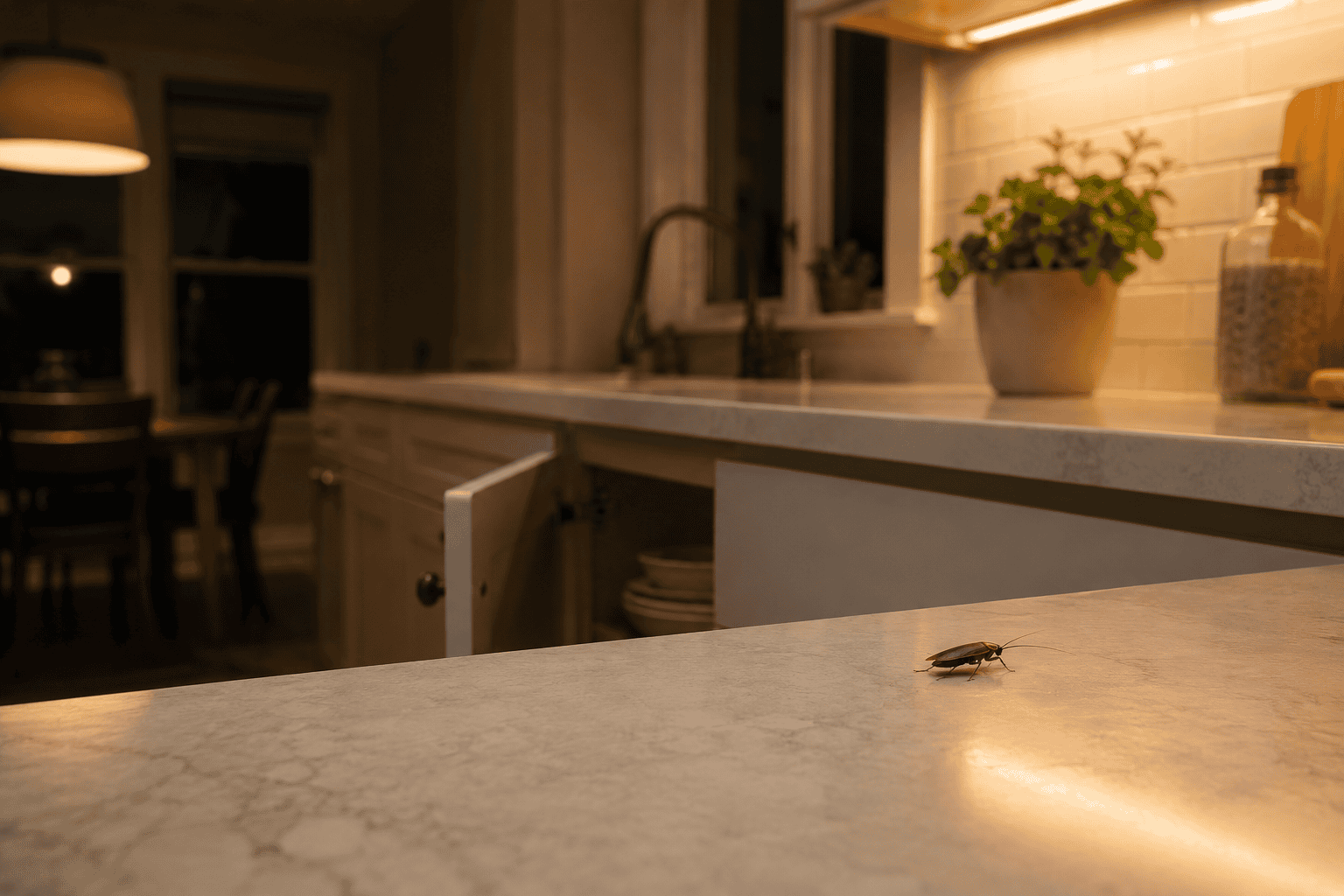
- Live roaches at night. Flip on the kitchen light after dark. Roaches scatter for cover – seeing several at once means an established population.
- Droppings. Small dark specks like ground pepper or coffee grounds in drawers, cabinet corners, and along baseboards. For a full breakdown, see what cockroach droppings look like.
- Egg cases (oothecae). Small brown capsules glued into cracks and behind appliances – a sign they are breeding on-site.
- A musty, oily smell. Heavy infestations give off a distinctive stale odor.
It also helps to know the species. Small tan roaches that breed fast indoors are usually German cockroaches – the hardest to control. Large reddish-brown ones are typically American cockroaches that often wander in from drains and sewers. Our guide on the German vs American cockroach explains the difference and why it changes your approach.
How to Get Rid of Cockroaches: 6 Methods That Work
These methods are ranked by how much they contribute to actually clearing an infestation. The first three do most of the work; the rest are support and situational tools.
Gel Bait (the most effective method)
 Gel bait is usually the strongest DIY roach treatment, and it should be the backbone of your plan. You place small dabs of bait where roaches travel; they eat it, return to the harborage, and die there. Other roaches then feed on the droppings and the dead – passing the insecticide through the colony. This is the secondary kill, and it is why a small amount of gel can affect roaches you never see.
The two gel baits worth buying are Advion Cockroach Gel Bait (professional-grade, broad use across common household species) and Combat Roach Killing Gel (affordable and beginner-friendly). For the full comparison and placement details, see our guide to the best roach gel bait.
How to Apply Gel Bait
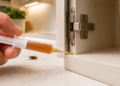
Use many small dabs, not a few big blobs – a dozen pea-sized dots reach more roaches. Place them where roaches hide, not where you see them: inside cabinet hinges, under the sink, behind and beneath the fridge and stove, and tucked into cracks and corners. Recheck every couple of weeks and refresh any gel that has been eaten or dried out. And never spray near it.
- Highest kill rate of any DIY method
- Secondary kill spreads through the whole colony
- Placed precisely where roaches actually hide
- Works on German, American, and other species
- Ruined by nearby spray residue
- Needs correct placement to work
- May require rotating formulas over long campaigns
Sanitation (the step that makes everything else work)
Sanitation is not glamorous, but it is half the battle – and it is free. Roaches need food, water, and shelter. Take those away and two things happen: the population cannot grow, and your gel bait becomes the most attractive food in the room instead of competing with crumbs.
Focus on the kitchen. Wipe up grease and crumbs nightly, never leave dishes overnight, store food (including pet food) in sealed containers, take out trash regularly, and fix leaks and drips – roaches can live on the moisture around a leaky pipe alone. A clean kitchen will not clear an infestation by itself, but without it, no product performs to its potential.
- Free and immediately effective
- Makes bait dramatically more attractive
- Prevents the population from rebounding
- Requires consistent daily habits
- Does not kill the existing colony on its own
Insect Growth Regulators (IGR)
 An insect growth regulator is the secret weapon most homeowners skip. It does not kill roaches directly – instead it prevents nymphs from maturing and can reduce successful reproduction. That helps break the breeding cycle while your bait reduces the current population.
Gentrol Point Source comes as small discs you simply place near harborage areas – no mixing. Pairing an IGR with gel bait is a professional-style approach, and it helps you move from simply knocking a population down to keeping it from rebuilding.
How to Use an IGR
Place the discs in the same zones you baited – under the sink, behind appliances, inside lower cabinets. One disc treats a defined area for several weeks. Use it alongside gel bait, not instead of it: the bait kills, the IGR makes sure the survivors are a dead end.
- Breaks the breeding cycle that makes roaches persistent
- No mixing – just place the discs
- Pairs well with gel bait
- Long-lasting per placement
- Does not kill adults on its own
- Works slowly – it is a cycle-breaker, not a knockdown
Bait Stations and Liquid Baits
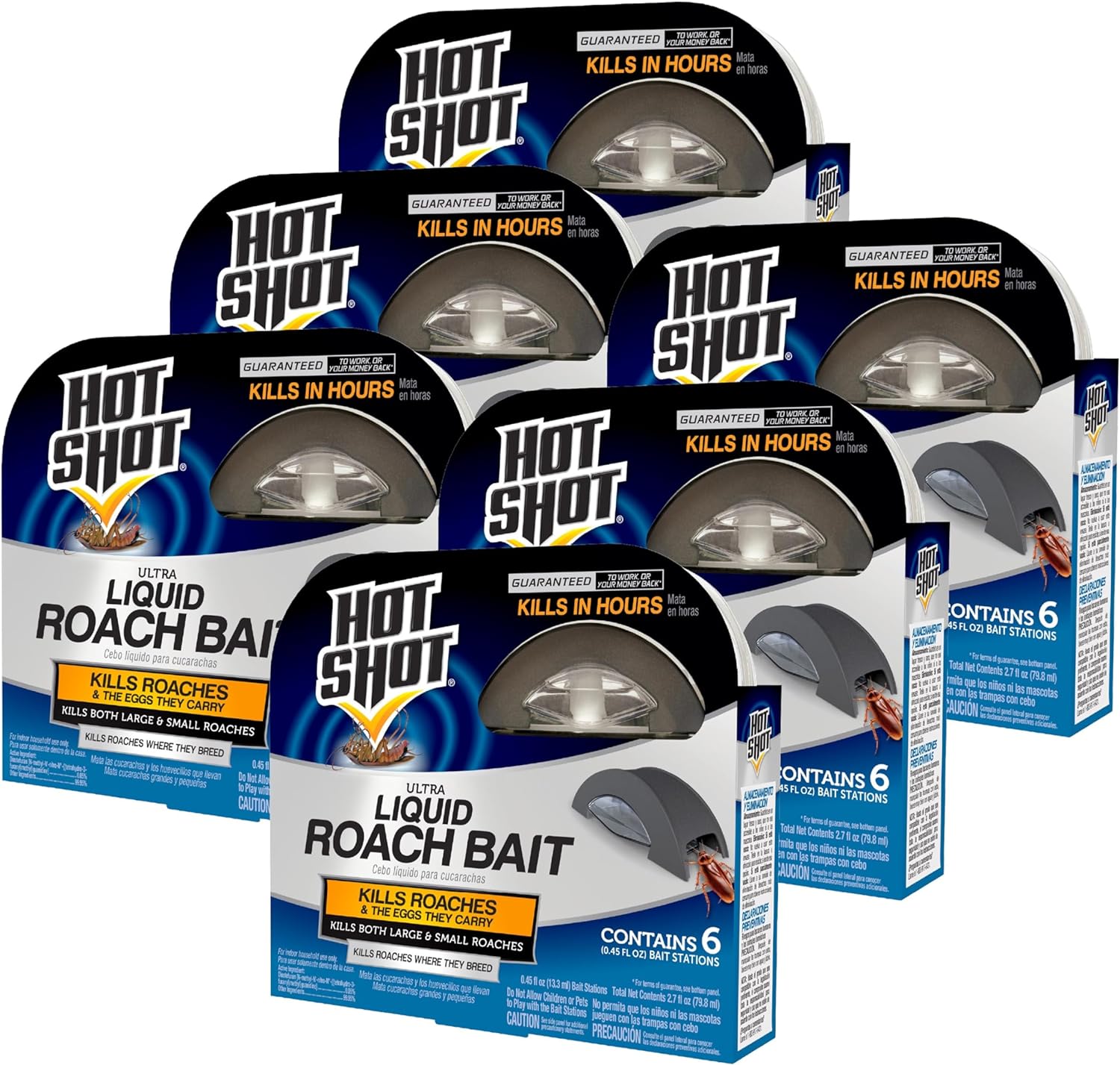 Enclosed bait stations are a convenient companion to gel, especially when placement control matters. They contain the bait inside a tamper-resistant disc, which makes them a reasonable choice if you have children or pets and want something enclosed. They work more slowly than gel and reach fewer roaches, so treat them as a supplement rather than your main weapon.
Hot Shot Ultra Liquid Roach Bait also provides a water-based bait, which appeals to roaches looking for moisture as much as food. Place stations flush against walls and in corners where roaches travel. Use them as a supporting tool when you want an enclosed bait format rather than exposed gel dots.
- Enclosed and tamper-resistant – good around kids and pets
- No application skill required
- Liquid baits also target moisture-seeking roaches
- Slower and less thorough than gel
- Fixed placement – less flexible than gel dabs
Boric Acid and Diatomaceous Earth (dusts)
 Boric acid is a classic roach killer that genuinely works. Roaches walk through the fine powder, pick it up on their bodies, and ingest it while grooming – which damages their digestive system. Unlike with termites, dusts are a legitimately effective tool against roaches when applied correctly.
The trick is a very light dusting. Roaches avoid visible piles; they will walk through a barely-there film. Apply a thin layer under and behind appliances, into cracks, and in the void under cabinets – never on open surfaces where children or pets go. Diatomaceous earth works on a similar contact principle and is a natural alternative for dry, hidden areas.
How to Apply Dust
Use a duster or squeeze bottle for a fine, even layer – if you can clearly see the powder, you used too much. Keep dust bone dry (it stops working when wet) and out of all living/food areas. Apply where roaches hide and travel, then leave it undisturbed.
- Genuinely effective against roaches (unlike on termites)
- Long-lasting when kept dry
- Inexpensive and covers hidden voids well
- Only works applied as a thin, dry film
- Must be kept away from kids, pets, and food areas
- Stops working if it gets damp
Sprays (for perimeter and visible roaches only)
 Sprays are the most overused and misused roach product. A spray like Ortho Home Defense or Raid Ant & Roach kills the roach it lands on, but it does nothing to the colony – and worse, its repellent residue scatters survivors and ruins your bait if used indoors near it.
Use spray only for two things: an exterior perimeter barrier around the foundation, doors, and windows to stop new roaches getting in, and killing the occasional visible roach far from any bait. Never make spray your primary indoor treatment, and never spray where you have placed gel or stations. For this core plan, treat sprays as a limited perimeter or spot-use tool, not the center of the treatment.
- Fast contact kill on visible roaches
- Good as an outdoor perimeter barrier
- Widely available and cheap
- Does nothing to the hidden colony
- Repellent residue ruins nearby bait
- Scatters roaches deeper into the structure
How to Verify It Worked
 Do not guess whether your treatment is working – measure it. Place sticky monitoring traps flat against walls and in corners, especially near the fridge, under the sink, and in cabinet backs. Count what you catch each week.
A falling weekly count means your plan is working. A steady or rising count after two to three weeks means roaches are getting food elsewhere, your bait dried out, or spray contaminated it – troubleshoot before buying more product. Monitoring traps also catch stragglers and give you early warning if a new population starts up.
Natural Options: What They Can and Cannot Do
Natural methods can help at the margins, but none of them clears an established infestation on their own. Treat them as support, not a substitute for bait.
- Diatomaceous earth – the most effective natural option; covered above as a dust.
- Baking soda – a popular home remedy, but there is little evidence roaches eat enough to be harmed. Low reliability.
- Essential oils (peppermint, catnip) – can repel roaches from small areas, but repelling is not killing; they scatter rather than die.
- Sealing and decluttering – genuinely useful. Fewer hiding spots and entry points make every other method work better.
The honest takeaway: natural repellents move roaches around; they do not end colonies. If you want a chemical-light approach, lean on sanitation, sealing, diatomaceous earth, and an IGR rather than oils and baking soda.
Methods to Avoid: What Does Not Work
- Total-release foggers (“bug bombs”)
Foggers are usually the wrong choice for roaches. They blast pesticide across open surfaces but never reach inside the cracks, voids, and cabinet backs where roaches actually live. Roaches simply move deeper into the walls and return afterward. Foggers also coat your kitchen in residue and pose a real fire and inhalation risk. Skip them entirely – gel bait does what a fogger cannot.
- Spraying everything in sight
Emptying a can of spray around the kitchen feels productive but backfires: it kills a few visible roaches, scatters the rest, and contaminates any bait. Restraint works better than firepower here.
- Bleach and household cleaners down drains
Pouring bleach into drains does not eliminate a roach harborage and can damage plumbing. Clean drains mechanically and bait around them instead.
- Giving up after a week
Secondary kill takes one to two weeks to move through a colony, and eggs keep hatching for a while. Seeing some roaches after a few days is normal, not failure. Stay the course.
How to Keep Cockroaches Out: Prevention
Clearing roaches is only half the job – keeping them out is the other half. Once the infestation is down, these steps stop it coming back.
- Seal entry points. Caulk gaps around pipes, baseboards, and cabinets, and add door sweeps. Roaches enter through surprisingly small cracks.
- Fix moisture. Repair leaks, dry out under-sink cabinets, and don’t leave standing water overnight. Moisture attracts roaches more than almost anything.
- Store food and take out trash. Sealed containers and lidded, regularly emptied bins remove the food supply.
- Declutter. Cardboard, paper bags, and stacked clutter are prime roach harborage – especially cardboard, which they eat and breed in.
- Keep a few monitoring traps out. Ongoing sticky traps give you early warning long before a new population becomes visible.
When to Call a Professional
DIY handles most roach problems, but some situations call for a pro. Consider hiring an exterminator when:
- a heavy German-roach infestation does not drop after several weeks of correct baiting;
- roaches are spread across multiple units in an apartment building (you cannot fix neighbors’ units);
- the infestation keeps returning no matter what you do;
- you are dealing with the health side of a severe infestation and want it resolved fast.
In an apartment, also notify your landlord – building-wide roach problems usually need coordinated treatment across units to succeed.
Ready to start?
Gel bait is where every roach plan begins
The most reliable path out of a roach problem is gel bait plus sanitation plus an IGR – not a can of spray. Start with the right gel, place it where roaches hide, keep spray away from it, and give the secondary kill time to work.
Frequently Asked Questions
What is the fastest way to get rid of cockroaches?
The most reliable first method is gel bait combined with sanitation. Place roach gel bait in cracks and hiding spots, deep-clean the kitchen so the bait is the best food available, and add an IGR to reduce successful breeding. You may see dead roaches within days, with activity often dropping over one to two weeks.
Why do I still see roaches after using bait?
Seeing roaches for a week or two is normal – the secondary kill takes time and eggs keep hatching. If numbers do not fall after two to three weeks, the usual causes are competing food (clean more thoroughly), dried-out bait (reapply), or spray contamination near the bait (stop spraying indoors).
Does killing roaches make them come back worse?
No – but using the wrong method can scatter them. Foggers and repellent sprays drive roaches deeper into walls and to new areas, which feels like it got worse. Gel bait does the opposite: it pulls them to a feeding point and moves through the colony.
Are cockroaches a sign my house is dirty?
Not necessarily. Roaches need food, water, and shelter, and even clean homes provide those – they often arrive in groceries, boxes, or from neighboring units. Sanitation makes treatment far more effective, but getting roaches is not proof of a dirty home.
How do I get rid of roaches in an apartment?
Use the same gel-bait-plus-sanitation plan, but also tell your landlord. Roaches travel between units through shared walls and pipes, so a building-wide problem needs coordinated treatment. Seal gaps around pipes and outlets to slow movement between apartments.
Is boric acid or gel bait better for roaches?
Gel bait is the stronger primary treatment because of its secondary kill. Boric acid is an excellent supporting tool in dry, hidden areas. Using both – gel in cracks, a light boric-acid dust under appliances – is more effective than either alone.
Do natural methods actually work on roaches?
Some help, most don’t clear an infestation. Diatomaceous earth genuinely works as a dust; sealing and sanitation help a lot. Essential oils and baking soda are weak – oils repel rather than kill, and baking soda has little supporting evidence. For a chemical-light plan, rely on DE, an IGR, and sealing.
Conclusion
Getting rid of cockroaches comes down to a simple, proven combination: gel bait to reduce the colony, sanitation to remove competing food, an IGR to slow the breeding cycle, and monitoring traps to confirm it worked. Boric acid and dusts add support in hidden areas; sprays stay outside or away from bait.
The single most important rule is the one most people get wrong: do not spray near your bait. Let the gel do its job, keep the kitchen clean, and give the colony one to two weeks to collapse. Do that, and even a stubborn roach problem has a much better chance of staying under control.