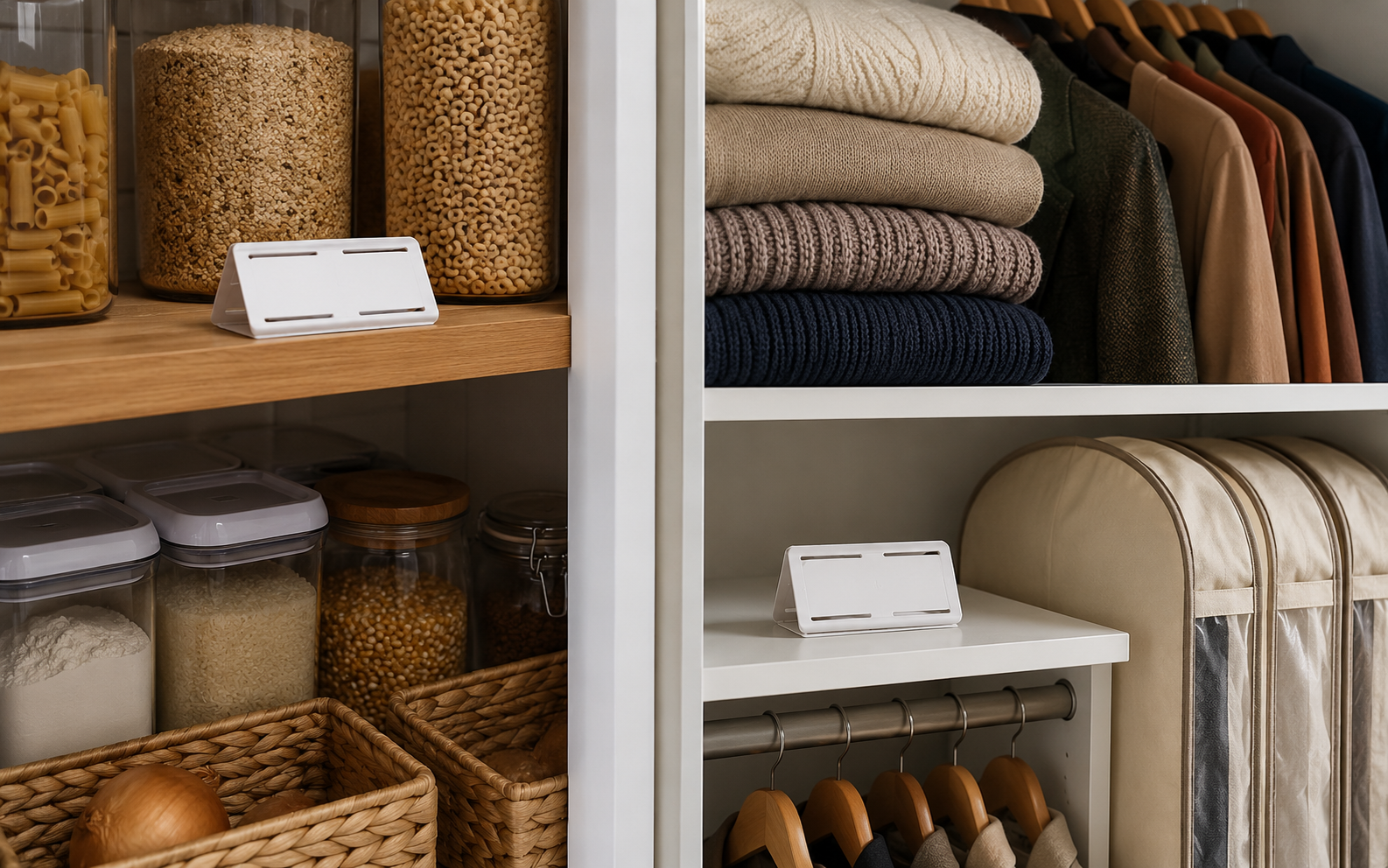
Pantry moth traps and clothes moth traps may look similar, but they are not the same product. They are designed for different moths, different locations, and different problems inside the home.
If you use the wrong trap, you may waste time and still fail to find the source of the infestation. A trap made for pantry moths belongs in kitchens and food storage areas. A trap made for clothes moths belongs in closets, wardrobes, rugs, and fabric storage areas.
This guide explains the difference between pantry moth traps and clothes moth traps, where each one should be placed, and how to choose the right product for your situation. It also explains when an optional indoor spray add-on may make sense after cleaning — without confusing sprays with pheromone traps.
Use pantry moth traps if moths are appearing near flour, cereal, rice, pasta, grains, nuts, pet food, bird seed, or kitchen cabinets. Use clothes moth traps if moths are appearing near closets, wardrobes, wool, cashmere, silk, rugs, coats, sweaters, or stored clothing. The two trap types are not interchangeable. If you are not sure, inspect food storage first, then inspect natural fabrics and closet corners.
Moths near food? Go to the best pantry moth traps guide. Holes in wool or moths near closets? Go to the best clothes moth traps guide. Want a natural indoor spray add-on after cleaning? Wondercide Indoor Pest Control can be considered only for appropriate surfaces and only as directed; it is not a replacement for the right trap type.

- Designed for flour, cereal, rice, and pet food
- Best for kitchen pantry and cabinets
- Trusted pantry pest brand

- Designed for wool, cashmere, rugs, and closets
- Best for wardrobes and stored clothing
- Extra-strength pheromone lure
Pantry Moth Traps vs Clothes Moth Traps: Main Difference
| Feature | Pantry Moth Traps | Clothes Moth Traps |
|---|---|---|
| Best location | Kitchen, pantry, cupboards, dry food shelves | Closets, wardrobes, drawers, rugs, fabric storage |
| Main target | Indian meal moths, flour moths, grain moths | Webbing clothes moths, case-bearing clothes moths, carpet moth activity |
| Common source | Flour, cereal, rice, grains, pet food, bird seed, nuts | Wool, cashmere, silk, fur, feathers, rugs, stored clothing |
| Damage sign | Webbing, larvae, clumps, moths inside dry food packages | Small holes, thinning fabric, larval cases, debris near natural fibers |
| Can traps solve it alone? | No — remove infested food and clean shelves | No — clean fabrics, vacuum, and protect garments |
| Optional spray add-on? | Only on appropriate non-food-contact surfaces after cleaning, if the label allows | Only on appropriate closet/floor/baseboard areas after cleaning, if the label allows |
What Are Pantry Moth Traps?
Pantry moth traps are designed for moths that infest stored food. These pests are most often found around dry goods such as flour, cereal, rice, pasta, grains, nuts, seeds, baking mixes, bird seed, and pet food.
Most pantry moth traps use a pheromone lure to attract adult male pantry moths to a sticky surface. This helps reduce adult moth activity and, more importantly, helps you monitor whether moths are still active after you clean the pantry.
Pantry moth traps are best used in:
- Kitchen pantries
- Food storage cabinets
- Dry goods shelves
- Pet food storage areas
- Bulk food storage zones
- Utility rooms where bird seed or dry feed is stored
If your moths are appearing near food, start with our guide to the best pantry moth traps in 2026.
What Are Clothes Moth Traps?
Clothes moth traps are designed for moths that damage natural fabrics. These pests are usually found in quiet, dark areas where clothing, rugs, blankets, or natural fibers are stored for long periods.
Like pantry moth traps, many clothes moth traps use pheromones to attract adult male moths. But the lure is different. A pantry moth trap is not meant for clothes moths, and a clothes moth trap is not meant for pantry moths.
Clothes moth traps are best used in:
- Bedroom closets
- Wardrobes
- Coat closets
- Wool and cashmere storage areas
- Rug storage areas
- Drawers and seasonal clothing storage rooms
If the problem is in closets, rugs, wool, cashmere, silk, coats, or stored clothing, start with our guide to the best clothes moth traps in 2026.
If you already have fabric damage or suspect larvae in clothing, follow our full cleanup guide on how to get rid of clothes moths.
How to Tell Which Moth Problem You Have
The easiest way to choose the right trap is to look at where the moths appear. Location tells you more than color or size because many small moths look similar at first glance.
Choose pantry moth traps if you notice:
- Small moths flying near the kitchen or pantry
- Moths near cereal, flour, rice, pasta, grains, nuts, or pet food
- Webbing inside food packages
- Larvae in dry food
- Clumps or fine threads inside opened bags or boxes
- Moths emerging from cabinets after you open the pantry door
Choose clothes moth traps if you notice:
- Small moths near closets, wardrobes, or stored clothing
- Holes in wool, cashmere, silk, or natural-fiber garments
- Damage to rugs, blankets, or fabric storage items
- Larval cases or debris in quiet closet corners
- Moths in dark, undisturbed fabric storage spaces
- Recurring fabric damage even when no pantry moths are visible
Why You Should Not Use the Wrong Trap
Using the wrong moth trap can create a false sense of progress. You may place traps, catch nothing, and assume the problem is gone — while the real source remains active.
For example, a pantry moth trap placed in a closet may not attract the moths damaging wool sweaters. A clothes moth trap placed in a kitchen pantry may not help identify moths coming from flour, cereal, rice, or pet food.
The wrong trap can cause three problems:
- Delayed treatment: the source keeps producing new moths while you wait.
- Misleading results: an empty trap may suggest there is no activity, even when the wrong lure is being used.
- Wasted money: you may buy more traps instead of fixing the actual source.
Where to Place Pantry Moth Traps
Pantry moth traps should be placed close to dry food storage areas, but not directly on food. Good locations include pantry shelves, cabinet walls, food storage rooms, and nearby dry goods zones.
Best placement areas include:
- Near flour, cereal, rice, pasta, grains, nuts, and baking mixes
- Near dry pet food, bird seed, or bulk food containers
- Inside the pantry or directly beside the suspected cabinet
- On a shelf where the trap will not touch food directly
- In separate zones if your kitchen has multiple food storage areas
Do not place pantry moth traps in closets, wardrobes, or fabric drawers. They are not designed for clothes moth control.
Where to Place Clothes Moth Traps
Clothes moth traps should be placed in quiet, dark areas where natural fabrics are stored. These pests are less likely to be active in bright, busy areas and more likely to hide near undisturbed fabric.
Best placement areas include:
- Closet shelves near wool or cashmere items
- Wardrobes with coats, suits, sweaters, or scarves
- Near rugs, blankets, or stored natural-fiber textiles
- Coat closets and seasonal storage areas
- Close to the suspected source, but not directly attached to valuable clothing
Do not place clothes moth traps in pantries or kitchen cabinets. If moths are food-related, use pantry moth traps instead.
Do Traps Kill Moth Larvae?
No. This is one of the biggest misunderstandings about moth traps.
Most pheromone moth traps attract adult male moths. They are useful for monitoring activity and reducing adult breeding opportunities, but they do not remove larvae from food or fabric.
That means the rest of the treatment depends on the moth type:
- For pantry moths: remove infested food, vacuum shelves, wipe pantry surfaces, and store dry goods in airtight containers.
- For clothes moths: inspect clothing, clean affected fabrics, vacuum closets and rug edges, and protect vulnerable garments with storage bags or containers.
What to Do If You Are Not Sure Which Moth You Have
If you are unsure, start with location and damage signs.
- Check the kitchen first. Inspect flour, cereal, rice, pasta, pet food, bird seed, and dry goods.
- Check closets next. Look at wool, cashmere, coats, sweaters, rugs, and stored clothing.
- Look for larvae or webbing. Pantry moth signs are often inside food. Clothes moth signs are often near fabric.
- Use one trap type per zone. Place pantry moth traps near food and clothes moth traps near fabric.
- Monitor results separately. Do not mix the two problems together.
You can also use the Moths category as a starting point for pantry and clothes moth guides.
Do You Need a Spray Add-On?
Most moth problems start with a source: infested food for pantry moths, or vulnerable natural fibers for clothes moths. That means traps and source removal matter more than sprays.
A natural indoor spray such as Wondercide Indoor Pest Control can be considered as an optional add-on after the area is emptied, inspected, vacuumed, and cleaned. It should not replace pantry moth traps, clothes moth traps, food disposal, laundering, dry cleaning, vacuuming, or better storage.
Use extra caution around kitchens and pantries. Do not spray food, dishes, open containers, pet bowls, or food-contact surfaces unless the product label specifically allows that use. Around closets, avoid spraying delicate or valuable garments unless the label allows it. Always read and follow the label before applying any indoor spray around children, pets, kitchens, closets, rugs, or furniture.
Best Trap Type by Situation
| Situation | Use This Trap | Also Do This |
|---|---|---|
| Moths near cereal, flour, rice, or pasta | TERRO 2900 Pantry Moth Trap | Inspect and discard infested food |
| Moths near pet food or bird seed | TERRO 2900 Pantry Moth Trap | Move food into airtight containers |
| Holes in wool or cashmere | MaxGuard Clothes Moth Traps | Clean garments and vacuum closet areas |
| Moths near rugs or stored blankets | MaxGuard Clothes Moth Traps | Inspect rug edges and fabric storage |
| Moths in both kitchen and closet | TERRO + MaxGuard | Treat food and fabric areas separately |
| You want a natural indoor spray after cleaning | Wondercide Indoor Pest Control | Use only as directed on appropriate surfaces; do not replace traps or source removal |
Common Mistakes Homeowners Make
- Buying one generic moth trap for every room. Pantry moths and clothes moths need different lure systems.
- Placing traps too far from the source. Traps work best near the affected food or fabric area.
- Expecting traps to kill larvae. Traps mainly monitor adult moth activity.
- Ignoring pet food and bird seed. These are common pantry moth sources.
- Ignoring wool rugs and closet corners. Clothes moth larvae may hide beyond sweaters and coats.
- Using sprays as a shortcut. Sprays do not replace finding the food or fabric source, and they must be used only as directed on the label.
- Stopping too soon. Continue monitoring after cleaning to confirm activity is reduced.
Which Guide Should You Read Next?
If the problem is in your kitchen or food storage area, read:
- How to Get Rid of Pantry Moths — step-by-step cleanout plan for food packages, shelves, traps, and airtight storage.
- Best Pantry Moth Traps in 2026 — compare trap options after you inspect and clean the pantry.
If the problem is in your closet, wardrobe, rugs, or stored clothing, read:
Frequently Asked Questions
Are pantry moth traps and clothes moth traps the same?
No. Pantry moth traps and clothes moth traps are designed for different pests. Pantry moth traps belong near stored food. Clothes moth traps belong near closets, wardrobes, rugs, wool, cashmere, silk, and stored clothing.
Can I use a pantry moth trap in my closet?
No. A pantry moth trap is not the right choice for a closet moth problem. If moths are near wool, cashmere, coats, rugs, or stored clothing, use clothes moth traps instead.
Can I use a clothes moth trap in my pantry?
No. Clothes moth traps are not designed for moths that infest flour, cereal, rice, grains, pet food, or bird seed. Use pantry moth traps in food storage areas.
How do I know if I have pantry moths?
You likely have pantry moths if moths are flying near kitchen cabinets, dry food shelves, flour, cereal, rice, pasta, pet food, bird seed, or pantry corners. Webbing or larvae inside food packages is another strong sign.
How do I know if I have clothes moths?
You likely have clothes moths if you find holes in wool, cashmere, silk, coats, rugs, or stored natural-fiber clothing. Small moths in dark closet areas are another warning sign.
Do moth traps get rid of moths completely?
Not by themselves. Traps help catch and monitor adult moths, but they do not remove larvae from food or fabric. You still need to clean, inspect, and remove the source of the infestation.
Can I use Wondercide with moth traps?
Wondercide Indoor Pest Control can be used only as an optional indoor spray add-on where the label allows. It should not replace pantry moth traps, clothes moth traps, removing infested food, cleaning fabrics, vacuuming, or protected storage. Be especially careful in kitchens: do not spray food, dishes, open containers, or food-contact surfaces unless the label specifically allows it.
Why are moths still appearing after I placed traps?
Moths may continue appearing if larvae or eggs are still present. For pantry moths, recheck dry food. For clothes moths, recheck wool, rugs, closet corners, and stored fabrics.
Should I use both pantry moth traps and clothes moth traps?
Use both only if you have signs in both food storage and fabric storage areas. If moths are only in the pantry, use pantry moth traps. If they are only in closets, use clothes moth traps.
Final Thoughts
The difference between pantry moth traps and clothes moth traps is simple: pantry moth traps protect food storage areas, while clothes moth traps help monitor fabric storage areas.
If moths are near flour, cereal, rice, pasta, grains, nuts, pet food, or bird seed, start with TERRO 2900 Pantry Moth Trap or read our full guide to pantry moth traps. If moths are near wool, cashmere, silk, coats, rugs, or stored clothing, start with MaxGuard Clothes Moth Traps or read our full guide to clothes moth traps. If you want a natural indoor spray after cleaning, consider Wondercide Indoor Pest Control only as a label-directed add-on on appropriate surfaces.
The right trap will not replace cleaning, inspection, or better storage — but it will help you monitor the problem correctly and avoid wasting time on the wrong product.