


Ant Control Hub
In this article you will find
show
Ants: Identify the Species, Stop the Trail, Choose the Right Treatment
Ants are one of the most persistent pests in US homes. A single worker on the counter is often a scout from a colony hidden in a wall, under a slab, in damp wood, or outside near the foundation. Start here: identify the ant type, match the treatment to the situation, then jump into the detailed guide that fits your problem.
What Kind of Ants Are in Your House?
The right treatment depends on the species, nest location, and food preference. Use this quick reference first, then open the guide that matches what you are seeing.
| Ant type | Key look | Problem clue | Best next guide |
|---|---|---|---|
| Odorous house ants | Small, dark brown to black, about 1/8 inch | Kitchen and bathroom trails; coconut-like odor when crushed | Indoor ant guide |
| Pavement ants | Small dark ants often seen near concrete cracks | Driveways, patios, sidewalks, slabs, and entry-point trails | Best ant killer |
| Argentine ants | Light to medium brown, uniform size, fast trails | Large outdoor pressure, multiple queens, recurring trails | Indoor ant guide |
| Carpenter ants | Large black or dark ants, often 1/2 inch or larger | Sawdust-like debris, damp wood, wall activity, structural concern | Carpenter ant guide |
| Pharaoh ants | Tiny yellow to light brown ants, about 1/16 inch | Scattered indoor trails; sprays can make colonies split | Indoor ant guide |
| Fire ants | Reddish-brown workers; aggressive when mounds are disturbed | Outdoor lawn mounds and painful stings, especially in the South | Fire ant yard guide |
All Ant Guides
Filter by what you need right now: identifying the ant, removing indoor trails, treating outdoor nests, or choosing products.
Best Products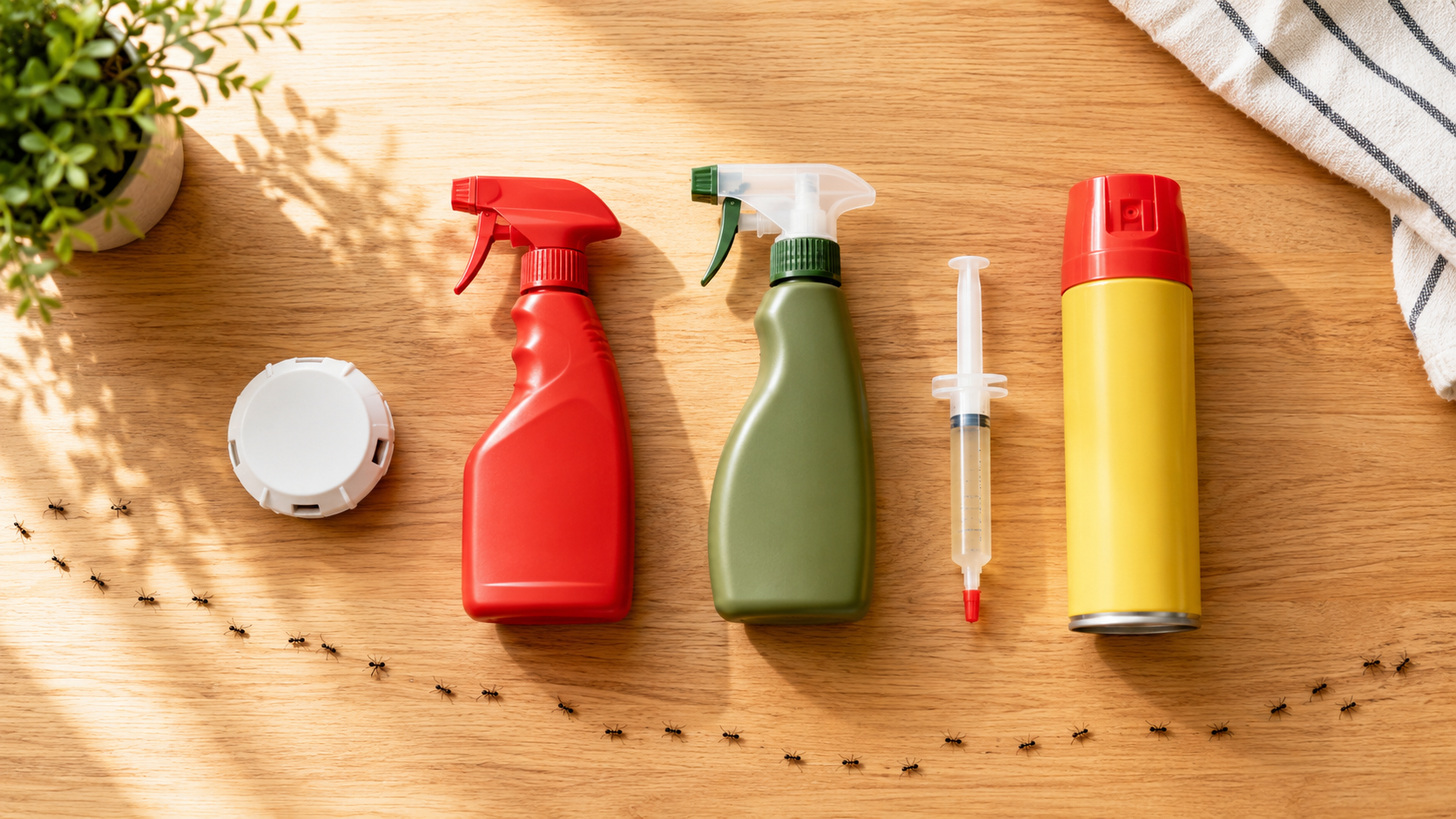

Best Ant Killer for Home
Bait stations, gels, sprays, and outdoor treatments compared by situation.
Control Guide
How to Get Rid of Ants in the House
A bait-first indoor plan for kitchen, bathroom, pantry, and entry-point trails.
Wood-Nesting Ants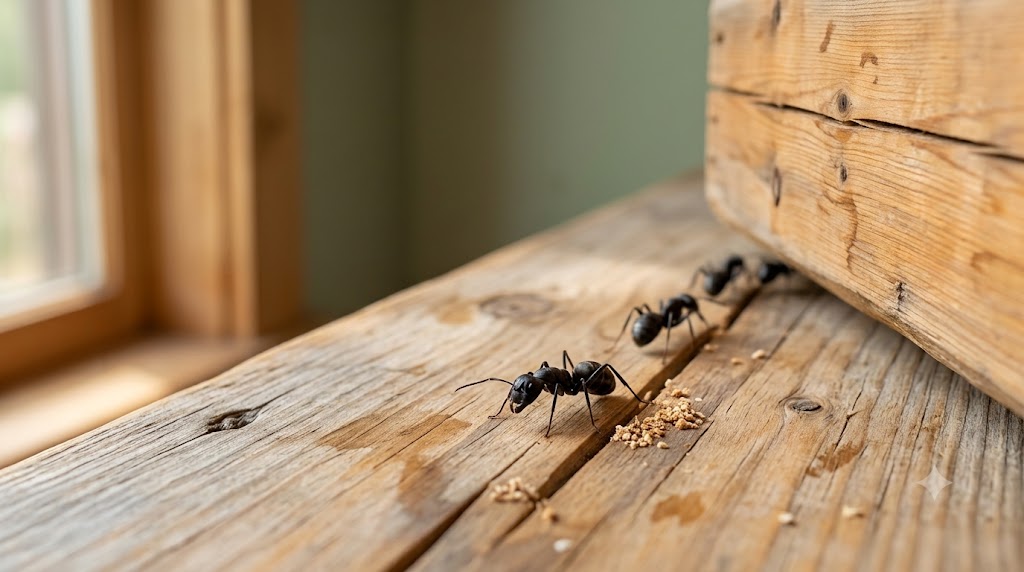
How to Get Rid of Carpenter Ants
Large black ants near damp wood need a different plan than ordinary kitchen ants.
Outdoor Control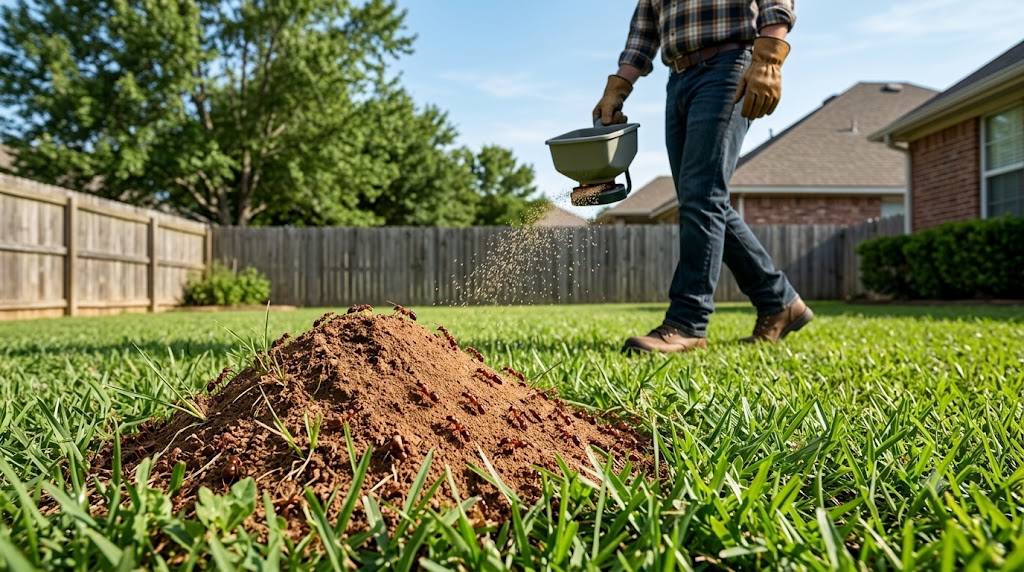
How to Get Rid of Fire Ants in the Yard
Fire-ant bait, mound treatment, timing, safety, and what not to do to mounds.
Identification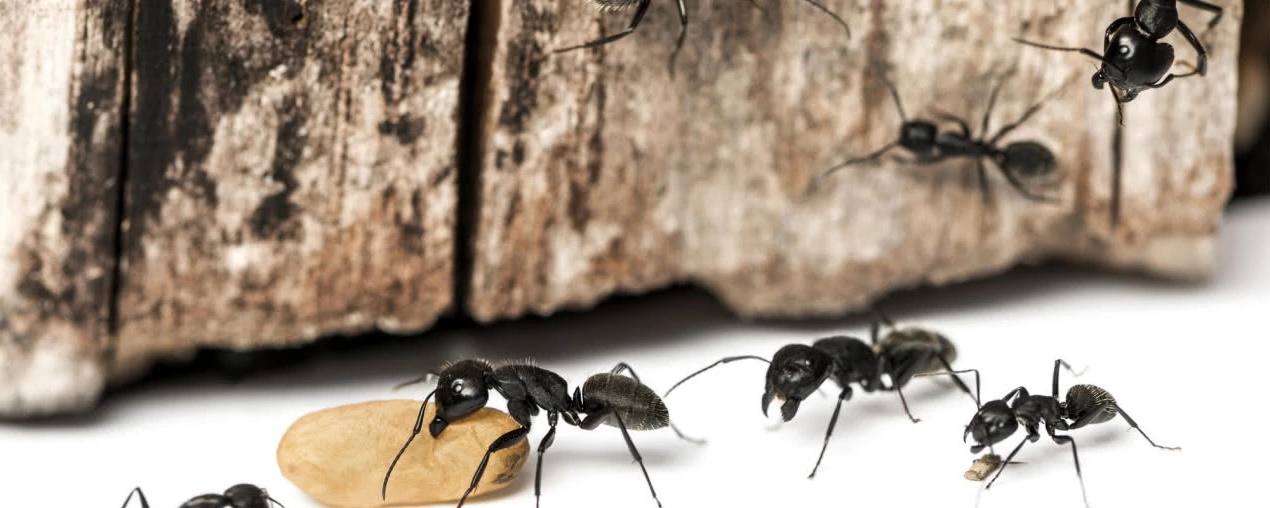

What Are Ants? 5 Facts You Need to Know
Ant biology, colony behavior, and why visible workers are only part of the problem.
DIY Methods
Say Goodbye to Ants: Effective Methods
General DIY ant control basics for reducing trails indoors and outdoors.
Prevention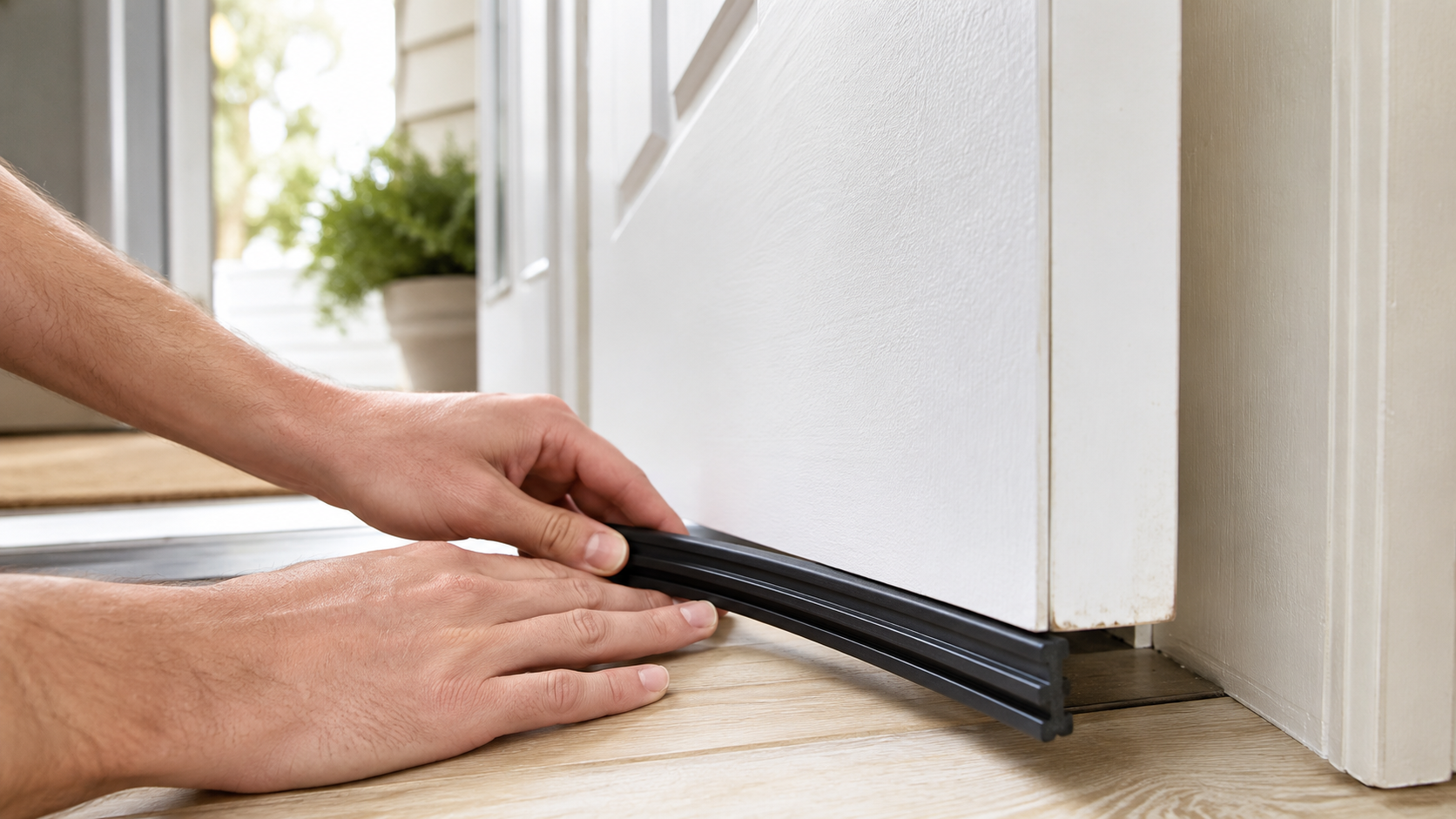
Pest Barriers for Doors and Windows
Seal the tiny gaps ants use around thresholds, windows, pipes, and trim.
Prevention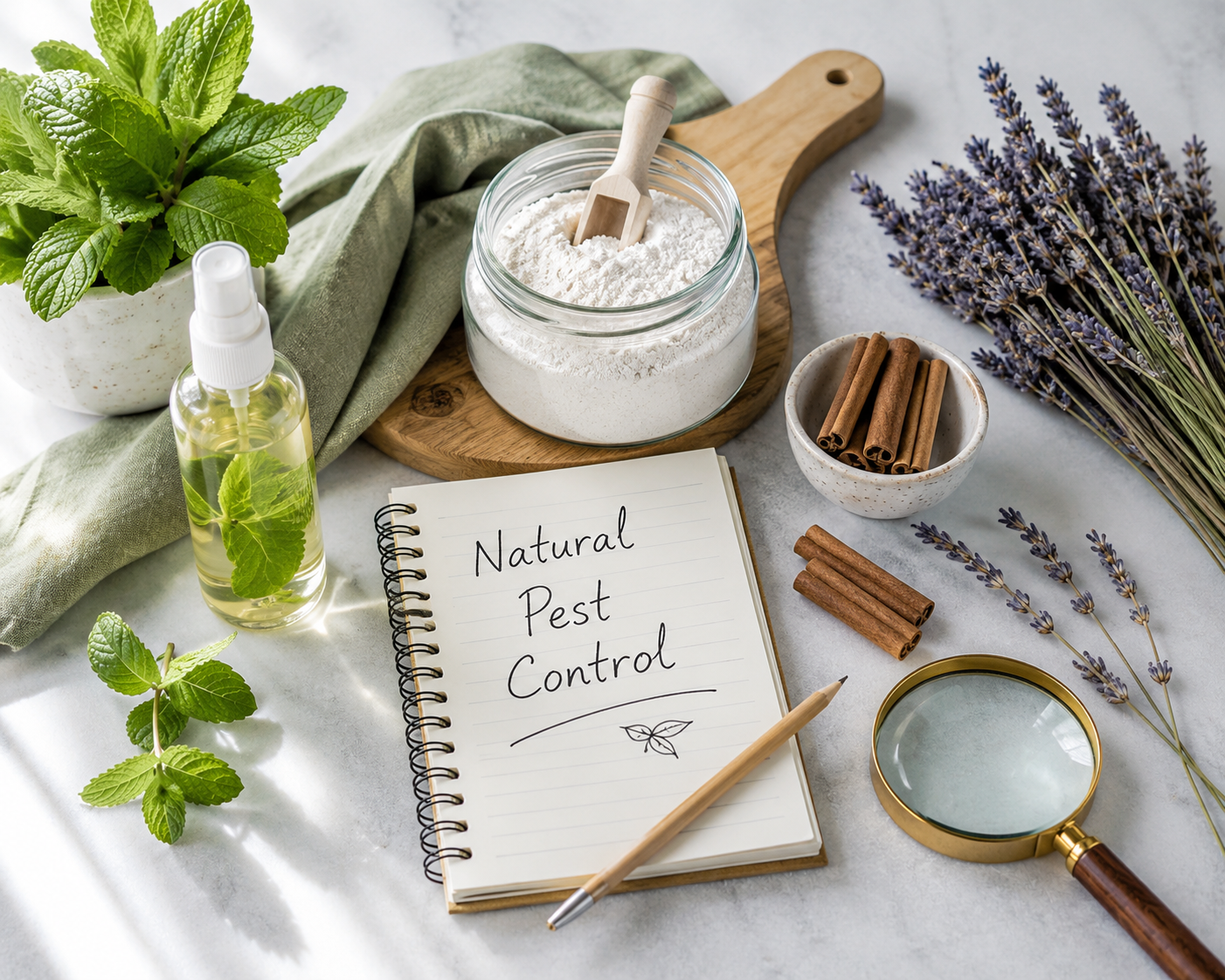
DIY Pest-Proofing
A broader home prevention checklist for reducing bug entry and attraction.
Prevention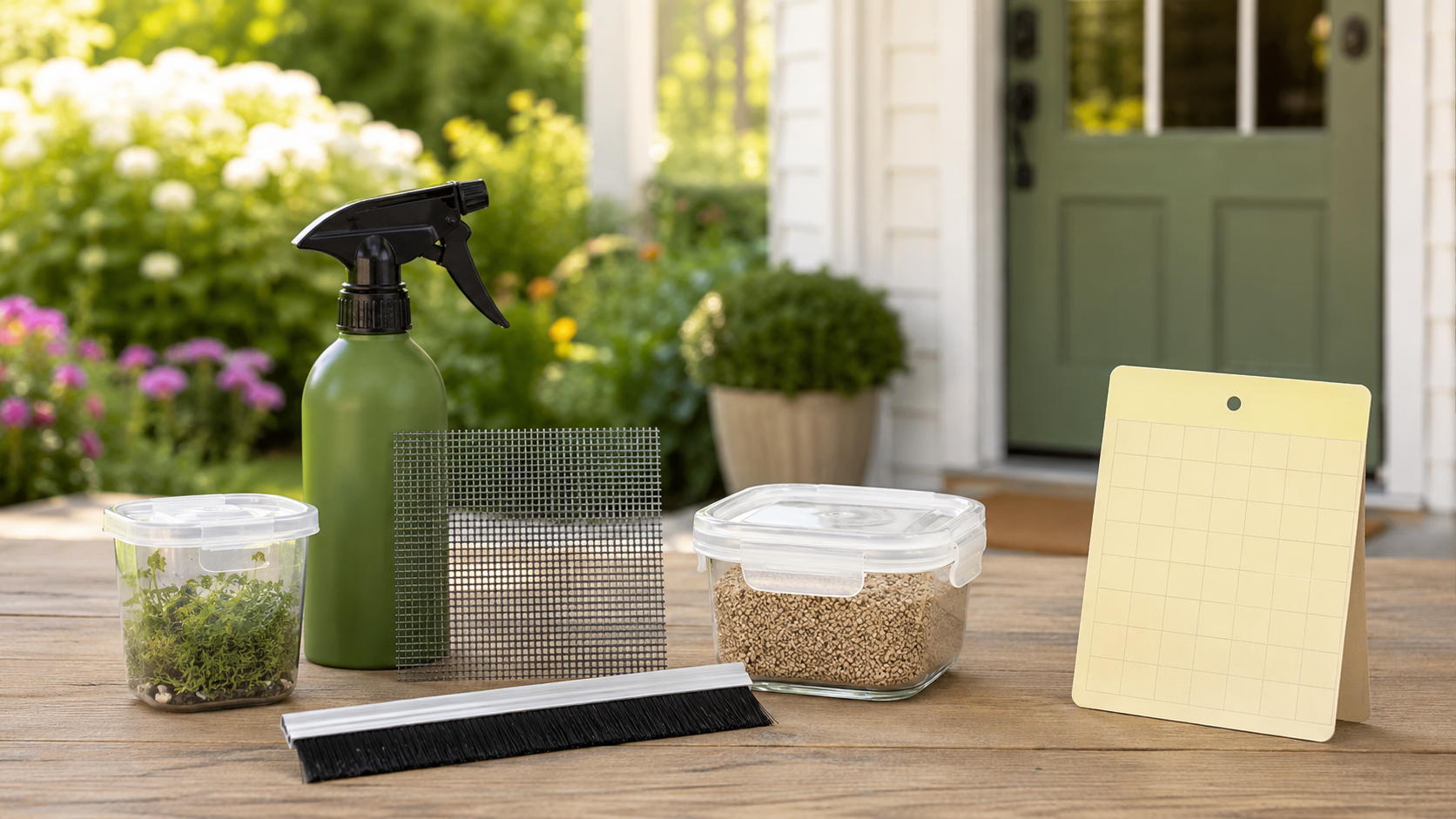
Best Natural Pest Control Products
Lower-toxicity tools and products for prevention, monitoring, and targeted control.
No guides in this category yet.
Quick Test: Bait, Spray, or Call a Pro?
Answer three questions about where the ants are active. This helps route readers to the safest first step instead of spraying trails blindly.
Question 1 of 3
Result
Ant Control FAQ
What is the best first step for ants in the kitchen?
Start with bait along the active trail, then clean food residue and seal entry points after activity drops. Spraying the trail first can repel ants away from bait and reduce colony-level control.
Why do I see more ants after placing bait?
That often means the bait has been found. Workers gather, feed, and carry the bait back toward the colony. Activity may increase for a short period before it declines.
When are carpenter ants more serious than ordinary house ants?
Large dark ants near damp wood, sawdust-like debris, soft wood, wall sounds, or activity around leaks can point to carpenter ants. They do not eat wood like termites, but they can excavate damaged wood for nesting.
Should I treat fire ant mounds one at a time?
For repeated fire-ant mounds, a yard-wide bait strategy usually works better than chasing one mound at a time. Remaining active mounds can then be spot-treated according to the label.
How do I keep ants from coming back?
Remove food and water sources, wipe scent trails, seal gaps around doors and windows, trim branches touching the house, keep mulch and wood away from siding, and reduce moisture around the foundation.