


Common signs of termite infestation include mud tubes, termite droppings, hollow-sounding wood, flying swarmers, shed wings, and damaged or warped wood. Recognizing these warning signs early can help prevent expensive structural damage.
Termites are among the most destructive pests a homeowner can face. Once they get into a house, they can stay hidden for months or even years while damaging wood, trim, floors, and structural supports. As the colony grows, the risk to your home grows with it.
The problem is that termite activity is rarely obvious at first. In many cases, damage becomes visible only after the infestation is already established. That is why knowing the signs of termites is so important.
Affiliate and referral disclosure: PestsGuide may earn a commission from qualifying purchases or referrals through links in this article. This does not change your price or our editorial recommendations.
- Mud tubes on walls or foundation → inspect for termite mud tubes and consider termite bait stations
- Frass or termite pellets indoors → compare with termite droppings and check for drywood termites
- Flying termites or shed wings → read our guides to flying termites vs flying ants and termite swarmers
- Visible live termites in wood or wall voids → review spot treatment sprays or foams
- Repeated signs across multiple parts of the home → start with the termite inspection cost guide and the DIY vs pro termite treatment guide
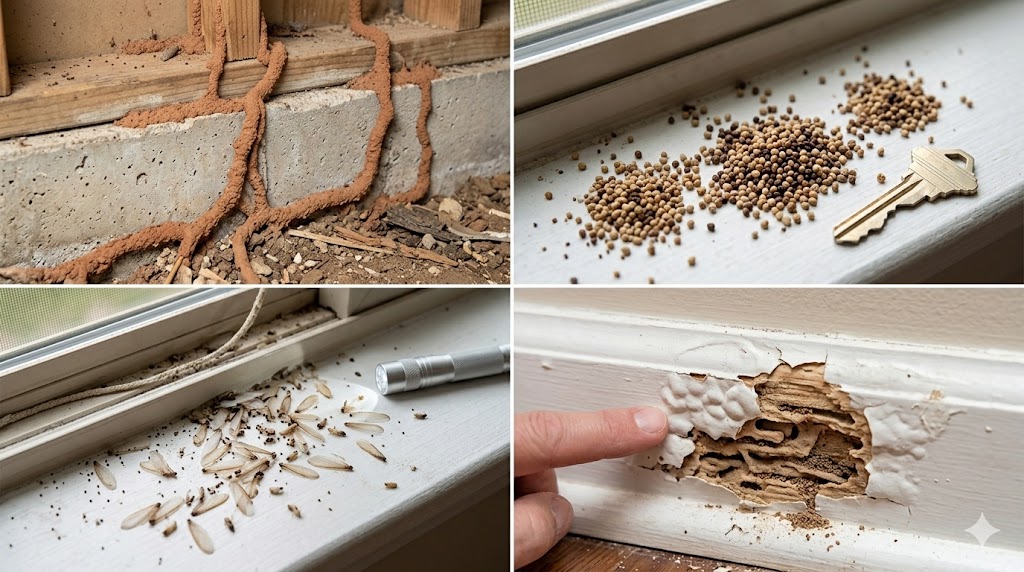
Important: A single warning sign does not always mean severe damage, but multiple signs together usually mean it is time to act quickly. Use this guide as a first-pass checklist. If you see more than one sign in the same area, document what you find before cleaning, painting, or repairing damaged wood.
10 Main Signs of Termite Infestation
Below are ten of the most common signs that termites may be active in or around your home. Most homes show more than one clue by the time the problem is discovered, so look for patterns rather than relying on one sign alone.
1. Mud Coverings, Shelter Tubes, or Dirt-Like Patches
Mud coverings are earthen patches that appear on wood, masonry, or other surfaces where termites are moving between food and moisture sources. They can look similar to mud tubes, but may spread across a wider area or appear as dirt-like patches on wood, walls, or structural surfaces.
If you notice these formations on structural wood, walls, basement areas, crawlspace wood, or exterior foundations, inspect further for hidden termite activity.
2. Frass or Termite Droppings
Frass is one of the clearest signs of drywood termite activity. Pellets often collect below infested wood and can look like tiny grains of wood-colored material, sand, or coffee grounds.
Unlike subterranean termites, drywood termites do not use droppings to build mud tubes. Instead, they push pellets out through small kick-out holes near the colony. If you see pellets indoors, compare the debris with our guide to termite droppings and frass.
3. Mud Tubes
Subterranean termites build mud tubes, which are narrow tunnels made from soil, saliva, and wood particles. These tubes help termites travel safely between the soil and the wood they are feeding on.
You may find mud tubes on foundations, concrete walls, crawlspaces, support piers, joists, or exterior walls. If you find tubes, inspect the surrounding area carefully and review our termite mud tubes guide.
4. Hollow or Damaged Wood
Termites often consume wood from the inside out, leaving the outer surface intact. Tap suspect wood with a screwdriver. If it sounds hollow, feels papery, or breaks easily, termites may have been active inside.
Other warning signs include trim that flexes when pressed, flooring that feels soft, and framing that looks normal but is weakened underneath. For more detail, see our guide to termite damage signs, pictures, and repairs.
5. Clicking Noises Inside Walls
In quiet conditions, some homeowners report faint clicking or rustling sounds inside walls, especially at night. These noises may come from termite activity inside galleries, but this sign is difficult to confirm on its own.
Clicking or rustling becomes more meaningful when combined with mud tubes, swarmers, damaged wood, frass, or other termite signs.
6. Bubbling or Peeling Paint
Bubbling or peeling paint can indicate hidden moisture behind a wall, and termite activity can sometimes create moisture changes in the areas where they tunnel. This visual change can point to termite activity, especially when it appears in dry indoor areas with no plumbing nearby.
However, bubbling paint can also come from ordinary water damage, so treat it as a warning sign rather than proof by itself.
7. Flying Termites or Swarmers
The most obvious termite warning sign is the presence of winged termites, also called swarmers or alates. These reproductive termites leave a mature colony to start new ones.
One or two winged insects do not always confirm a major infestation, but a swarm indoors or repeated swarmer activity around windows, doors, and light fixtures is a serious clue. Read our guide to termite swarmers if you see winged termites indoors.
8. Shed Wings
After swarmers land and pair off, they shed their wings. Finding discarded termite wings on windowsills, near doors, on the floor, or under light fixtures is one of the clearest signs that swarmers were recently active nearby.
Termite wings are usually equal in length, translucent, and slightly milky in appearance. Flying ant wings are unequal in length. If you are not sure which you found, compare our guide to flying termites vs flying ants.
9. Stuck Windows and Warped Doors
Many homeowners assume sticky doors and hard-to-open windows are caused only by humidity or weather. Sometimes that is true. But hidden termite activity inside frames can cause swelling, distortion, and warping that looks similar to moisture damage.
If doors and windows suddenly become harder to open, especially together with other warning signs, inspect for termites.
10. Tree Nests or Outdoor Termite Activity
Some termite species establish colonies in tree trunks, stumps, roots, or dead wood near the property. You may see mud-like material, hollow areas, or heavily damaged wood outdoors before discovering termites have spread toward the house.
Outdoor termite activity close to the home should not be ignored. Subterranean colonies can travel from their source in search of food, and foundations, decks, fences, and wood-to-soil contact points are vulnerable.
Which Termite Sign Points to Which Problem?
| Sign | Most Likely Meaning | Best Next Step |
|---|---|---|
| Mud tubes | Subterranean termites | Check if tubes are active |
| Dry pellets / frass | Drywood termites | Compare termite droppings |
| Swarmers or wings | Mature colony nearby | Identify termite swarmers |
| Hollow wood | Possible internal damage | Review termite damage signs |
| Multiple signs together | Higher risk of active infestation | Review inspection cost and next steps |
Why Termite Inspection Is Important
If you are deciding what to do next, you may want to understand whether DIY termite treatment is worth it before choosing between DIY and professional solutions.
Peace of Mind
Your home is one of your most valuable assets. A termite inspection can catch problems early before serious structural damage develops.
Prevention of Expensive Damage
The biggest reason to take inspections seriously is the scale of termite damage. Termites feed from the inside out, weakening structural components long before any problem is obvious.
More Efficient Treatment
Catching termites early gives you more treatment options and a better chance of stopping the infestation before it spreads. If you are already seeing active termites in a small area, our guide on termite sprays for spot treatment covers local treatment options.
Protecting Property Value
Whether you plan to stay or eventually sell, a home free from termite problems is easier to protect and maintain. Existing termite issues can lower property value or complicate a sale.
How Much Does Termite Inspection Cost?
Inspection cost varies depending on the size of the home, location, and whether it is a basic inspection or part of a treatment estimate. Typical pricing across the US often looks like this:
- Free inspection from many pest control companies as part of a treatment estimate;
- Independent termite inspection: often $75-150;
- Wood-Destroying Insect report for home buying or selling: often $75-200;
- Detailed inspection with advanced tools: sometimes $200-400.
Inspection costs may also vary based on property size, region, crawlspace/attic access, suspected termite species, and whether the inspection is for treatment, prevention, or real estate.
For a full breakdown, see our guide on termite inspection cost. If you are not sure whether the signs point to a DIY-friendly situation or a professional-level problem, use our DIY vs pro termite treatment guide.
- Do not clean everything up immediately. Take photos of mud tubes, frass, wings, damaged wood, or live insects before disturbing the area.
- Match the signs to the likely termite type. Mud tubes usually point to subterranean termites, while dry pellets often point to drywood termites.
- Use inspection and treatment guides before repairs. Start with termite inspection cost and DIY vs pro treatment guidance if signs appear in more than one area.
What Treatment Usually Matches the Signs?
- Mud tubes and colony activity from soil → bait stations or soil treatment
- Indoor swarmers or visible termites in one area → spot treatment sprays and foams
- Exposed wood during repairs or renovation → borate wood treatment
- Widespread hidden infestation → use the termite inspection cost guide and the DIY vs pro decision guide
Ready to turn the signs into a treatment plan? Follow our complete guide to getting rid of termites and preventing them from returning to compare the treatment sequence for soil activity, wall voids, exposed wood, bait stations, and severe infestations.
FAQ
What is the first sign of termites?
For subterranean termites, mud tubes on foundation or basement walls are one of the clearest early signs. For drywood termites, small piles of dry pellets or frass below kick-out holes are common. Indoor swarmers or shed wings can also be early warnings.
How fast do termites damage a house?
The speed depends on termite species, colony size, moisture, and where the colony is located. Significant structural damage usually takes time, but larger colonies and Formosan termites can cause serious damage faster.
What does termite damage smell like?
Some termite-damaged areas may smell musty or damp because termite activity often overlaps with moisture. However, smell alone is not a reliable way to identify termites.
Can I see termites with the naked eye?
Yes, but homeowners usually see indirect signs first. Workers are small and pale, soldiers have darker heads, and swarmers have wings. Most activity stays hidden inside wood, soil, or wall voids.
Do I need to leave the house if I have termites?
For most inspections, spot treatments, bait systems, and many soil treatments, you usually do not need to leave the house. Tent fumigation is different and requires leaving the home for a set period.
How can I tell termites from carpenter ants?
Termites have straight antennae, thicker bodies, and equal-length wings. Carpenter ants have bent antennae, narrow waists, and uneven wing pairs. See our guide to flying termites vs flying ants for a visual comparison.
Are termites visible during the day?
Workers and soldiers usually avoid light and stay inside the colony. Swarmers are the exception. They may fly during daylight or evening depending on species.
Should I be worried if I see only one termite?
Yes. Termites are social insects, so one termite may indicate a colony nearby. Save a specimen or take a photo, then inspect for other signs such as wings, mud tubes, frass, or damaged wood.
Conclusion
There are many possible signs of termite infestation, and some are easier to spot than others. Mud tubes, frass, swarmers, shed wings, damaged wood, and unusual changes in doors, windows, or paint can all point to hidden termite activity.
Catching an infestation early gives you more treatment options and reduces the risk of expensive repairs. If you notice any of these signs, identify which type of termite activity you are dealing with and match the right response:
- Dry pellets or frass → termite droppings / drywood termites
- Mud tubes from the soil → mud tubes / subterranean termites
- Winged termites indoors → termite swarmers
- Visible local activity → spot treatment options
- Multiple signs or recurring activity → start with termite inspection cost and DIY vs pro treatment guidance
The earlier you act, the easier it is to protect your home.
Related Reading
- Termite Mud Tubes: What They Look Like and What to Do
- Termite Droppings: What Frass Looks Like and What to Do
- Termite Swarmers: What They Look Like and What to Do
- Flying Termites vs Flying Ants: How to Tell the Difference
- Subterranean Termites: Signs, Damage, Treatment, and Cost
- Best Termite Killer for Soil: Termidor SC vs Taurus SC
- Termite Damage: Signs, Pictures, and Repairs
- Termite Inspection Cost: What Homeowners Should Expect
- Can I Treat Termites Myself or Do I Need a Professional?