




- Professional-grade snap trap
- Wide kill bar for large rats
- Easy to reset and reuse

- Sealed, no-touch disposal
- Safer around kids and pets
- Fast high-voltage kill

- Low cost per trap
- Enough to cover a whole home
- Simple set-and-place design
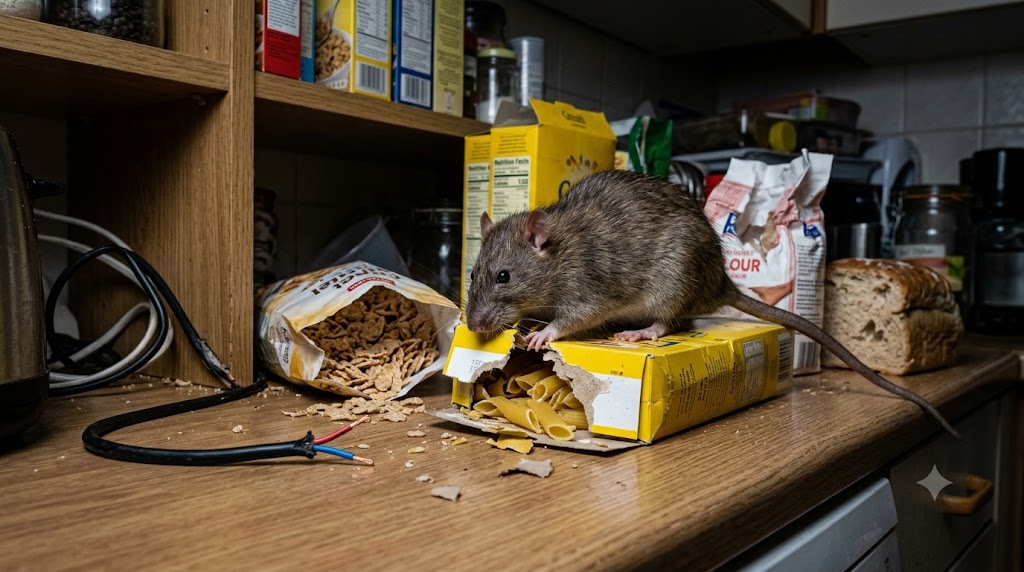
Rats in the house are alarming — but they are solvable. What you do in the first 24 hours, and then across the first week, decides whether this becomes a small, contained problem or a full infestation inside your walls.
A single female rat can produce a new litter every three to four weeks, and rats gnaw on electrical wiring, contaminate food, and shed pathogens in their droppings and urine. That is why speed matters more than perfection. This guide is the plan I give homeowners who call me in a panic: read the signs, act tonight, then work a structured 7-day plan. If you want a broader overview of species, biology, and long-term prevention afterward, our main rats hub covers it in depth.
- Best snap trap: Victor M326 Pro Rat Trap – professional-grade, resets easily, closes reliably on large rats.
- Best electric trap: Victor Indoor Electronic Rat Trap – sealed, no-touch, safer around kids and pets.
- Best value multipack: Tomcat Rat Snap Trap (8 Pack) – blanket a whole house for little money.
- Best for attics/sheds: Goodnature Auto-Reset Trap – keeps working through 20+ catches.
- Best humane trap: Kensizer Humane Live-Catch Trap – for catch-and-release households.
- Best seal material: Copper Mesh – rats can’t chew through it.
How to Read the Signs: What Each Clue Actually Tells You
Before you buy anything or set a single trap, spend 30 minutes doing a diagnosis. The evidence tells you where rats are living, how many you likely have, and how recent the activity is.
Droppings: Your Most Reliable Timeline
Rat droppings are the single most useful clue in the house. Look for them along walls, behind the stove and fridge, inside pantry cabinets, under sinks, in the garage, and in attic corners.
- Size and shape: Rat droppings are dark, capsule-shaped, and about 12-19 mm long (roughly the size of a large raisin or olive pit). Mouse droppings are much smaller – about the size of a rice grain (3-6 mm). If yours look like the smaller version, you may actually be dealing with mice; our mice control guide is the right starting point.
- Fresh vs. old: Fresh droppings are shiny, dark black or dark brown, and soft – they smear if you press them (do not do this bare-handed). Old droppings are dull gray, dry, and crumble.
- What the pattern tells you: A concentrated pile in one spot usually marks a nest or travel route. Scattered droppings along a baseboard mean an active runway – this is exactly where your traps go later.
Gnaw Marks: Rat or Mouse?
Rats have to gnaw constantly – their incisors never stop growing. Check wood door frames, the corners of cabinets, plastic food containers, PVC pipes under sinks, and – most dangerously – electrical wiring.
- Rat gnaw marks are typically 3-4 mm wide, with clearly visible parallel tooth grooves. On wood, they often look like coarse scraping.
- Mouse gnaw marks are much finer – under 2 mm – and look almost like pinpricks or fine scratches.
- Chewed wiring is an emergency. Rodent-damaged wiring is a documented cause of house fires. If you see stripped insulation on any cable, kill the circuit at the breaker and treat that room as a priority zone.
Noise: When and Where They Are
Rats are nocturnal. Most of what you hear falls between about 9 p.m. and 4 a.m. The sound tells you where they are:
- Scratching inside walls – a rat is running along a stud cavity or plumbing chase. Note the wall and height. If the noise is very light and quick, it may actually be mice – see our guide to rodents inside wall cavities for how to tell them apart.
- Thumping or “running” on the ceiling – attic activity. This is common with roof rats and often the earliest sign.
- Squeaking or high-pitched chattering – usually multiple rats, and often a nest with young.
- Daytime noise – a bad sign. It usually means the population is large enough that rats are forced to forage in daylight, or that a nest is directly disturbed.
Burrows and Nests: Where They Live
Outdoors, look for smooth, greasy-edged holes about 5-8 cm (2-3 in) across at the base of foundations, under decks, near compost bins, along fence lines, and in dense ivy or woodpiles. A burrow with clean, packed soil at the entrance is active.
Indoors, nests are shredded material – insulation, cardboard, paper, fabric – tucked behind appliances, in attic corners, inside stored boxes, and above dropped ceilings. If you find a nest with warm bedding, assume it is currently in use. The garage is one of the most common indoor nesting spots – if that’s your situation, our dedicated guide on rats in the garage walks through the specifics.
Your First 24 Hours: Emergency Response Plan
The goal in the first day is not to kill every rat. It is to stop the situation from getting worse: cut off food and water, safely clean the first evidence, and map the entry points. Trapping comes tomorrow.
Step 1: Safe Cleanup of Any Droppings You’ve Already Found
Do this before anything else, and do it right – this is the highest health-risk step of the whole week.
- Put on disposable nitrile gloves and an N95 or KN95 mask. Open windows in the room.
- Spray the droppings and the surrounding area thoroughly with a disinfectant – a bleach solution of 1 part bleach to 10 parts water, or a registered disinfectant. Let it soak for at least 5 minutes. Do not sweep or vacuum first.
- Pick up the wet droppings with paper towels and place them directly into a sealable plastic bag. Double-bag it and put it in an outdoor bin.
- Wipe the area a second time with fresh disinfectant. Wash gloves before removing them, then wash your hands.
Step 2: Cut Off Food and Water Tonight
Rats need daily food and water to survive indoors. Take both away and you make them desperate – which drives them straight into your traps in a few days.
- Move all pantry food – including cereal, flour, pasta, rice, pet food, and bird seed – into glass, metal, or hard-walled plastic containers with tight lids. Rats chew straight through cardboard and thin plastic.
- Do the dishes before bed. Wipe down countertops. Take the trash outside every night this week.
- Fix any dripping tap. Empty the pet water bowl overnight. In garages and basements, look for water in buckets, saucers under water heaters, and condensation pans under fridges.
Step 3: Walk the Perimeter and Find Entry Points
Grab a flashlight and walk the entire outside of the house. You are looking for anything a rat could squeeze through. The rule that shocks most homeowners: an adult rat can fit through a hole the size of a US quarter – about 2 cm (¾ inch).
Focus on:
- Gaps where pipes, cables, or gas lines enter the house.
- The bottom edge of the garage door – a gap you can slide a pencil under is enough.
- Weep holes in brick, damaged soffit vents, and gable vents without intact mesh.
- The crawl space access door and any foundation cracks.
- Around dryer vents and A/C line sets.
Mark each hole with a piece of blue painter’s tape. Do not seal them yet – you will do that in the exclusion step later this week, after trapping is underway.
Your First-Week Plan: Systematic Elimination
Now that food and water are gone and you know where they are getting in, you can move to active removal. The whole week fits into three fronts: trap, seal, and monitor.
Traps: Why Snap Traps Beat Poison Indoors
For an in-home rat problem, I recommend mechanical traps – snap or electronic – over rodenticides every time. Here is why poison is a bad first choice indoors:
- Poisoned rats often die inside a wall cavity or under a floor. The smell of a decomposing rat lasts 1-3 weeks and there is usually no way to reach the body.
- Secondary poisoning is real. Pets and wildlife (owls, hawks, neighborhood cats) that eat a poisoned rat can be seriously harmed or killed.
- You never know how many rats died or where. Traps give you a body count – poison gives you guesswork.
Pick a mix of two or three trap styles based on where the activity is. For a full comparison with pros and cons, see our roundup of the best rat traps; below are the workhorses I set on day one.
Victor M326 Pro Rat Trap – Best Overall Snap Trap
The Victor M326 Pro is the snap trap professional exterminators actually carry. It resets easily, has a wider kill bar than the classic wooden Victor, and closes reliably on larger Norway rats where basic traps sometimes fail. If you buy only one style, buy these.
Best for: homeowners who want a reliable, reusable trap that works on big rats, placed along walls and known runways.
Example: You find greasy rub marks and droppings along the garage baseboard. You set four M326 traps flush against the wall, trigger toward the wall, baited with peanut butter – and catch two rats the first night.
- Professional-grade build quality
- Wide kill bar handles large rats
- Easy to set and reset
- Fully reusable
- Works indoors and in garages/sheds
- Strong snap can pinch fingers during setup
- Not ideal in the open around curious pets
- Requires close handling during disposal
- One rat per trap before resetting
Tomcat Rat Snap Trap (8 Pack) – Best Value Multipack
Rat trapping fails when people set one or two traps in a house that needs eight. The Tomcat 8-pack solves that. It is inexpensive enough to blanket the garage, basement, attic access, and kitchen perimeter all at once, which is exactly how you should trap on night one.
Best for: first-time infestations, budget-conscious homeowners, and multi-room placement where you need broad coverage fast.
Example: You have droppings in three areas. Instead of buying two premium traps, you deploy all eight Tomcat traps along the active runways the same evening – and start catching rats before they learn to avoid the trap zones.
- Very low cost per trap
- 8-pack covers a whole home in one campaign
- Simple to bait and set
- Works in kitchens, garages, basements, attics
- Good for broad night-one placement
- Lighter build than pro traps
- Can pinch fingers during setup
- Not ideal around pets or toddlers
- One rat per trap before resetting
Victor Indoor Electronic Rat Trap – Best Electric Trap
The Victor electronic rat trap is an enclosed, high-voltage kill box. The mechanism sits inside a housing you never touch, which makes it the safest choice around children and pets and the most pleasant to empty – you just tip the rat into a bag.
Best for: kitchens, pantries, finished basements, and households that don’t want to see or handle a snap trap in action.
Example: You know rats are active in the kitchen but the thought of emptying snap traps each morning makes you avoid the problem. A sealed electric trap makes the job quick and clean, so you actually keep at it.
- No-touch disposal
- Sealed design hides the dead rat
- Safer around kids and pets
- Fast high-voltage kill
- Reusable
- Higher upfront cost
- Requires batteries
- Indoor use only
- Covers fewer spots than a multipack
Goodnature Auto-Reset Trap – Best for Attics & Sheds
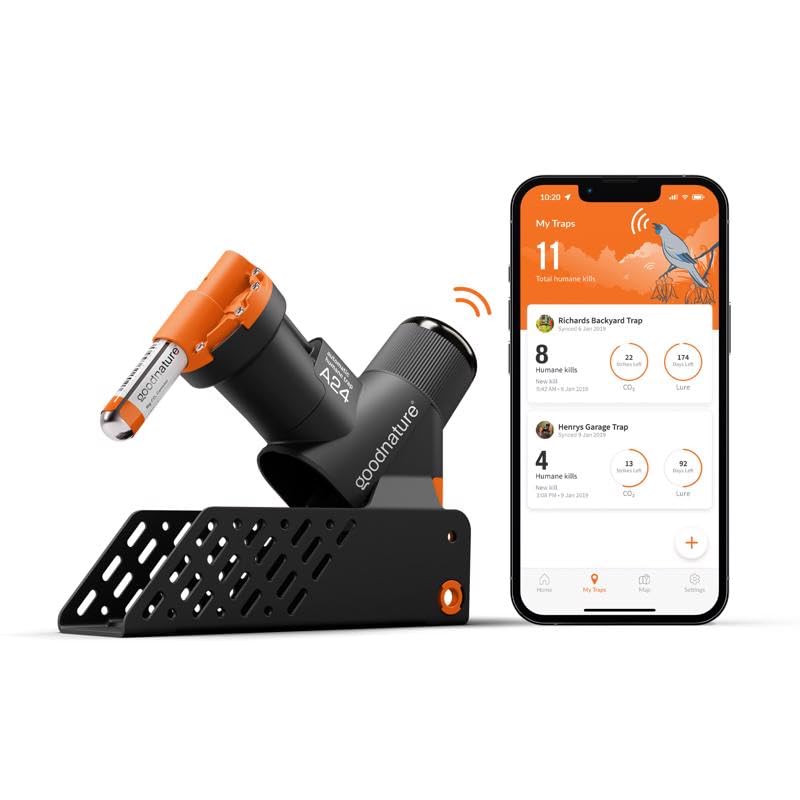
If activity is in a space you don’t visit daily, standard traps sit “spent” after a single catch. The Goodnature auto-reset trap keeps working through 20+ catches on a single CO₂ cartridge – ideal for attics, crawl spaces, and outbuildings where you’d otherwise be climbing up every morning.
Best for: attics, crawl spaces, sheds, and detached garages where you can’t check traps daily.
Example: You hear running in the attic but can only get up there on weekends. A single auto-reset trap mounted on a rafter keeps culling rats between your visits instead of catching one and going idle.
- Resets automatically after each kill
- 20+ catches per CO₂ cartridge
- No daily checking required
- Great for hard-to-reach spaces
- No poison, no loose carcasses to find
- Highest upfront cost here
- Needs CO₂ cartridge replacements
- Overkill for a single indoor rat
- Requires mounting
Kensizer Humane Live-Catch Trap – Best Humane Option
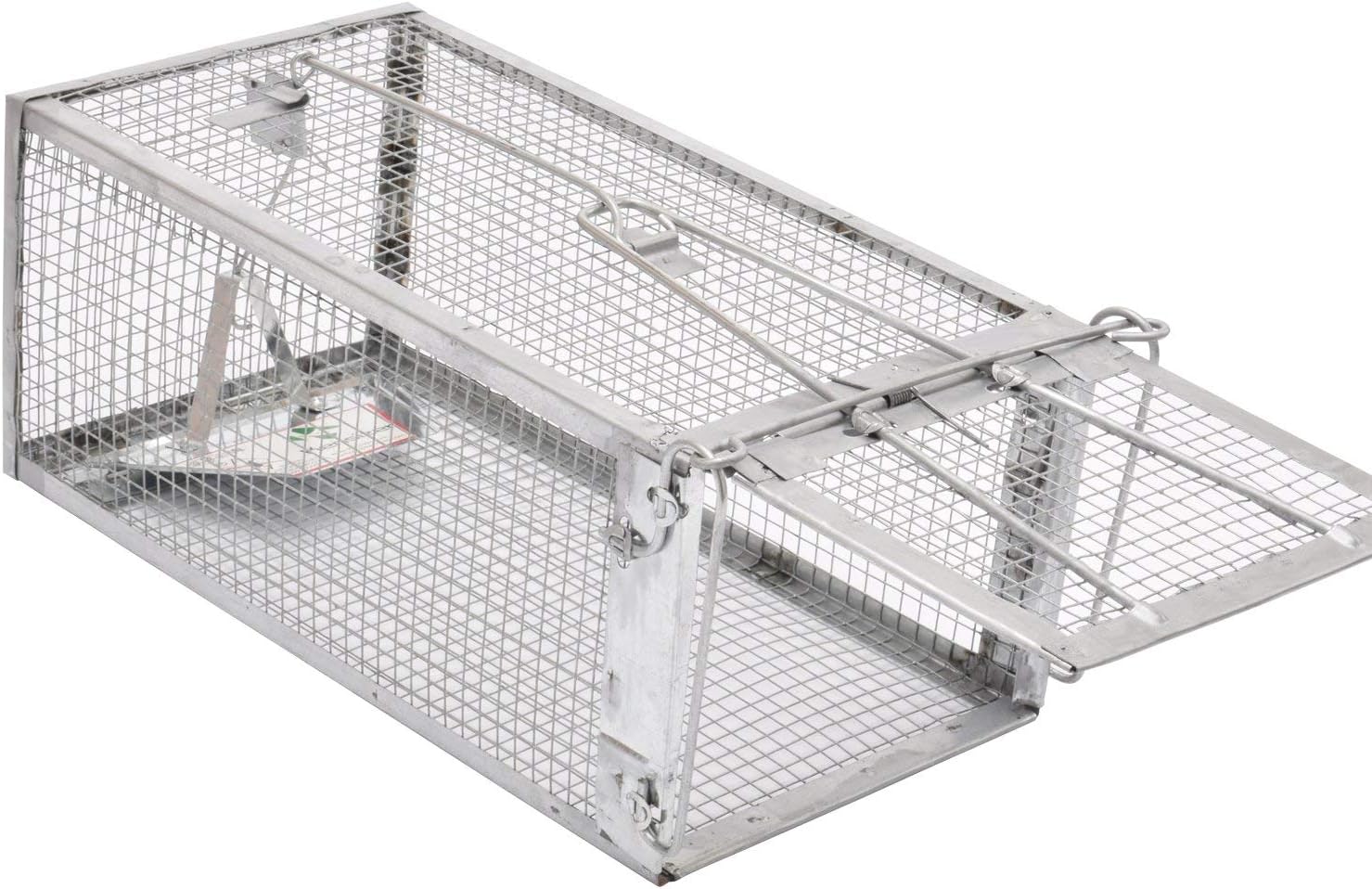
If you want to release rather than kill, the Kensizer live-catch trap works well – but check local laws first, since releasing wild rodents is regulated in many US states. A live trap is only humane if you check it at least twice a day and release the animal far from the home.
Best for: no-kill households, rural properties with a suitable release area, and situations with just one or two rats.
Example: You spot a single rat in a detached cabin and don’t want to kill it. You bait the Kensizer, check it morning and evening, and release the rat well away from the structure – then seal the entry point so it can’t return.
- No-kill catch-and-release design
- Reusable
- Easy to see when triggered
- Good for ethical-concern households
- No chemicals or snapping mechanism
- Must be checked at least twice daily
- Released rats return if freed too close
- Not suited to large infestations
- Requires handling a live animal
Placement Rules That Actually Matter
- Rats travel along walls, not across open floors. Set traps flush against a wall, trigger side toward the wall.
- Bait with something sticky, not something they can steal: a small smear of peanut butter, a piece of bacon tied on with thread, or a bit of chocolate. Skip cheese – it’s a cartoon.
- Place traps every 3-5 meters along active runways (baseboards with droppings or grease marks).
- Pre-bait for 2-3 nights before setting. Put bait on unset traps first. Rats are neophobic – they avoid new objects. Once they eat freely, set the traps and you’ll get catches fast.
Exclusion: Sealing the House So This Doesn’t Repeat
Trapping without sealing is a treadmill – new rats simply replace the ones you kill. Once traps are working (usually by day 3-4), start closing the entry points you flagged. For a full walkthrough of doors, windows, vents, and pipe penetrations, our guide to pest barriers for doors and windows covers each opening in detail.
Copper Mesh – Best Rat-Proof Seal Material

Copper mesh is the material rats can’t chew through. Stuff it tightly into a hole, then seal over it with silicone caulk or foam – the metal is the barrier, the caulk just holds it in place. Unlike plain steel wool, copper won’t rust and stain your walls. One roll covers most whole-house exclusion jobs.
Best for: pipe penetrations, weep holes, gaps around utility lines, and any opening up to a couple of inches wide.
Garage Door Bottom Seal – Closes the #1 Entry Point

The gap under the garage door is the single most common rat entry point I find in suburban homes. A worn or missing bottom seal leaves a channel a rat walks straight through. A fresh rubber bottom seal closes it against the concrete and blocks the route for good.
Best for: attached and detached garages with a visible gap under the door.
Days 5-7: Monitor and Decide
By day five you should have caught rats and be down to little or no fresh droppings. Reset traps every morning. Wipe out old droppings from key areas so you can tell new activity from old. Sprinkle a thin dusting of flour along one suspected runway at night – clean paw prints in the morning mean activity is still there.
Rat Trap & Seal Comparison Table
| Product | Type | Best For |
|---|---|---|
| Victor M326 Pro | Snap trap | Reliable all-round trapping |
| Tomcat 8-Pack | Snap trap | Low-cost whole-home coverage |
| Victor Electronic | Electric | Kitchens, no-touch disposal |
| Goodnature Auto-Reset | Auto-reset | Attics, sheds, crawl spaces |
| Kensizer Live-Catch | Humane | No-kill catch and release |
| Copper Mesh | Exclusion | Sealing pipe gaps and holes |
| Garage Door Seal | Exclusion | Closing the garage door gap |
Prices, ratings, and Amazon badges change over time. Click through to confirm current details before buying.
When to Stop DIY and Call a Professional
DIY handles most first-time infestations. But some situations need a licensed pest control operator, and delaying only makes them more expensive. Call a pro if:
- You are seeing rats during daylight – a strong sign the population is large.
- There is a strong ammonia (urine) smell in a room, attic, or wall cavity. This means a heavy, established infestation.
- You catch rats for a week straight and the flow does not slow down.
- You suspect activity inside walls or under a slab that you cannot access.
- You find chewed electrical wiring – this needs an electrician plus a pest professional.
- Anyone in the household is immunocompromised, pregnant, or a small child who has been in a contaminated space.
If you decide to hire out, our guide on how to choose a pest control service covers what to ask, what a fair quote looks like, and which red flags to walk away from.
The Bottom Line
Rats are a serious pest, but they are not a mysterious one. They need food, water, and a hole to get in – take away all three and the problem ends. Your first 24 hours are about cleanup, food lockdown, and mapping entry points. Your first week is about trapping hard, sealing the house behind you, and knowing when the job is bigger than one person with a flashlight.
Move tonight, work the plan, and by this time next week the house will be yours again.
Frequently Asked Questions
How do I know if it’s rats or mice in my house?
Size of the droppings is the fastest tell. Rat droppings are 12-19 mm long and shaped like a large raisin or olive pit; mouse droppings are 3-6 mm and look like grains of rice. Gnaw marks give the same signal – rat tooth grooves are about 3-4 mm wide, mouse marks are under 2 mm. If the evidence points to mice, our mice control guide is the right place to start.
How long does it take to get rid of rats?
Most first-time home infestations are cleared in 7 to 14 days if you trap aggressively and seal entry points at the same time. If you only trap and don’t seal, you’ll keep catching rats indefinitely because new ones simply move in.
Are snap traps or poison better for indoor use?
Snap and electronic traps, without exception. Poisoned rats often die inside walls and stink for 1-3 weeks, secondary poisoning can kill pets and wildlife that eat the carcass, and you never get a body count. Traps show you exactly how many rats you’ve removed and where.
What’s the best bait for rat traps?
Peanut butter is the standard because it’s sticky (rats can’t steal it and run) and calorie-dense. Bacon tied to the trigger with sewing thread also works well. Skip cheese – it’s a myth. And always pre-bait unset traps for 2-3 nights before arming them, so rats overcome their natural fear of new objects.
Can rats really chew through walls?
They can chew through drywall, wood, thin plastic, aluminum siding, expanding foam, and even soft mortar. What they cannot chew through is copper mesh, coarse steel wool, hardware cloth, sheet metal, and concrete. Any seal that will actually hold has one of those materials as its core.
How small a hole can a rat fit through?
About the size of a US quarter – roughly 2 cm (¾ inch). If you can slide your thumb through a gap, so can a rat. Norway rats need slightly more; roof rats can squeeze through the smaller openings.
Are ultrasonic repellers effective against rats?
Not as a standalone solution. Independent field trials have consistently shown ultrasonic devices produce little to no measurable long-term reduction in rat populations – rats habituate to the sound within days. They may have limited use as a supplement in a garage or shed, but they are not a substitute for trapping and exclusion.
Is it safe to trap rats yourself if I have young children or pets?
Yes, if you choose the right trap style. Classic snap traps should go inside a bait station box or behind an appliance where small hands and paws can’t reach. Enclosed electronic traps like the Victor Indoor model are the safest option in kid-and-pet households because the kill chamber is fully enclosed.
Related Reading
- Rats: Full Identification & Control Hub
- Best Rat Traps Compared
- Rats in the Garage: How to Get Them Out
- How to Get Rid of Mice
- How to Get Rid of Mice in Walls
- Best Pest Control Barriers for Doors and Windows
- Best Pest Control Services
Prices, ratings, and availability change frequently. PestsGuide.com earns from qualifying purchases as an Amazon Associate and may earn commissions from partner referrals.