


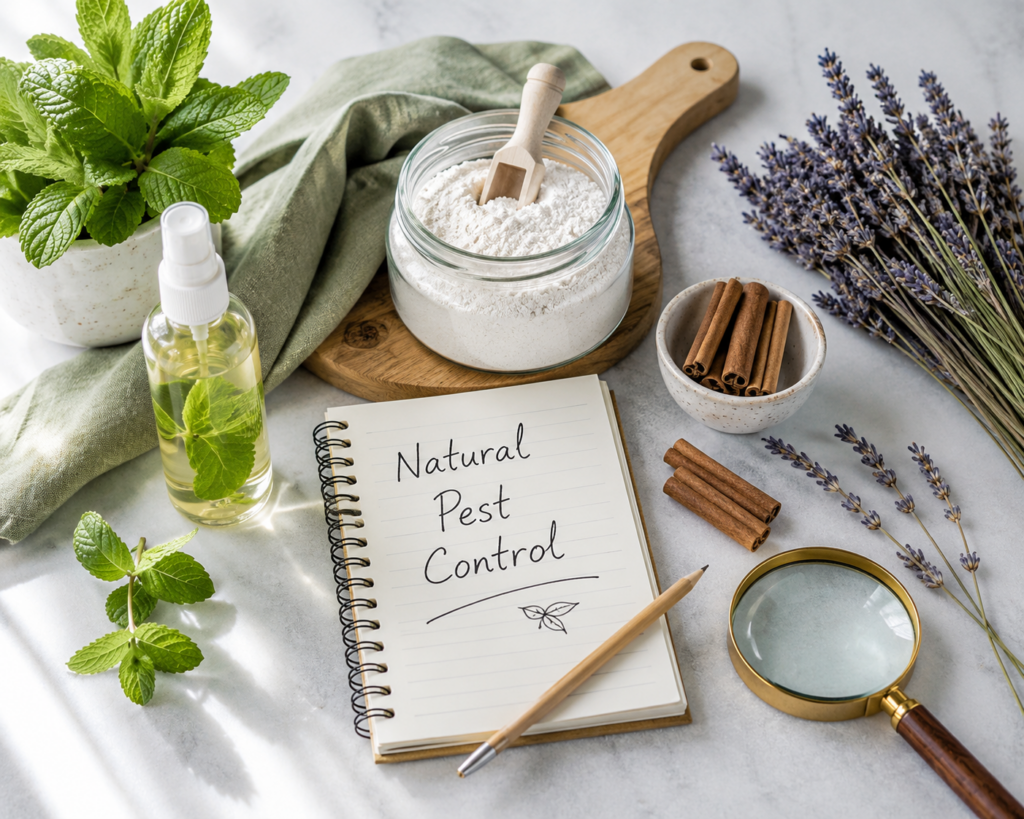
Looking for natural ways to keep your home pest-free? Toxic sprays are not your only option. The most effective DIY pest-proofing plan starts with blocking entry points, removing food and water, monitoring activity, and treating the outside perimeter before pests move indoors.
This guide covers practical, low-toxicity pest-proofing steps for US homeowners in 2026. Each section gives you the problem, what to do, and the product that fits that exact situation.
If you are not sure which pest is getting inside, first compare signs with our household pest identification guide.
Quick Answer: Best DIY Pest-Proofing Products to Start With
If you want the fastest practical setup, start with these four layers: seal door gaps, block flying pests, monitor indoor activity, and treat the outdoor perimeter.
Best First Fix for Entry Points
Holikme Under-Door Draft Stopper
The gap under an exterior door is one of the easiest ways for ants, roaches, spiders, and even mice to enter. A door sweep is cheap, fast, and lasts longer than repeated spraying.
Best for Patio Doors and Summer Airflow
Magzo Magnetic Screen Door
A magnetic screen lets air in but blocks mosquitoes, flies, gnats, and other flying pests. Best for patio doors, garage entries, and high-traffic doorways.
Best for Monitoring What Is Already Inside
Catchmaster Sticky Traps
Sticky traps tell you what pest you actually have before you waste money. Place them under sinks, behind appliances, in closets, and near doors.
Best Outdoor Perimeter Layer
Lawnbright PureGuard Pest Control
A natural outdoor perimeter treatment for homeowners who want fewer pests reaching doors, windows, patios, and foundation edges. Use code PESTSGUIDE10 for 10% off your first purchase.
Prices and availability change frequently. PestsGuide.com earns from qualifying purchases and affiliate referrals.
1. Seal Door Gaps First
The easiest pest entry point is also the one most homeowners ignore: the gap under exterior doors. Ants, roaches, spiders, crickets, and mice all use door gaps to move indoors. A mouse can squeeze through a 1/4-inch opening, and many insects need far less.
Start here before buying sprays. If pests can keep entering, every indoor treatment becomes temporary.
- Check exterior doors at night with a flashlight.
- If you can see light under the door, pests can enter.
- Install a door sweep or draft stopper on every exterior door.
- Pay special attention to garage entry doors, back doors, and basement doors.
Recommended Product
Holikme Under-Door Draft Stopper
Best for quick sealing under standard exterior doors. It also helps reduce drafts, which makes it an easy first purchase even if you are still diagnosing the pest problem.
For a more complete sealing checklist, see our guide to pest control barriers for doors, windows, and vents.
2. Repair Window Screens and Patio Door Screens
Flying pests usually do not need a complicated path indoors. Mosquitoes, flies, gnats, moths, and boxelder bugs often enter through torn window screens, loose frames, and patio doors that stay open during warm weather.
If you like keeping doors open for airflow, a magnetic screen door is more useful than spraying inside after bugs are already in the room.
- Replace screens with large tears.
- Patch small holes with screen repair tape.
- Check the gap between the screen frame and window frame.
- Use a magnetic screen door on patio doors and garage entries.
Recommended Product
Magzo Magnetic Screen Door
Best for patio doors, screen porches, and summer entryways. The magnetic center closes behind you, which matters if kids or pets go in and out often.
Budget Fix for Small Tears
Screen Repair Kit
Use this when the screen is mostly intact but has a few small holes or edge tears.
3. Block Garage, Vent, and Utility Openings
Doors and windows are obvious. Garage seals, dryer vents, utility penetrations, and foundation gaps are easier to miss. These openings are common entry points for mice, rats, roaches, spiders, and overwintering insects.
Walk around the house slowly and look for daylight, damaged rubber, missing vent covers, and gaps where pipes or cables enter the wall.
- Replace cracked garage door bottom seals.
- Cover dryer vents with a pest-resistant vent cover.
- Use stainless steel mesh for utility gaps and small holes.
- Seal around pipes and cables after the mesh is in place.
Recommended Product
Garage Door Bottom Seal
Best for garages where insects or mice enter under the main door. Replace the seal if it is brittle, flattened, or visibly cracked.
For Utility Gaps
Stainless Steel Mesh
Use mesh before caulk or foam when rodents are possible. Mice can chew through soft materials, but stainless mesh creates a physical barrier.
If you already hear scratching inside walls, read our guide on how to get rid of mice in walls.
4. Remove Food Sources Indoors
Pests do not stay where they cannot eat. Ants, roaches, pantry moths, mice, and rats all become harder to control when food is easy to access. The biggest problems are open pet food, unsealed pantry bags, crumbs under appliances, and trash that sits overnight.
- Store cereal, rice, pasta, flour, sugar, and pet food in airtight containers.
- Wipe counters every night.
- Vacuum under appliances and sofas weekly.
- Rinse food containers before putting them in trash or recycling.
- Use a trash can with a tight lid.
Recommended Product
Vtopmart Airtight Food Storage Containers
Best for pantry pest prevention and ant/roach reduction. Sealing food is boring, but it works.
For Trash Odor Control
Simplehuman 45L Step Trash Can
Best for kitchens where flies, roaches, ants, or mice are attracted to food waste.
5. Monitor Activity Before You Treat
Sticky traps are not only for killing insects. They help you identify what is moving through the house, where activity is strongest, and whether your prevention work is helping.
Place traps first if you are not sure whether the problem is roaches, spiders, silverfish, pantry pests, or occasional invaders.
- Put traps behind appliances, under sinks, in closets, near basement doors, and along garage walls.
- Check after 7 days.
- Move traps if they stay empty but you still see pests elsewhere.
- Replace traps every 4-6 weeks or sooner if full.
Recommended Product
Catchmaster Sticky Traps
Best for monitoring roaches, spiders, silverfish, small crawling insects, and occasional invaders in multiple rooms.
6. Use Diatomaceous Earth for Crawling Insects
Diatomaceous earth is a natural powder made from fossilized algae. Food-grade DE kills crawling insects mechanically by damaging their outer coating and dehydrating them. It can help with ants, roaches, fleas, silverfish, earwigs, and some crawling pantry pests.
It works only when dry and only when insects walk through it. Use a thin layer. Heavy piles are less effective and messier.
- Use only food-grade diatomaceous earth, not pool-grade DE.
- Apply a thin layer along baseboards, under appliances, and near cracks.
- Wear a dust mask while applying.
- Keep powder away from pet bowls, food prep surfaces, and areas where children crawl.
- Reapply after vacuuming or moisture exposure.
Recommended Product
Harris Diatomaceous Earth Food Grade with Powder Duster
Best for careful crack-and-crevice application. The included duster makes it easier to apply a thin layer instead of dumping powder in piles.
If you suspect termites, do not rely on DE alone. Compare warning signs in our guides to termite droppings and termite mud tubes.
7. Use Plant-Based Sprays for Entry Points and Hot Spots
Plant-based sprays are useful when you need a low-toxicity option around baseboards, trash zones, entry points, and occasional insect trails. They are not magic, and they do not replace sealing. But they can help reduce ants, roaches, spiders, flies, and other small pests when used consistently.
- Spray baseboards, door thresholds, window sills, and trash areas.
- Let treated surfaces dry before pets or children return.
- Reapply after cleaning or every 1-2 weeks depending on activity.
- Do not spray directly on pet bedding, food bowls, or toys.
Recommended Product
Wondercide Indoor Pest Control Spray
Best for homeowners who want a ready-to-use plant-powered spray instead of mixing essential oils themselves.
Peppermint Option
Mighty Mint Peppermint Oil Insect Spray
Best for spot use around kitchens, pantry edges, baseboards, and small indoor insect trails.
8. Treat the Outdoor Perimeter Naturally
Many indoor pest problems begin outside. Ants nest in mulch near the foundation. Roaches and spiders hide in damp debris. Mosquitoes breed in standing water. Ticks and fleas move through tall grass and shaded vegetation.
Once doors, screens, and garage gaps are handled, the next step is reducing pest pressure around the house.
- Trim shrubs and branches at least 18 inches away from siding.
- Remove leaf piles, wood scraps, and debris near the foundation.
- Move firewood at least 20 feet from the house and off the ground.
- Dump standing water from buckets, toys, plant saucers, and clogged gutters.
- Use an outdoor perimeter treatment around high-risk areas.
Natural Outdoor Perimeter Option
Lawnbright PureGuard Pest Control
PureGuard fits this page because it supports the same strategy: keep pests from building pressure around doors, windows, patios, foundation edges, and lawn areas before they move indoors. It is not a replacement for sealing gaps, but it is a useful outdoor layer after you fix the obvious entry points.
Use code PESTSGUIDE10 for 10% off your first Lawnbright purchase.
Amazon Alternative
Wondercide Outdoor Pest Control Spray
Best for homeowners who want a hose-end plant-based yard spray they can apply themselves around patios, lawns, and foundation edges.
9. Use Ultrasonic Repellers as a Support Layer
Ultrasonic pest repellers can help in some situations, especially for mice and certain crawling pests, but they should not be your only plan. They work best after sealing entry points and removing food sources.
Use them as a supporting layer in garages, basements, utility rooms, and rooms where you have already seen pest movement.
- Place one unit per major room or enclosed area.
- Do not hide units behind furniture; sound waves need open space.
- Give them 2-4 weeks before judging results.
- Do not rely on ultrasonic devices for termites, bed bugs, or established rat infestations.
Recommended Product
Victor M754 PestChaser Ultrasonic Pest Repeller
Best as a supporting layer for rooms where mice or crawling pests may be moving through.
For a full comparison, see our guide to the best ultrasonic rodent repellers.
10. Add Targeted Traps if Pests Are Already Active
Pest-proofing prevents new pests from entering. But if roaches, mice, ants, or spiders are already active inside, you may need targeted traps or bait stations while you close the entry points.
- Use roach bait stations in kitchens, bathrooms, and under sinks.
- Use snap traps along walls where mice travel.
- Keep traps out of reach of children and pets.
- Continue sealing and cleaning so new pests do not replace the ones you catch.
For Roaches
Combat Max Roach Killing Bait Stations
Best for active roach problems in kitchens, under sinks, and behind appliances.
For Mice
Tomcat Press ‘N Set Mouse Traps
Best for active mouse activity along walls, behind appliances, in garages, and in utility rooms.
Best Order to Pest-Proof Your Home
The order matters. If you spray first but leave gaps open, pests keep coming. If you seal first but ignore existing activity, pests may stay trapped inside. Use this sequence:
- Inspect: identify pest signs, droppings, damage, and entry points.
- Seal: fix doors, screens, garage seals, vents, and utility gaps.
- Clean: remove food, trash odors, water leaks, and clutter.
- Monitor: place sticky traps to see what is still active.
- Treat: use DE, plant-based sprays, baits, traps, or outdoor perimeter products based on what you find.
- Recheck: inspect again after 2-4 weeks.
When Natural DIY Pest-Proofing Is Not Enough
DIY pest-proofing works best for prevention, occasional invaders, small ant trails, mild roach activity, spiders, flies, mosquitoes around entries, pantry pests, and early mouse signs.
Call a professional or at least get an inspection if you see:
- termite mud tubes or structural wood damage;
- bed bugs in multiple rooms;
- rats instead of mice;
- large roach activity during the day;
- repeated infestations after 4 weeks of DIY work;
- pests entering from wall voids, attic spaces, or crawlspaces you cannot access.
When DIY is not enough
Get free pest control quotes from licensed pros near you
Natural pest-proofing works well for prevention and small problems. But termites, bed bugs, large rat activity, structural carpenter ants, and recurring infestations usually need a professional inspection. Through Angi, you describe the problem once and get matched with up to 3 licensed pest control companies in your area. Quotes are free, with no obligation to hire.
Free, no obligation · Local licensed pros · Takes about 60 seconds
Frequently Asked Questions
What is the best natural way to keep pests out of a house?
The best natural method is physical exclusion: seal door gaps, repair screens, block garage and vent openings, and remove food and water sources. Natural sprays and powders help, but sealing entry points gives the longest-lasting result.
Do natural pest control products really work?
Yes, but they work best when matched to the right problem. Door sweeps and screens prevent entry. Sticky traps monitor activity. Diatomaceous earth helps with crawling insects. Plant-based sprays help around entry points and hot spots. Outdoor perimeter products reduce pest pressure before pests move indoors.
Is Lawnbright PureGuard a replacement for sealing gaps?
No. Lawnbright PureGuard is an outdoor perimeter layer. It can help reduce pest pressure around the yard, foundation, patios, doors, and windows, but you should still seal gaps and repair screens.
Is diatomaceous earth safe around pets?
Food-grade diatomaceous earth is non-toxic, but the dust can irritate lungs if inhaled. Apply thin layers in areas pets cannot easily disturb, and wear a dust mask during application. Never use pool-grade DE for pest control inside a home.
Do ultrasonic pest repellers work?
They can help in some situations, especially as a support layer for mice or certain crawling pests. They are not reliable as a standalone solution, and they will not fix a serious infestation if entry points and food sources remain.
When should I call a professional instead of using DIY pest-proofing?
Call a professional if you see termite signs, bed bugs, rats, structural carpenter ant activity, large roach activity, or repeated infestations that come back after sealing and treatment.
Final Thoughts
Natural pest-proofing is not one product. It is a system: seal the openings, remove food and water, monitor activity, treat the outdoor perimeter, and use targeted traps only where needed.
Start with the most obvious entry points: door gaps, screened doors, utility gaps, and outdoor pressure around the foundation. If pests are already active, add sticky traps, diatomaceous earth, or targeted bait/traps based on what you find.
For the outdoor layer, Lawnbright PureGuard is the best fit when you want natural perimeter support around the yard, patio, doors, and foundation. Use code PESTSGUIDE10 for 10% off your first purchase.