


If you have access to bare, unfinished wood and want longer-lasting termite protection, a borate wood treatment is one of the smartest products you can use. Unlike quick contact sprays, borate treatments are designed to soak into wood and help protect accessible lumber from termite damage over time.
They are especially useful during repairs, remodels, crawlspace work, attic projects, shed treatment, and anywhere exposed wood is easy to reach. If the infestation is already severe or hidden deep inside finished walls, borates may not be enough on their own. In that case, read our guides on termite fumigation and why termites come back after treatment.
PestsGuide.com may earn from qualifying purchases through affiliate links in this article.
- Best overall: Bora-Care is the best all-around choice for exposed, unfinished wood.
- Best for damp areas: Bora-Care with Mold-Care may make more sense in crawlspaces, basements, or moisture-prone wood areas.
- Best budget alternative: Tim-bor Professional can be a lower-cost option for larger bare-wood projects if you are comfortable mixing a powder.
- Not enough for severe infestations: If termites are hidden deep inside walls or structural areas, get an inspection before relying on borate alone.
Best Borate Wood Treatments for Termites Compared
| Product | Best For | Main Advantage | Best Fit |
| Bora-Care | Most exposed wood termite repair and prevention jobs | Best all-around choice for unfinished structural wood | Repairs, crawlspaces, joists, attic wood, sheds, and framing |
| Bora-Care with Mold-Care | Damp crawlspaces, basements, and moisture-risk areas | Adds mold-focused protection for vulnerable wood areas | Wood exposed to both termite risk and moisture issues |
| Tim-bor Professional | Larger unfinished wood projects on a tighter budget | Good value if you are comfortable mixing a powder | Sheds, garages, fencing, framing, and bigger bare-wood jobs |
Before you buy, match the product to the wood
Most bad borate purchases happen when the wood is not actually ready for borate treatment. Use Bora-Care for exposed unfinished wood, Bora-Care with Mold-Care when moisture or mold risk is part of the same exposed-wood project, and Tim-bor when budget matters and you are comfortable mixing a powder.
- Do not buy borate for sealed wood: paint, stain, sealer, drywall, or paneling can block useful penetration.
- Check coverage before ordering: crawlspaces, joists, sheds, and large framing projects can require more product than one small repair.
- Check state restrictions: some products or direct consumer sales may be limited in certain states.
- Use inspection first: borate is not the right first purchase for hidden wall activity, soil-based subterranean termites, or visible structural damage.
When Borate Wood Treatment Makes Sense
Borate treatment is usually worth considering when:
- you have direct access to unfinished wood;
- you are replacing or repairing termite-damaged framing or trim;
- you want to protect joists, beams, sill plates, studs, or exposed supports;
- you are treating sheds, fences, barns, garages, or outbuildings;
- you want preventive protection before closing a wall or finishing a repair.
Important: Borate products work best on bare, unfinished, accessible wood. They are much less useful on wood that is already painted, stained, sealed, or hidden behind finished materials.
When Borate Treatments Are Not Enough
These products are useful, but they are not the right answer in every situation. Borate wood treatments are usually not enough when:
- the infestation is widespread throughout the structure;
- termites are hidden deep inside sealed walls or inaccessible areas;
- the wood is painted, stained, sealed, or covered by finished materials;
- termite activity keeps returning after local treatment;
- you are already seeing serious structural damage.
If that sounds like your situation, a stronger option such as termiticides, termite spray for spot treatment, soil treatment, or a professional inspection may be the safer next move. If you are not sure where borate fits, start with the DIY vs pro termite treatment guide.
Best Borate Wood Treatment for Most Homeowners: Bora-Care
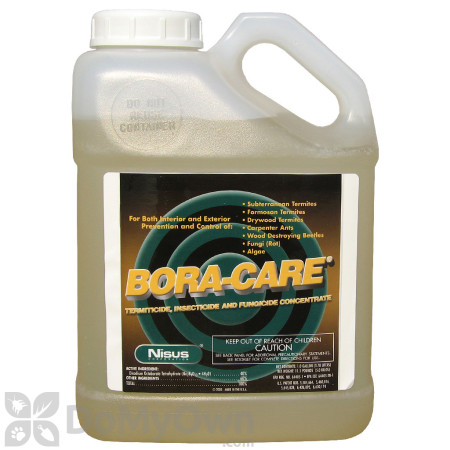

Check Bora-Care label, coverage, and availability on DoMyOwn
Bora-Care is the best overall choice for homeowners who want a serious borate wood treatment for termite prevention and repair work. It is especially useful when treating exposed framing, sill plates, joists, crawlspace wood, attic wood, or unfinished structural lumber after termite activity has been discovered.
Why it stands out: Bora-Care is built for long-term exposed wood protection rather than a fast surface-only fix. It is a smart fit when you are already opening a wall, replacing damaged wood, or rebuilding a damaged area and want to treat nearby unfinished wood before closing everything back up.
Best for: Exposed wood during termite repairs, remodeling work, crawlspaces, attics, sheds, garages, and unfinished wooden structures.
Where it can be used: According to the product information from DoMyOwn, Bora-Care is made for bare cellulosic materials such as wood, plywood, particle board, OSB, logs, timbers, crawlspace wood, attic wood, decks, fencing, and similar unfinished materials. It should not be applied over an intact water-repellent barrier such as paint, stain, or sealer.
Example from real life: You remove trim or open a wall near a damaged door frame and find limited termite damage. After removing the damaged section, you treat the nearby exposed wood before rebuilding the area. That is exactly where Bora-Care makes sense.
- Best all-around choice in this group
- Strong fit for exposed wood protection
- Excellent option after termite repair work
- Better long-term strategy than a quick contact spray
- Available through DoMyOwn, a specialty pest control retailer
- Not the right solution for sealed or painted wood
- Works best only when the wood is accessible
- Not a substitute for whole-structure treatment in severe infestations
- Not available for direct sale to consumers in New York; NY residents need a licensed applicator
Bora-Care with Mold-Care: Best Specialty Alternative for Damp Areas
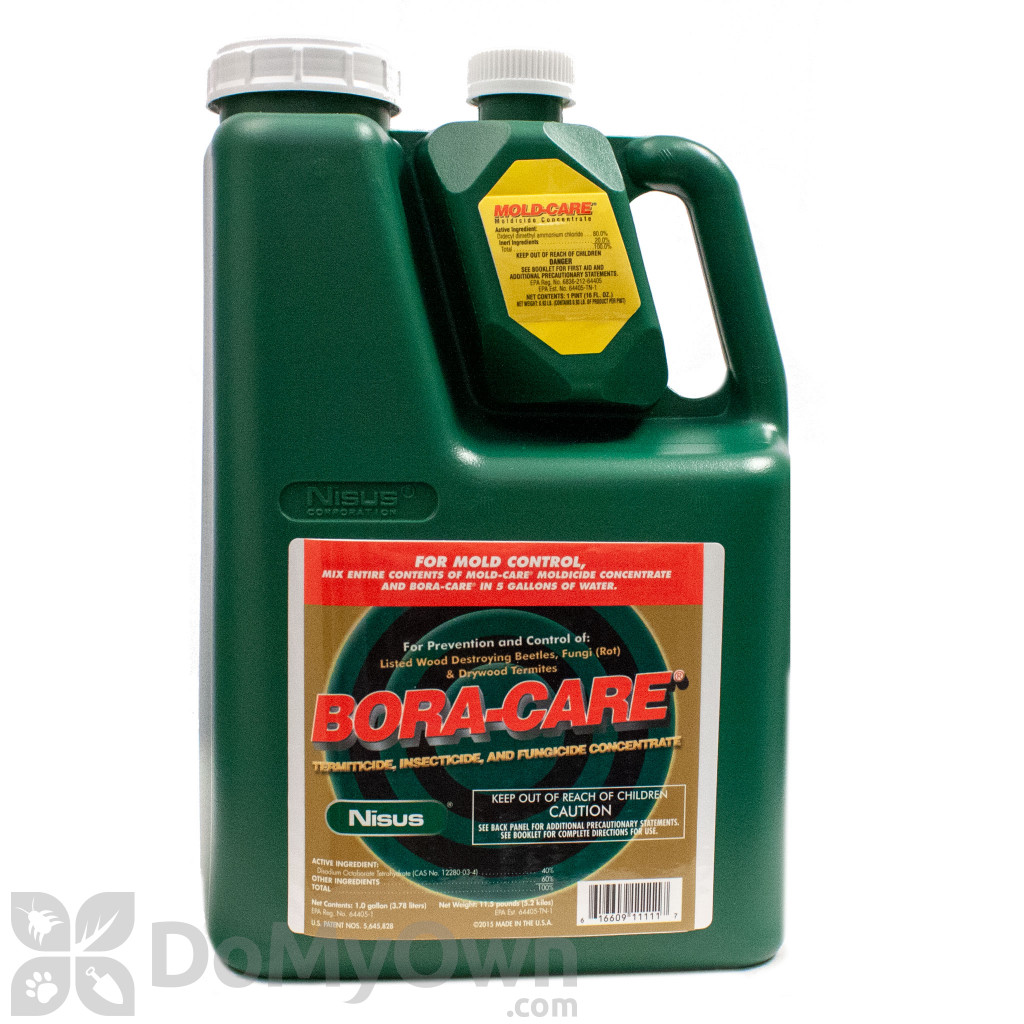

Check Bora-Care with Mold-Care on DoMyOwn
Bora-Care with Mold-Care is the better choice when the wood you are treating is not only vulnerable to termites, but also exposed to moisture, fungal growth, or mold concerns. This makes it especially useful in damp crawlspaces, basements, utility rooms, water-damaged areas, and other spaces where moisture is part of the bigger problem. It is not automatically the better choice for every borate project; if the wood is dry and mold is not part of the issue, standard Bora-Care is usually the cleaner fit.
Why it stands out: Some wood areas do not just need termite prevention. They also need extra help because humidity, leaks, or poor airflow increase the risk of mold and moisture-related damage. In that situation, this version makes more sense than a standard borate treatment alone.
Best for: Damp crawlspaces, moisture-prone basements, restoration work, utility spaces, and unfinished wood areas where both termite risk and mold concerns are in play.
Choose this instead of standard Bora-Care if:
- the area has had moisture issues before;
- the crawlspace or basement has poor ventilation;
- you are repairing wood after leaks, humidity, or water damage;
- mold risk is part of the same project as termite prevention.
Tim-bor Professional: Best Budget Alternative for Larger Bare-Wood Jobs
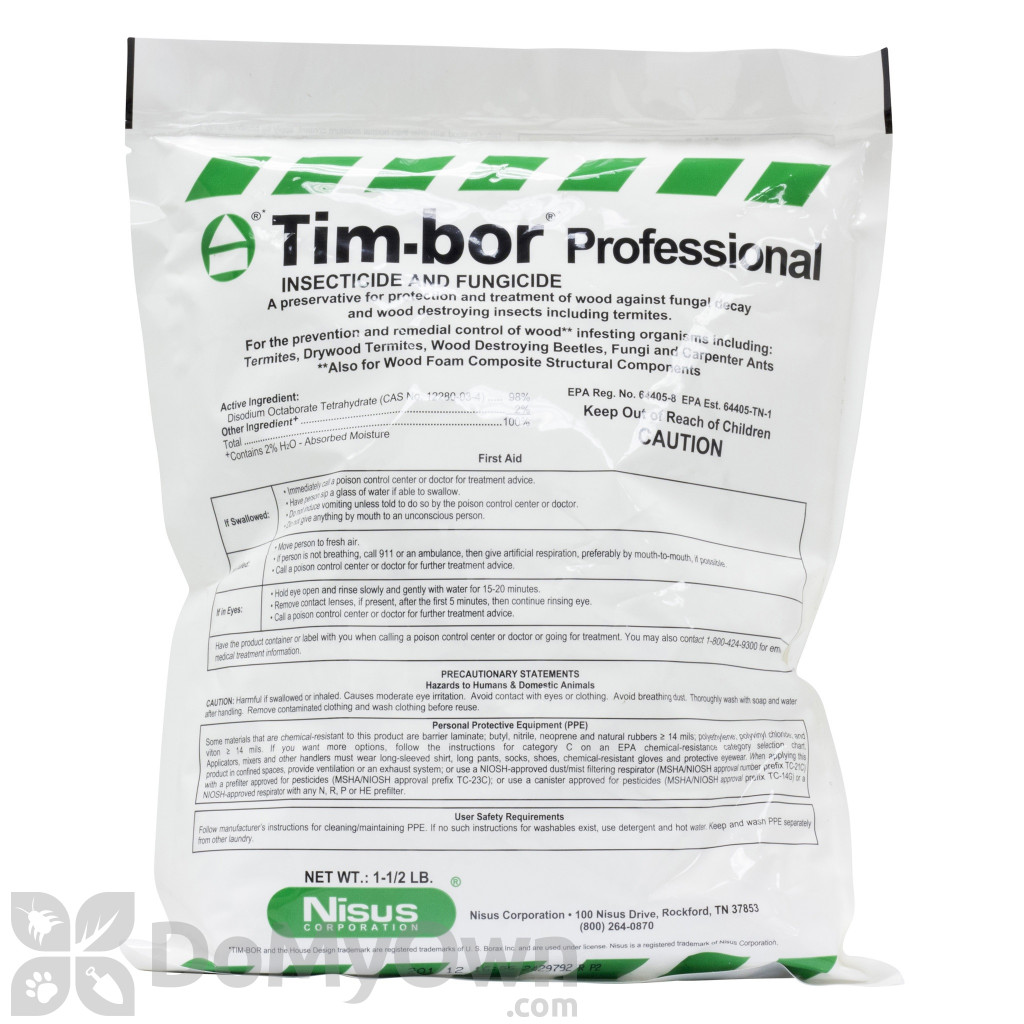
Check Tim-bor Professional label and mixing directions on DoMyOwn
Tim-bor Professional is a budget-friendly borate option for homeowners who do not mind mixing a water-soluble powder before application. It may be practical for larger wood treatment jobs where value matters, especially if you are treating sheds, framing, garage wood, fences, crawlspaces, or other unfinished wood surfaces.
Why it stands out: Not every project needs a premium liquid concentrate. If the job is larger, your budget matters, and you are comfortable doing more prep work, Tim-bor gives you another route into borate treatment.
Best for: Larger unfinished wood projects, detached sheds, garages, fencing, framing work, and homeowners who are comfortable mixing treatments themselves.
Choose this instead of Bora-Care if:
- you are treating a larger unfinished wood area;
- you are comfortable mixing and applying a powder product;
- you care more about lower cost than maximum convenience;
- the project is a shed, garage, fence, or other non-finished wood structure.
Which Borate Treatment Should You Buy for Your Project?
Do not choose only by price or product strength. Choose by the wood condition first: dry exposed wood, damp exposed wood, or a larger unfinished area where powder mixing is acceptable.
Choose Bora-Care if:
- you want the best all-around pick in this group;
- you are treating exposed framing after termite repairs;
- you care more about long-term protection than a short-term DIY fix;
- you want the most versatile choice for typical exposed wood situations.
Choose Bora-Care with Mold-Care if:
- the area is damp or vulnerable to mold;
- you are treating a crawlspace, basement, or moisture-prone wood area;
- you want termite protection plus additional support against mold-related wood problems.
Check Bora-Care with Mold-Care label and availability on DoMyOwn
Choose Tim-bor Professional if:
- you want a lower-cost alternative;
- you are comfortable mixing a borate powder yourself;
- you are treating a larger unfinished wood area and want solid value.
Check Tim-bor Professional on DoMyOwn
Tips for Getting Better Results
- Use borate products only where the wood is actually exposed and reachable.
- Apply them during repairs, remodeling, or before finishing surfaces whenever possible.
- Do not expect deep protection through paint, stain, sealant, or closed wall systems.
- Inspect surrounding wood for soft spots, frass, discoloration, mud tubes, or repeated signs of activity.
- Think of borate treatment as one part of a broader termite prevention plan, not a cure for every infestation.
- During termite damage repair – treat exposed unfinished wood before closing the wall or replacing trim.
- Before finishing raw lumber – apply before paint, stain, sealer, drywall, or paneling.
- During crawlspace or attic work – treat joists, beams, or supports while they are accessible.
- Before shed or garage upgrades – protect unfinished framing before the structure is sealed or finished.
Common Mistakes Homeowners Make
- Buying a borate product for wood that is already sealed, painted, or inaccessible.
- Trying to use a wood treatment when the real problem is deeper inside finished walls or structural voids.
- Ignoring repeat termite signs after local treatment.
- Choosing the cheapest option without matching the product to the actual moisture and wood conditions.
- Applying borate after the repair area has already been closed, painted, or sealed.
FAQ
What is the best borate wood treatment for termites overall?
Bora-Care is the best all-around option for most homeowners who can treat exposed, unfinished wood directly. It is a strong fit for crawlspaces, framing, joists, attic wood, sheds, garages, and termite repair projects.
Can borate treatment kill termites?
Borate treatment can help control termites that contact or feed on treated wood, but it is not the same as treating a whole hidden colony. If termites are active deep inside walls, soil, or structural voids, you may need spot foam, soil treatment, bait stations, fumigation, or professional service.
What is the best borate treatment for crawlspaces?
Standard Bora-Care is a strong choice for exposed crawlspace joists and beams. Bora-Care with Mold-Care may be a better fit when crawlspace humidity, moisture, or mold risk is part of the problem.
Is Tim-bor a good budget option?
Yes. Tim-bor Professional can be a lower-cost borate option for unfinished wood if you are comfortable mixing and applying it properly.
Can borate products replace fumigation?
No. Borate products are wood treatments, not a full replacement for whole-structure treatment in severe or hidden infestations. For that situation, read our guide to termite fumigation.
Can I use borate products on painted wood?
These products make the most sense on bare, unfinished, accessible wood. If the wood is already painted, sealed, stained, or covered, borate treatment is usually much less useful.
Where can I buy Bora-Care?
Bora-Care is sold through specialty pest control retailers like DoMyOwn, where many pest control professionals shop. DoMyOwn may be especially useful for larger orders. Important: Bora-Care is not available for direct sale to consumers in New York; NY residents need to work with a licensed applicator.
When is the best time to use borate treatment?
One of the best times is during repair or remodeling work, after damaged wood has been opened up and before the area is closed again. This lets you treat unfinished wood before paint, sealer, drywall, trim, or paneling blocks access.
Conclusion
If you have access to unfinished wood, borate wood treatment is one of the smartest termite-control purchases you can make. It is not the right solution for every infestation, but it is very useful in the situations where it actually fits: repairs, exposed framing, crawlspaces, sheds, garages, and preventive treatment before wood gets sealed back up.
For most homeowners, Bora-Care is the best place to start. If moisture and mold are also part of the problem, Bora-Care with Mold-Care may be the smarter specialty option. If you want a lower-cost alternative for a larger bare-wood job, Tim-bor Professional may be worth comparing.
The key is simple: match the product to the real situation. Borates work best when the wood is exposed and the problem is still manageable. If the infestation is deeper, more aggressive, or keeps coming back, move up to a stronger termite control plan.
Not sure borate is enough?
Match the treatment before buying
Borate treatment is useful for exposed unfinished wood, especially during repairs. It is not the right fix for hidden wall activity, soil-based subterranean colonies, or structural damage that keeps spreading. If the signs do not match exposed wood, choose the right termite treatment path first.
DIY vs Pro Termite Treatment Guide Termite Damage Repair Guide